New Years Eve Ritual 2026/2027 with Savannah
Blog, Demonolatry, Demons, Pacts
4 Stage Lucifer Pact Roadmap

Apr
A practitioner’s relationship with Lucifer moves through four stages: initiation, consolidation, maintenance, and integration, and the practitioners who reach the last stage almost always share three habits.
If you’re starting out, the first move is small: set a written intent and open a dedicated pact journal before you light a single candle.
I will cover the following
- Practitioners should establish a fixed contact schedule and log every session to build reliability and verify signs of communication with Lucifer.
- Building trust requires consistent rituals over several weeks, typically around 25 days, with clear pact terms specifying scope, reciprocity, and termination conditions.
- Routine offerings should be shared experiences, rotated regularly, and tracked to foster a stronger relationship rather than simple transactional exchanges.
- Relationships often stall due to inconsistency, entitlement, or poor recordkeeping, which can be repaired by pausing asks, performing a clearing ritual, and renegotiating pact terms.
- Long-term success depends on maintaining discipline, logging verification signs, and gradually deepening skills like divination and energy hygiene to achieve integration.
Stage 1: Initiation and the First Working Pact
The initiation stage is where most workings fail, not because Lucifer is inaccessible, but because practitioners skip preparation and treat first contact like a vending machine transaction. A working alliance starts with intent, not desperation.
Before any ritual, write a one-paragraph intent statement: what you want from the relationship, what you’re offering in return, and how long you’re committing to the initial working period (a reasonable start period).
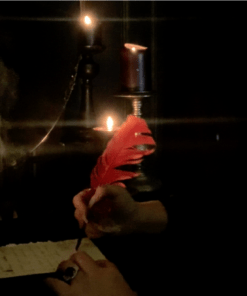
Set up a dedicated journal for this pact alone, choose a black or deep purple candle for the opening rite, and draw or acquire Lucifer’s sigil in advance rather than improvising it at the altar.
A repeatable initiation rite:
- Cleanse the space with smoke or salt water and ground yourself for several minutes before speaking aloud.
- Light the candle, place the sigil before you, and state your intent statement exactly as written.
- Speak a direct invitation to Lucifer, naming what you offer (attention, devotion, ritual work) and what you’re asking for.
- Sit in silence for at least ten minutes, noting any sensory shifts, temperature changes, or intrusive thoughts.
- Close by thanking the working and extinguishing the candle deliberately, never leaving it to burn unattended.
Your pact clause template should specify three things plainly: the scope of what you’re asking for, what reciprocity looks like on your end, and a termination condition (“either party may end this working with three days’ notice through ritual closure”). This keeps the arrangement honest rather than open-ended.
After the rite, look for three verification signs: a sensory cue (candle flicker, cold spot, scent), a divinatory confirmation (a tarot pull or pendulum check that lines up with your intent), and an unprompted synchronicity within 72 hours.
Log each one with the date and exact wording of what happened.
Publicly circulated rites like the Seven Spheres ritual use pre-ritual cleansing and color-correspondent candles for good reason: they reduce the noise that makes verification unreliable.
Build in a cooling step, too. A short closing invocation and a few minutes of grounding after every session prevents residual energy from bleeding into your daily life, and have a contingency ready (a banishing phrase, a note in your journal) if something unexpected happens mid rite.
Pro Tip: Don’t evaluate the whole relationship off one ritual. Treat the first three sessions as a data-gathering phase, not a verdict.
Stage 2: Consolidation, or How Trust Actually Gets Built
This is where a working relationship either becomes real or quietly dies from neglect. Consolidation is about proving, through repetition, that you show up whether or not you need something.
A workable cadence looks like three short check-ins a week, five to fifteen minutes each, paired with one fuller monthly rite where you go deeper into dialogue, offerings, or skill work. This mirrors broader guidance in Luciferian practice that treats daily discipline as the engine of internal change, with a multi-week window (often cited around 25 days) as the baseline before habits solidify.
Communication methods worth building into this stage:
- Journaling immediately after contact, while impressions are still fresh.
- Dreamwork prompts written before sleep, asking for a specific sign or message.
- A divination check (cards, pendulum, scrying) once weekly to cross-reference what you’re receiving.
- A sigil refresh every few months, redrawn with fresh intent rather than reused indefinitely.
Deepening shows up as clearer, less ambiguous messages, synchronicities that cluster around the specific domain you’re working (money, protection, creative power), and a measurable improvement in your own divinatory accuracy or ritual focus. Track these in a simple three-column log: date, what you asked, what happened within a week.
Inconsistency is the single biggest reason relationships stall at this stage rather than the ritual work itself, which lines up with what Eclectic Witchcraft’s guide to demon relationships identifies as the leading cause of failure across Left-Hand Path workings generally. Scale ritual complexity only once you’ve logged several consistent monthly rites with clean verification. Rushing into elaborate ceremonial work before trust is established tends to produce noise, not signal.
Pro Tip: If your weekly check-ins start feeling like a chore, shorten them rather than skipping them. A two-minute acknowledgment beats a skipped week every time.
Stage 3: Maintenance, or How Not to Let a Real Relationship Go Cold
Once trust is established, the risk shifts from doubt to complacency. Maintenance is about designing a routine you’ll actually keep, not an ideal one you’ll abandon by month three.
For a busy schedule, a five- to fifteen-minute daily acknowledgment (lighting a candle, speaking a short line of gratitude or intent) covers the baseline. Reserve full hour rites for monthly or seasonal markers, new moon workings, or moments tied directly to whatever domain you’re focused on.
Offering protocols that build the relationship rather than just transacting with it:
- Choose offerings you can share in, not just give away. Eat part of the meal, drink part of the wine, keep part of the incense burning near you.
- Rotate offering types (food, creative work, dedicated time) so the exchange doesn’t flatten into routine.
- Note which offerings produce the clearest responses and favor those going forward.
This mirrors a point made in guidance on building relationships with demons: offerings framed as shared experience build more trust than purely transactional gifts left and forgotten.
Your recordkeeping template after each session should capture: the date, what you did, any sign received, and a one-line honesty check on whether you kept your side of the pact that week. Reread this log quarterly. If reliability patterns are strong and your original pact terms feel outdated, that’s your cue to formally re-draft the clause rather than let it drift.
Stage 4: Integration, Where the Relationship Becomes Part of Who You Are
Integration is less about ritual frequency and more about whether the relationship has reshaped how you operate day to day, similar to concepts found when you decode your cosmic identity. This stage tracks closely with the Luciferian framing of liberation, illumination, and apotheosis as a staged path toward self-mastery rather than external worship.
Every mature pact needs boundary language covering scope (what domains this relationship touches), reciprocity (what you continue to owe), timelines (renewal points, not indefinite silence), and consent (either party can decline a specific request without ending the whole working).
Skills worth cultivating at this stage, and why each matters:
- Divination literacy, so you can self-verify messages without needing external confirmation every time.
- Sigil craft, so you can design working tools specific to new requests as they arise.
- Energy hygiene, so long-term contact doesn’t leave you depleted or scattered.
- Shadow work, since integration usually surfaces personal material Lucifer’s domain tends to press against.
You’ll know you’ve reached integration when requests start flowing both directions, when skill transmission feels sustained rather than occasional, and when life changes track visibly with the domain you’ve been working (career shifts alongside prosperity work, sharper boundaries alongside protection work).
Pro Tip: Keep a polite refusal ready in your working vocabulary: “I acknowledge this request and need time to consider it” respects the relationship without obligating you to say yes on the spot.
Why Do Working Relationships With Lucifer Stall or Break?
Three failure modes account for most stalled relationships: inconsistency, entitlement (asking without reciprocating), and abandoning your log so you’re relying on memory instead of evidence. Testing which one applies is straightforward: check your log for gaps, check your last five requests for a pattern of asking without offering, and check whether your “signs” are actually documented or just recalled.
A 4-step repair sequence for a stalled or strained working:
- Pause all requests for at least one full week. No asks, no rituals demanding anything.
- Perform a clearing or atonement offering acknowledging where you fell short (missed sessions, broken pact terms).
- Run a short verification rite, similar to your original initiation check, to confirm the line is still open.
- Renegotiate terms if the original pact no longer fits your practice or circumstances.
Close a relationship permanently only when repeated repair attempts produce no verification signs and the working feels consistently draining rather than neutral. Cool it temporarily, instead, when life circumstances (illness, major relocation, burnout) make consistency impossible for a defined stretch. A safe close involves a final rite of gratitude, a clear statement of closure, and a note in your journal marking the date and reason. Preventing relapse afterward comes down to the same lesson every stage teaches: schedule before crisis, not during it.
Sources
- Introduction to Luciferian Magick – Assembly of Light Bearers
- How to Summon Lucifer: The Seven Spheres Ritual (Full Guide) – Occultist
FAQ
How Long Does It Take to Build a Relationship With Lucifer?
Consolidation typically takes a minimum of several weeks of consistent contact, with many practitioners citing a baseline habit window of around 25 days before patterns of response become reliable.
What’s the Biggest Mistake Practitioners Make With Pacts?
Contacting Lucifer only when they need something, which reads as unreliable and is widely cited as the leading cause of relationship failure in Left-Hand Path workings.
Do I Need Elaborate Rituals to Deepen the Relationship?
No. Short, repeatable practices done consistently outperform infrequent elaborate ceremony; complexity should scale only after trust is established through logged, verified contact.
How Do I Know If a Pact Needs to Be Renegotiated?
If your recordkeeping shows consistent reliability but your original terms no longer match your goals or circumstances, that’s the signal to formally re-draft the clause.
What Should I Do If a Working Feels Stuck or Draining?
Pause requests for a week, perform a clearing offering, run a short verification rite, and renegotiate terms if the check confirms the connection is still open.