
 New Years Eve Ritual 2026/2027 with Savannah
Blog, Rituals, Working With Demons
A Nine-Step Ritual Template for Left Hand Path Entity Work
Mar
Entity work is ritual evocation, invocation, pact making, and offerings with spiritual or demonic entities, and reliable outcomes depend on three repeatable stages: preparation, calibrated contact and negotiation, and aftercare. This guide is written for serious Left Hand Path witches who want an operational template, not an overview of demonology. It draws on Solomonic grimoire structure and older Near Eastern precedent to show what actually holds a working together.
Table of Contents
- Historical and canonical roots of entity work
- Building a ritual structure you can repeat
- Protections, discipline, and who should be doing this work
- Negotiating pacts and structuring offerings
- Working notes on frequently invoked entities
- Aftercare, maintenance, and confirming results
- Methods for identifying and verifying entities
- Psychological and spiritual effects of entity work
- Ethical considerations and risks in entity work
- Legal and cultural perspectives on entity work
- What serious practice actually looks like
- Working with a witch directly
- Sources
- FAQ
Historical and canonical roots of entity work
The ritual grammar magicians use today did not appear from nowhere. The Lemegeton Clavicula Salomonis, commonly called the Lesser Key of Solomon, catalogs 72 spirits by name, office, and seal, and its Goetia section pairs each entry with rituals and protective instructions that still inform Goetic practice today. The related Key of Solomon supplies the mechanical layer beneath that catalog: planetary days and hours, tools, confessions, conjurations, and the pentacles used to build a working circle. These texts treat ritual as engineering, with the same seals, incense, and timing reappearing across manuscripts, which is exactly why they still function as a template rather than a curiosity.
The lineage goes back further than the medieval period. Mesopotamian Utukku lemnuti tablets record incantations and scapegoat rituals aimed at managing spirits and afflictions, showing that structured, practical spirit management is a practice thousands of years old, not a modern invention.
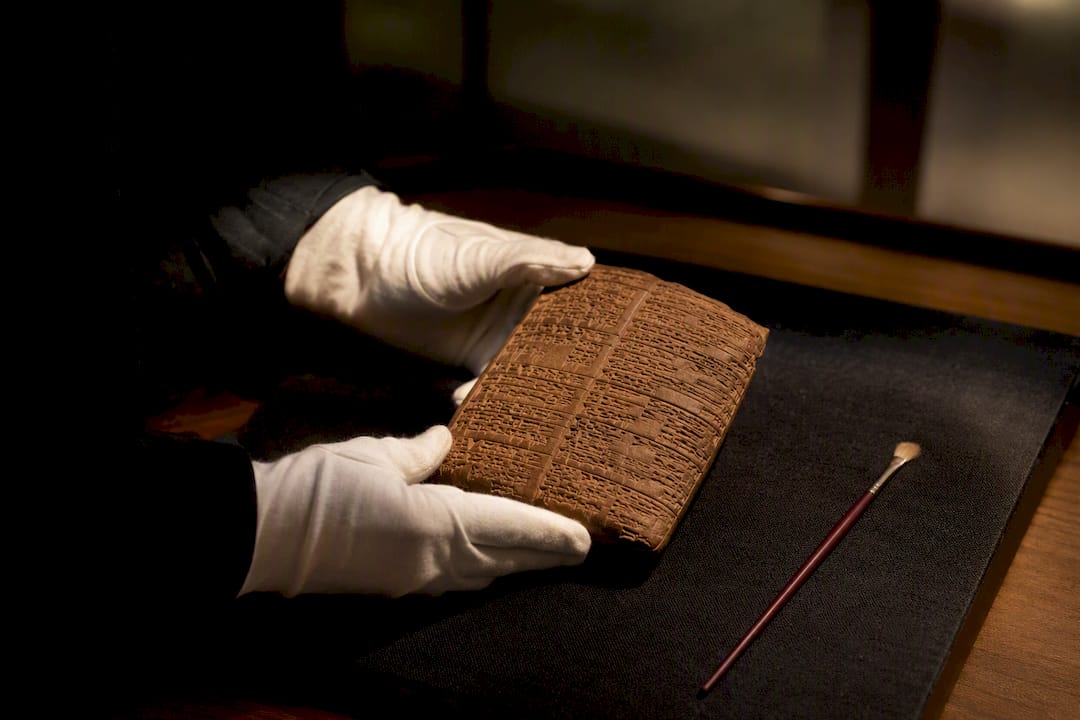
A curatorial review of manuscript grimoires by the Folger Shakespeare Library notes that Crowley-era occultists reframed some of this material as psychological exploration. That reading has its place, but the older sources were written for people expecting external, verifiable results, and this guide follows that operational reading.
Building a ritual structure you can repeat
A working only holds together when its structure is fixed before you begin. The sequence below adapts Solomonic form into a repeatable operational template.
- State intent in one measurable sentence. Write down exactly what outcome you are asking for and by what date you expect signs of movement, before any tool touches the altar.
- Consecrate your instruments. Cleanse and charge your blade, chalice, seals, and incense burner separately, since a tool used across unrelated workings without recharging carries residue into the new one.
- Set the circle and altar. Draw or lay the circle with the entity’s sigil placed at the point of contact, elemental markers at the quarters, and candles matched to the entity’s traditional correspondence.
- Match timing to the entity. Planetary hours and lunar phase are not decorative; the Key of Solomon ties specific operations to specific hours for a reason, and ignoring that timing is the most common cause of a flat, unresponsive working.
- Choose invocation or evocation deliberately. Invocation draws the entity’s influence into you; evocation calls it to manifest outside the circle for negotiation. Pick the mode that matches your intent rather than defaulting to whichever feels more dramatic.
- Run the contact protocol in stages. Open with the conjuration, wait for a sign of presence, then ask direct, closed questions before moving to open negotiation, and write down every response as it comes rather than reconstructing it afterward.
- Seal the agreement. Formalize terms with the entity’s sigil, a written statement of what each party gives, and a closing gesture such as a signed pact or spoken oath.
- Dismiss cleanly. Thank and release the entity by name, close the circle in reverse order of how it was opened, and never skip this step even when the working felt inconclusive.
- Log the operation immediately. Record date, hour, entity, phrasing used, signs received, and your own physical state, since a working without a written record cannot be evaluated or repeated.
Pro Tip: Keep a single dedicated notebook per entity rather than one general grimoire log; patterns in an entity’s response style only become visible when you can flip back through a focused record.
Protections, discipline, and who should be doing this work
Protective structure is what turns a working from a gamble into a controlled operation. A closed circle, consecrated tools, and correct protective conjurations exist to keep contact on your terms, and skipping them is the fastest way to get a working that runs long, feels wrong, or produces confused signals. Historical ritual texts consistently describe rigorous protocols as a requirement for the practitioners performing this work, not as optional flourish.
- Keep the circle physically unbroken for the entire operation, including during long silences.
- Use tools consecrated specifically for entity contact, separate from general spellwork.
- Rehearse the conjuration aloud before the working so the wording is fluent under pressure.
- Work sober and rested; fatigue and intoxication both degrade your ability to read signs accurately.
- Assign or mentally hold a watch position, someone or something monitoring the boundary while your attention is on the exchange.
Pro Tip: Read your full conjuration aloud once, start to finish, at least an hour before the ritual begins. Stumbling over unfamiliar phrasing mid-contact is one of the most common self-inflicted disruptions in a working.
Negotiating pacts and structuring offerings
Pacts fail most often because the terms were vague on one side or the other. Structure every offer the same way: state precisely what you are giving, what you are asking for, the timeframe in which you expect results, and what constitutes the deliverable being fulfilled.
- Open with your offer, not your request. State what you bring to the exchange, whether that is a material offering, a devotional act, or a longer-term commitment.
- State the request in measurable terms. “Help my finances” is not a request an entity can act on cleanly; a figure, a deadline, or a specific event is.
- Watch for assent signals. Candle flame behavior, temperature shifts, physical sensations, or dreams in the following days are common signs; note the sign, the time, and the context rather than relying on memory.
- Formalize the terms. Write the agreement out, mark it with the entity’s sigil, and sign it, either literally or through a spoken oath witnessed by your own recorded voice.
- Close the exchange deliberately. State clearly that the terms are set and thank the entity before dismissal, so nothing is left open ended.
Working notes on frequently invoked entities
Different entities have distinct working styles, and matching your approach to that style improves consistency.
- Lucifer tends to respond to direct, dignified address rather than pleading, and workings framed around sovereignty, self-liberation, or clarity of will tend to move more cleanly than vague requests.
- Clauneck is associated with wealth and abundance work and rewards precise, contractual phrasing. A clear figure or outcome stated plainly tends to outperform an open-ended request for prosperity.
- Andras is linked to swift, forceful outcomes, particularly in conflict or domination work, and containment protocols such as a firmly held circle matter more here than in slower-moving workings.
- Astaroth is tied to knowledge, influence, and political or interpersonal leverage, and workings tend to unfold over a longer arc, so build in a follow-up check rather than expecting immediate resolution.
Aftercare, maintenance, and confirming results
A working is not finished at dismissal. Aftercare protects the agreement and gives you a way to measure whether it is holding.
- Maintain offerings on the cadence you agreed to, whether that is weekly, at each new or full moon, or on a fixed calendar date.
- Check in briefly at set intervals rather than repeatedly reopening the full ritual, since constant re-contact can muddy a clean agreement.
- If results are partial, revisit your original terms before assuming the entity failed to deliver; an underspecified request is the more common cause.
- Keep a running log of offerings given, dates, and observed outcomes so you can spot patterns across months.
Methods for identifying and verifying entities
Confirming which entity you are actually in contact with matters as much as the contact itself. Start with the entity’s traditional seal or sigil as given in a primary source; a response that lines up with the correct sigil, name, and traditional office is a stronger indicator than a vague felt presence. Cross check the tone and content of responses against the entity’s documented attributes: an entry catalogued under wealth or negotiation in the Ars Goetia) should behave consistently with that office across multiple sessions, not shift character from working to working.
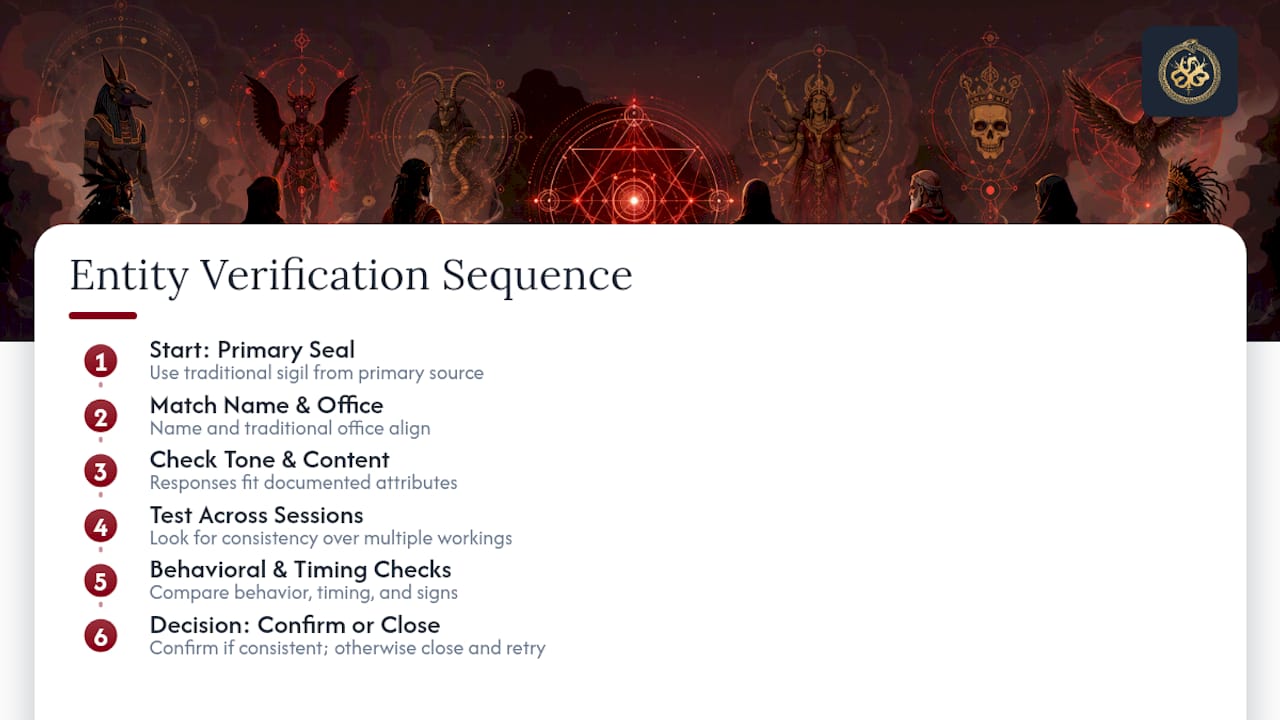
Consistency across repeated contact is the most reliable signal available to a magician working alone. If a presence gives a name but its behavior, timing preferences, or the signs it produces do not match documented patterns for that entity, treat the identification as unconfirmed rather than accepting the name at face value. Ambiguous or contradictory signs are grounds to close the working and reattempt on a different day rather than pushing forward on an uncertain identification, since forcing a working through with a misidentified entity is where confused or unproductive results tend to originate.
Psychological and spiritual effects of entity work
Entity work asks a lot of sustained attention, and that attention has effects beyond the ritual itself. Witches commonly report heightened dream activity, increased pattern recognition in daily life, and a sharpened sense of intent following sustained contact with a particular entity, effects consistent with the intense focus the practice demands. The Folger Library’s review of grimoire material notes that some modern occultists frame these effects primarily as psychological exploration, a useful lens for understanding your own internal shifts even when the working is approached as producing external results.
Sustained entity work also changes how a witch relates to will and consequence. Negotiating explicit terms with a named power tends to sharpen a person’s sense of what they actually want, since vague desires do not survive the process of writing them into a measurable offer. That clarity is one of the more durable effects of the practice, independent of whether a given working succeeds outright.
Ethical considerations and risks in entity work
The main operational risk in entity work is not moral, it is structural: sloppy terms, broken circles, and unverified identifications produce outcomes magicians did not intend. A pact with unclear deliverables can resolve in a way that technically satisfies its wording while missing what the magician actually wanted, which is why precise phrasing matters more here than in most other ritual work.
Consider the durability of any agreement before entering it. A pact with an open-ended or unclear term length can outlast its usefulness, and closing an agreement cleanly at dismissal, with clear terms on both sides, keeps a working from becoming an ongoing obligation you did not intend to take on. Witches who keep detailed logs are better positioned to recognize when a pattern of results has shifted and a working needs revisiting or renegotiating.
Legal and cultural perspectives on entity work
Entity work sits outside any regulatory framework; there is no license, certification, or governing body overseeing pacts or evocation, and no law addresses the ritual itself in most jurisdictions. What does carry legal weight is anything a witch might promise or deliver alongside a ritual, such as financial arrangements with clients, which fall under ordinary consumer and contract law regardless of the spiritual framing attached to them.
Culturally, entity work occupies a strange position: it is documented in academic and museum collections, including the Folger Shakespeare Library’s manuscript holdings and the Metropolitan Museum’s ancient Near Eastern tablets, while still carrying stigma in mainstream religious and cultural contexts. That academic legitimacy sits at odds with the popular framing of the practice, and serious occultists tend to treat the historical record, rather than public opinion, as the relevant standard.
What serious practice actually looks like
The gap between people who talk about entity work and people who get consistent results is almost always discipline: written intent, a fixed structure, and a log that gets reviewed, not just kept. Entities respond to precision, and precision is a practice, not a talent.
— Black Witch Coven
Working with a magician directly
Not every reader wants to build a full ritual practice from scratch, and some magicians work directly with entities including Lucifer, Andras, Clauneck, and Astaroth on behalf of clients who prefer an experienced witch to handle the contact, negotiation, and aftercare.
- Daemonic spell casting and pact services, covering prosperity, love, legal matters, and protection workings built around specific named entities.
- Black magic spells for money, love, mind work, and cursing or hexing operations that do not require demonic negotiation.
- VIP and multi-month programs for readers who want sustained, ongoing ritual engagement rather than a single working.
- Monthly subscription services for full moon workings, money magick maintenance, and ongoing protection.
If you would rather have a working handled and maintained by someone else, book a consultation to talk through what you are trying to achieve.
Sources
- Lemegeton Clavicula Salomonis (The Lesser Key of Solomon) — Esoteric Archives
- How to Conjure Demons Using the Holdings at the Folger Shakespeare Library: A Primer — Folger
- Metropolitan Museum collection — Utukku lemnuti tablet
FAQ
What is the difference between invocation and evocation in entity work?
Invocation draws an entity’s presence or influence into the magician, while evocation calls the entity to manifest outside the witch, typically within a circle, for direct exchange. Witches choose based on whether the goal is embodying an entity’s qualities or negotiating with it as a separate presence.
How do I know if an entity has accepted my offer?
Assent is usually signaled through physical cues such as flame behavior, temperature shifts, or dreams in the days following the working, cross checked against the entity’s documented attributes from a source like the Ars Goetia. Consistent signals across a logged series of attempts are more reliable than a single ambiguous sign.
Do I need special training before attempting entity work?
Historical grimoires and academic reviews of manuscript sources describe rigorous, trained practice as the expectation, not casual experimentation, particularly around circle integrity and conjuration wording. Occultists without that grounding often prefer working alongside an experienced coven or magician rather than attempting evocation solo.
How long does a pact with an entity typically last?
Pact duration depends entirely on the terms set during formalization, since grimoire sources describe no default length. Clear terms specifying an end date, a deliverable, or renewal conditions prevent an agreement from running longer than intended.
Can Black Witch Coven perform entity work on my behalf?
Black Witch Coven offers daemonic spell casting and pact services built around named entities including Lucifer, Andras, Clauneck, and Astaroth, along with VIP and monthly maintenance programs for ongoing work. Services are booked directly through the coven’s site rather than performed as self-guided rituals.
