
 New Years Eve Ritual 2026/2027 with Savannah
Well, greetings. When someone says they want to work with a heavy spirit, I ask what made them choose that name. Andras has an office of discord. Leraje appears as an archer and belongs to contests and battle. Glasya-Labolas has a reputation for bloodshed, and his entry puts that right beside his ability to teach. Those differences are where the work of reading the Grimoire begins.
Here are four names you’ll find in baneful discussions, with the seal or sigil we can identify and the reason each name comes up. The older accounts, BWC’s own material, and living practitioners’ accounts each have something to tell you.
Andras · Discord
The Ars Goetia puts a raven-headed figure on a black wolf. Its stated office is sowing discord, and the account treats dealings with him as grave. In the coven’s material he comes up in discussions of discord. Think of an alliance already full of grievances. The question his entry brings to mind is what happens when the quarrel is exposed or sharpened.
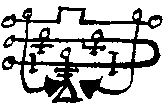
From a practitioner. One author on r/DemonolatryPractices describes Andras as demanding and discusses working with him as a hard teacher in shadow work. That is a personal account of a different aim. Read the practitioner’s account.
Leraje · The Contest
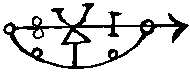
Leraje, also written Leraye, is the green-clad archer in the Goetia. His entry concerns battles and contests, with the arrow motif central to its imagery. If two sides are already openly opposed, Leraje gives you a different lens on the conflict from Andras, whose office is discord itself.
Glasya-Labolas · Bloodshed and Dangerous Knowledge
The Goetia gives this president a winged dog’s form and attributes several offices to him. It names bloodshed alongside teaching arts, telling of past and future matters, and winning the affection of friends and foes. Read the entire entry and you’ll see why a practitioner might name him for knowledge, and why he turns up elsewhere in a very different context.
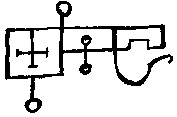
From BWC. BWC’s profile goes into both the darker reputation and the teaching role. Read BWC’s profile of Glasya-Labolas.
From practitioners. A recent r/DemonolatryPractices discussion asks for firsthand experiences and includes readers describing the character of their own encounters. A Become A Living God discussion uses Glasya-Labolas and Leraje to think about different aspects of one conflict. Read those accounts as personal interpretations of the offices. DemonolatryPractices discussion · Become A Living God discussion.
Sonnillion · Hatred in BWC’s Demonolatry Material
BWC’s material associates Sonnillion with hatred. The name also appears as Sonnillon and Sonnelion. S. Connolly’s Modern Demonolatry records Sonnillion in its material on demonolatry and includes an enn, a short spoken invocation, under that name. The sigil shown here comes from BWC’s existing article. It belongs to that thread of demonolatry material alongside the numbered Solomonic figures above.

Breakup, Separation and Discord
When someone says “break them up,” I want to know what they mean. A quarrel, a relationship ending, and someone reclaiming their life after a breakup are three different situations. In the older text, Andras’s office is discord and Leraje’s is battles and contests. Their association with relationship rupture in current practice is an interpretation of those offices.
In one Become A Living God discussion, a practitioner says they approached Andras and Leraje together for breakup work. A separate r/DemonolatryPractices account discusses Andras in the context of interference with an existing relationship. The stories describe what those practitioners asked for and how they interpreted events afterward. For how BWC distinguishes ending a relationship from bringing two people back together, see our Breakup and Separation guide.
Bloodshed and Death in the Historical Sources
The old books can be blunt. The Goetia attributes bloodshed to Glasya-Labolas. Its warning about Andras concerns the operator and companions. Those are different claims, and the wording matters. The Fourth Pentacle of Saturn, in the Mathers edition of the Key of Solomon, belongs to a separate text and is described in terms of ruin, destruction, and death. Read each in its own edition and keep the attribution with the claim.
Historical accusations that someone caused a death by witchcraft come from a different kind of record. The UK National Archives’ witchcraft collection puts those records in the setting of trials and prosecutions. I’d keep a grimoire’s description, a court accusation, and a modern practitioner’s story as three different kinds of evidence in my notes. The coven’s most severe rites are kept in our private Book of Shadows.
How I’d Read a Seal
Put the seal next to the name and write down where you found it. The Goetia describes seals in the context of Solomonic ceremonial work, including wearing a seal as a lamen. Modern demonolatry has its own approaches. Connolly’s invocation notes describe a spoken enn or an invocation written by the practitioner, alongside a drawn gesture. The words you say, the seal that identifies a spirit, and the mark you trace in a rite each have their own place.
Practitioner’s tip. In your Book of Shadows, put the source and figure number under the image before you write what it means in your own practice. When you come back to it a month later, you’ll be able to see where the text ends and your experience begins.
Read the GenDem invocation notes · Read BWC’s spoken words for baneful work · Read about private coven work.