
 New Years Eve Ritual 2026/2027 with Savannah
Blog, Commanding
How to Make a Poppet: A Witch’s Guide to Poppet Dolls and Magical Links
Aug
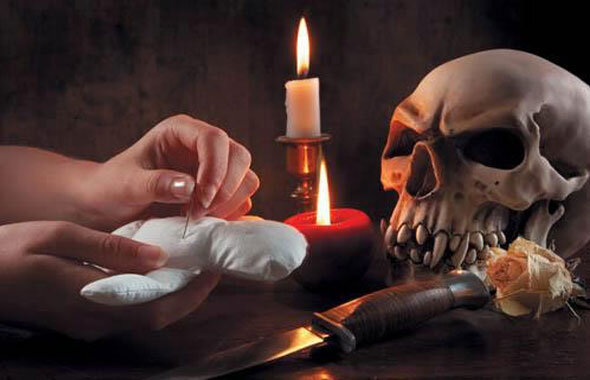
A poppet is one of the simplest ways to turn an intention into something you can physically work with.
You make a small figure to represent a person, situation, goal, or sometimes yourself. From there, you can dress it, mark it, fill it, carry it, place it on an altar, or use it as the focus of a spell.
You will often see these objects called “voodoo dolls” online. That label is usually too broad.
Poppets are a form of sympathetic magic. They are not automatically part of Vodou.
That distinction matters. Vodou is a living religious tradition with its own history, spirits, practices, and communities. A handmade figure used in a general witchcraft spell should not automatically be given that name.
What is a poppet?
A poppet is a magical figure made to represent something or someone.
The figure itself does not have to look realistic. A rough cloth doll, a stitched figure, a bundle of fabric, or another handmade representation can work perfectly well if you understand what it represents.
The important part is the magical link.
That link might be a name, photograph, handwriting, personal belonging, hair, fingernail clipping, clothing, or another object associated with the target.
For workings directed toward yourself, you can use your own name, photograph, handwriting, or another personal link.
The point isn’t artistic quality.
A crooked little doll can be just as useful as an elaborate one.
What you need
The original article recommends felt, thread, needles, stuffing, herbs, stones, candles, hair or fingernails, embroidery materials, yarn, and colored fabric. Those can all be useful, but you don’t need to buy a pile of occult supplies to make a poppet.
Start with:
- Fabric, felt, or another material you can safely work with
- Needle and thread, or another way to secure the figure
- Stuffing such as cotton or fiberfill
- Scissors
- Paper and pen
- Optional personal link to the target
- Optional herbs, symbols, colors, or other correspondences related to the working
Use what actually contributes to the spell.
A poppet stuffed with twenty different ingredients isn’t automatically stronger than a simple one.
How to make a basic poppet
You can use the pattern from the old article as a starting point, but the basic construction is simple enough that you can also draw your own figure. The original instructions tell readers to enlarge the pattern slightly to allow room for seams.
1. Decide what the poppet represents
Before cutting fabric, decide exactly what the figure is standing in for.
Is it you?
A specific person?
A relationship?
A problem you want to remove?
A goal you want to strengthen?
Do not skip this part. A vague target produces a vague working.
2. Draw your pattern
Draw a simple human-shaped figure on paper.
It doesn’t need to be anatomically accurate. Make it large enough to sew or otherwise assemble comfortably.
Add extra space around the outline if you are sewing the pieces together so that you have room for the seam.
3. Cut the fabric
Fold your fabric and place the pattern over it.
Cut two matching pieces.
If you’re using a different construction method, adjust the shape accordingly. The goal is simply to create a figure that you can identify as the representation you chose.
4. Sew the pieces together
Place the two pieces together and sew around the edges.
Leave an opening large enough to add your stuffing and any magical materials you intend to use.
You don’t need perfect stitches.
You need a figure that stays together.
5. Add the stuffing and magical link
Fill the poppet with your chosen stuffing.
If you are using a personal link, this is where you can add it.
For example, a poppet representing a specific person might contain their name written on paper or another appropriate personal link.
Only use personal materials that you obtained ethically and are legally allowed to possess.
6. Close the poppet
Once the figure is filled, sew the remaining opening closed.
At this point, you have a physical representation that can become the focus of your working.
7. Give the figure its identity
Add whatever makes the representation clear to you.
You might embroider a name, draw facial features, add hair, mark the heart, place a symbol on the chest, or use colors associated with your intention.
You can also keep it completely plain.
The representation exists because you assign the meaning, not because it looks like a miniature human being.
8. Connect it to the working
Hold the finished poppet and clearly establish what it represents.
Speak the person’s name or your intention if that helps you focus.
You might also place the poppet on your altar, dress it with oils or herbs appropriate to your practice, or incorporate it into a larger spell.
There is no universal rule that says a poppet has to be treated one particular way.
Its purpose determines what you do with it.
Choosing what goes inside
The stuffing is one of the easiest places to personalize a poppet.
For example, you might choose herbs or written petitions according to the purpose of the working.
For a healing-focused working, you might choose herbs associated with healing within your own magical system.
For prosperity, you might choose ingredients connected with money or abundance.
For protection, you might choose protective herbs, symbols, or written words.
The important thing is correspondence.
Don’t throw ingredients into the doll simply because a random list on the internet says they are magical.
Know why you’re using them.
What about using hair or fingernails?
Personal links are traditionally useful in sympathetic magic because they create a stronger symbolic connection between the representation and its target.
Hair, fingernail clippings, handwriting, photographs, names, and personal belongings are examples.
But there is no requirement to use bodily material.
If you don’t have a personal link, you can still create a meaningful representation through the person’s name, photograph, description, or your own focused visualization.
Can a poppet be used for harmful magic?
Yes. Poppets have historically been associated in popular culture with curses and harmful magic, but reducing them to “dolls you stick pins into” is a cartoon version of a much broader magical technique.
A poppet can represent healing, protection, attraction, prosperity, reconciliation, separation, banishing, boundary work, or many other intentions.
The technique isn’t inherently good or bad.
The purpose of the working is what matters.
If you are working against another person, however, be honest with yourself about what you are attempting to accomplish. “Protection” and “punishment” are not automatically the same thing.
Why that order
The target comes first because the poppet needs a clear magical purpose before you start building it. The physical construction comes next because the figure gives that intention a form. The personal link and identifying marks are added afterward because they strengthen the connection between the physical object and the intended target.
Only after the representation is established does it make sense to begin the actual spellwork.
Otherwise, you’re just sewing a doll.
What should you do with the finished poppet?
That depends on the working.
You might keep it on your altar, carry it with you, place it somewhere private, wrap it in cloth, revisit it during repeated workings, or eventually dismantle it when the spell is finished.
Don’t assume every poppet needs to be destroyed after one ritual.
Some workings are ongoing.
Others have a clear endpoint.
When the purpose is complete, decide deliberately whether the poppet should be kept, cleansed, dismantled, buried, discarded, or otherwise disposed of according to your practice.
The most important part of making a poppet
Don’t get distracted by making the “perfect” magical doll.
The power of the technique isn’t in whether you used expensive fabric, whether the face looks realistic, or whether you followed somebody else’s ingredient list exactly.
It is in the relationship between the object, the target, and your intention.
Make the figure clearly enough that you know what it represents.
Give it a purpose.
Use symbolism that actually means something to you.
Then do the magical work.
That’s the part that matters.
