
 New Years Eve Ritual 2026/2027 with Savannah
The definition of a familiar spirit:
A familiar spirit (alter ego, doppelgänger, personal demon, personal totem, spirit companion) is the double, the alter-ego, of an individual. It does not look like the individual concerned. Even though it may have an independent life of its own, it remains closely linked to the individual. The familiar spirit can be an animal (animal companion).
Pierre A. Riffard
A familiar is a spirit that maintains an ongoing working relationship with a practitioner, often serving as an assistant, intermediary, guardian, or extension of the magician’s reach.
Unlike a spirit called for a single operation and then dismissed, a familiar remains available across multiple workings and may develop a distinct presence and role over time.
Why familiars belong in advanced work
This subject sits in the advanced section because a familiar is not a temporary contact. It is a sustained relationship with a non-human intelligence that has access to the practitioner’s space, attention, and often their ongoing magical work.
Several practical demands follow from that fact.
The operator must be able to establish clear terms and keep them. A familiar that is fed, acknowledged, or allowed to remain without structure can drift into unwanted influence or dependency. The practitioner also needs reliable discernment to tell the difference between a genuine working spirit and a presence that is simply attaching itself because attention is available. Closing or releasing a familiar, if the relationship needs to end, requires the same thoroughness demanded in other advanced spirit work. Residual attachment is a real possibility when the connection has been long and close.
In addition, many traditional and modern methods of obtaining a familiar involve either the binding of a spirit, the shaping of one from other materials or forces, or the acceptance of a spirit that offers itself. Each of these routes carries responsibility. A spirit that lives in the background of a practitioner’s life is not a neutral tool. It becomes part of the operational environment.
For these reasons familiars are not treated as a beginner topic. The work assumes that the practitioner already has experience with spirit contact, the ability to maintain boundaries, and the capacity to manage a long-term magical relationship without losing clarity.
Familiar Spirits: Types and Distinctions
A familiar is a spirit that maintains an ongoing working relationship with a practitioner. It is not a spirit called once and dismissed. It remains available, develops a role, and often becomes part of the operational background of the magician’s life.
Beyond that basic definition, the category contains several different types that are frequently mixed together.
1. Spirit familiars (non-physical)
These are discarnate intelligences that work with the practitioner over time. They may appear in animal form, human form, or in shapes that are neither. In early modern British and European records they were often described as imps, spirits, or devils that took animal shape. They assisted with magical work, brought information, carried out tasks, and in many accounts required feeding or some form of reciprocal arrangement.
This is the classic “familiar spirit” of the witch trial material and of much traditional craft. It is a spirit, not a living animal, even when it wears an animal appearance.
2. Living animal familiars
Some practitioners keep an actual animal that participates in or is sensitive to magical work. Cats, dogs, toads, birds, and other creatures appear repeatedly in the records. In folk practice the animal might be used for divination (watching which object it chose), for sensing presence, or simply as a companion that was present during workings. In the trial literature these living animals were often reinterpreted as demons in animal shape.
A living animal that is magically aware or useful is not the same thing as a spirit that merely takes animal form. One has a physical body and ordinary animal needs. The other does not.
3. Created or constructed familiars
Some traditions and modern practitioners deliberately build a familiar. This may be done by shaping a thought-form or servitor and then feeding it until it develops more autonomy, by binding a spirit into an object or vessel, or by other methods of artificial creation. The result is a working spirit that exists because the magician made or assembled it.
These are different from spirits that arrive of their own accord or that are met in the landscape. They begin as constructs and may or may not develop into something more independent over time.
4. Bound or gifted spirits
In grimoire and ceremonial contexts, a spirit may be bound into a ring, a bottle, a brass vessel, or another object and kept as a permanent assistant. In some folk accounts a familiar is given by another spirit, by a teacher, or by a more powerful entity. The relationship begins with a transfer or a formal binding rather than with a gradual acquaintance.
5. Human dead as familiars
Less commonly discussed in popular writing, but present in some older material, is the use of a dead human spirit as a familiar. This overlaps with necromancy. The dead person is kept in a working relationship and used for information or tasks. This type carries the same problems of residual attachment and discernment already noted in the necromancy section.
6. What is often confused with familiars
Animal spirit guides, totemic animals, and temporary spirit allies are frequently labelled “familiars” in modern writing. They are not the same thing. A guide or totemic presence that appears for teaching or short-term assistance does not automatically become a familiar. A familiar is defined by the ongoing, working, often contractual or reciprocal nature of the relationship.
Practical distinctions that matter
When someone says they have a familiar, it is worth asking which type they mean:
- Is it a spirit that has no permanent physical body?
- Is it a living animal?
- Was it created or constructed?
- Was it bound into an object?
- Is it a dead human?
- Or is it simply a spirit that has helped them once or twice?
These are different relationships with different demands. Treating them as interchangeable creates confusion in both discussion and practice. A spirit familiar requires clear terms and the ability to manage a long-term non-human presence. A living animal requires ordinary care plus whatever magical role it is given. A created familiar requires sustained feeding and attention if it is to remain functional. A bound spirit requires secure containment and eventual responsible release or maintenance.
The advanced nature of the work comes from exactly this: a familiar is not a one-off contact. It becomes part of the practitioner’s ongoing magical environment, and that environment has to be managed with clarity.
Purpose and benefit of a familiar in occult work
A familiar exists to extend the practitioner’s reach and capacity. That is the core practical benefit.
What it actually provides
A functioning familiar can:
- Carry out tasks at a distance while the magician is occupied elsewhere
- Watch a person, place, or situation and report back
- Act as an intermediary with other spirits
- Strengthen or speed certain workings by adding its own force
- Guard the practitioner or the working space
- Locate information, objects, or opportunities that are not easily visible by ordinary means
- Maintain a continuous presence so that some types of influence do not have to be rebuilt from nothing each time
In short, it functions as a permanent or semi-permanent assistant rather than a spirit that must be called, briefed, and dismissed for every single operation.
Why this matters in black magic and serious occult work
Much occult work is limited by the magician’s attention, time, and physical location. A familiar reduces those limits. Influence can be applied while the practitioner sleeps or deals with ordinary life. Surveillance or pressure can be maintained without the magician constantly feeding the working. Certain operations become more efficient because part of the labour is delegated.
In older accounts the familiar is often the one that goes out to do the practical harm or the practical fetching while the witch or magician remains at home. In more modern terms, it is a long-term specialist spirit that knows the practitioner’s methods and does not need to be reintroduced to the work every time.
Vessel Familiars
One of the most practical and enduring methods of working with a familiar is to house it in a physical vessel. The spirit is created, called, or empowered, and then seated in an object so that it has a stable anchor in the material world. From that point the vessel becomes the point of contact, feeding, command, and rest.
The vessel can take many forms. A doll, a bottle, a statue, a ring, a box, a sealed container, or any object prepared for the purpose can serve. What matters is that the object is deliberately chosen, cleaned, and dedicated so the spirit has a clear place to occupy. Once seated, the familiar is no longer only an astral or mental presence. It has a physical seat that can be placed on an altar, carried, covered, fed, or retired when the work requires it.
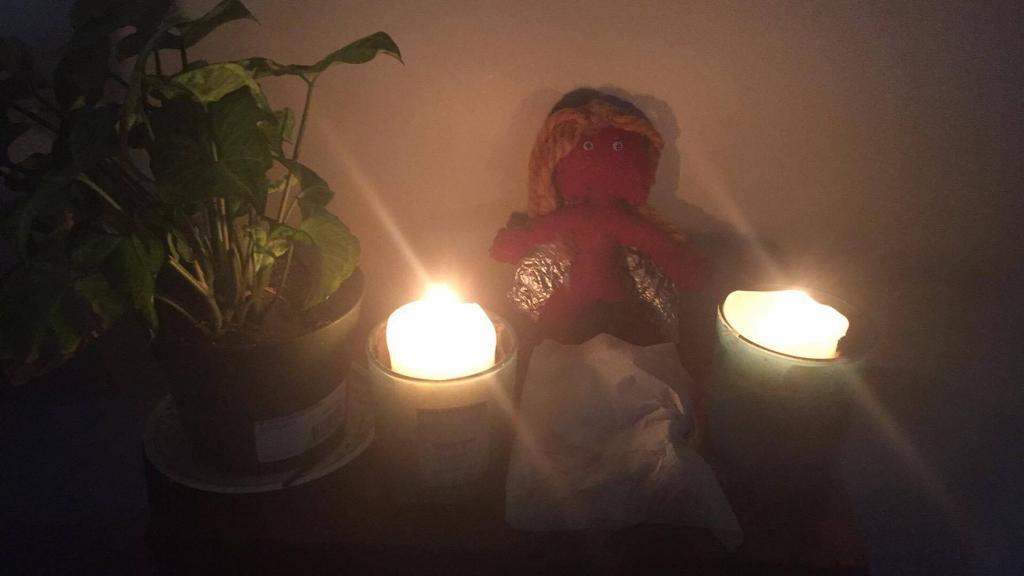
This method sits between the pure thought-form approach and the older grimoire practice of binding spirits into rings or vessels. It combines the advantages of both. The practitioner retains the ability to shape and define the spirit, while the physical object gives the relationship permanence and makes ongoing management more concrete. Offerings can be placed directly with the vessel. Attention can be directed to a fixed point. The spirit can be put away or brought forward as needed.
At Black Witch Coven this is a central part of how we understand and work with familiars. Creating a spirit and giving it a vessel is not an optional flourish. It is one of the practical ways we build lasting magical assistants. A well-seated familiar in a proper vessel becomes a reliable working presence that can be strengthened over time, directed with clarity, and maintained without constant improvisation.
The advanced practical method for creating and seating a vessel familiar belongs among the advanced techniques. The principle, however, belongs here: a familiar does not have to remain only a presence in the air or in the mind. It can be given a body to work from, and that body becomes part of the operational structure of the magic.
You maybe wondering “How do I get a familiar?”
Creating a Familiar (Thought-Form Method)
One practical way to obtain a familiar is to create it deliberately as a thought-form or energy construct. This is not the only method, but it is a recognised one, especially among practitioners who already have solid skills in meditation, visualisation, and energy work.
Requirements
This approach assumes you can already gather, shape, and hold energy with reasonable stability. If visualisation is weak and concentration collapses easily, the resulting construct will be weak or unstable. In that case it is better to strengthen those foundations first.
Basic process
Decide the purpose of the familiar with precision. A vague purpose produces a vague entity. Determine its form, its limits, what it is allowed to do, and what it is not allowed to do. Then build it through repeated sessions of focused visualisation and energy feeding until it begins to hold together on its own.
Once the construct has some coherence, it must be fed regularly and given clear tasks. Without sustained attention it will fade or become unreliable. With consistent work it can develop greater responsiveness and usefulness over time.
Demonic assistance
Some practitioners ask a demon to empower, stabilise, or help govern the created familiar. This is optional, but it is a traditional support for the method.
Buer has the strongest reputation in the older sources for this specific service. The Pseudomonarchia Daemonum states that he “giveth the best familiars.” Other Goetic spirits also have records or practical reputations for assisting with familiars, including Paimon, Purson, Marax, Gaap, Belial, Amdusias, Alloces, Shax, Malphas, and Sabnock. Relationship and affinity matter more than simply choosing a name from a list.
If a demon is asked to help, the familiar remains the practitioner’s responsibility. The demon may strengthen or help control it; the ongoing management still belongs to the magician.
Important distinctions
A familiar created this way begins as a construct. It is not the same as a spirit that arrives independently, a living animal, a spirit bound into an object, or a dead human used as a familiar. Treating a thought-form as if it were already a fully independent spirit leads to confusion about what it can and cannot do.
Clear terms, regular feeding, defined tasks, and the ability to dissolve or retire the familiar if the work is finished remain essential. A created familiar that is left without structure can become a drain rather than an asset.
Let’s get specific. What do you need to do to make this happen?
Follow these steps I recommend for any person with Intermediate skills. At this point you should have put in a request with your demon for a familiar to do the task you need. When you have the go ahead from the demon, begin the steps below.
- Decide on the familiars name – This makes it easier to call upon the familiar. A name that will remind you of its purpose can be helpful. As long as the name means something to you, you can use any name (even codes)
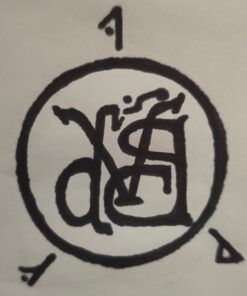
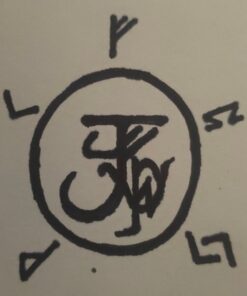
- Assign the familiar a sigil – You may create a new sigil based on the purpose for the familiar, or perhaps you want to link the demons sigil to the familiar at the point of creation.
- Provide an object for the familiar to reside within – This could be a voodoo doll, a fixed object, or something live. You will be “feeding” this object so ensure you can get to it when needed.
- The “Awakening” Ritual – (you could do this ritual on the astral plane) or in the same manner as you do your current ritual openings.
- As long as you include the following elements in your opening you can use any opening ritual method you normally use.
- At least 15 minutes of visualization of what the familiar will look like
- Tracing the sigil in the air
- Calling the familiars name out at least 3 times
- You know you have created the familiar – When you feel the energy taking shape, then rest for the day, and set your object at the altar for “feeding”
- Next 7 Days – Repeat the above, and offer the familiar what you feel the familiar is asking for – I normally give blood
- Assignment of task – You now assign the familiar with its task, and place it under the control of the demon. This part is totally up to you, as you need to be able to trust that your demon is on your side. Personally, with so many familiars, I need the help from the demons. However, I will call the familiar back from time to time to check it is completing the assigned task.
- As long as you include the following elements in your opening you can use any opening ritual method you normally use.
Familiar Assignment Charge
Hear me now (familiars name)!
I, (Black Witch Savannah) who created you from the abyss,
charge you to rise from (the object you assigned to be the familiar eg this voodoo doll) bearing your sigil and name.
I, who created you from the abyss for the sole purpose of working my will upon this plane,
command you now to hear and fulfill this task.
I, who feed and own your very existence,
command you to (do the assigned task).
Fulfilling this and all tasks I give you is your duty and sole justification for having been created.
By the decree of the Great (demons name)
Obey now with full cooperation and faithfully serve your witch who created you and who will destroy you if you are disobedient.
So be it.
Lastly, do make sure you call the familiar back from its assignment to “feed” and love on IT. Do this at least weekly, and otherwise whenever you feel you have the time. Feeding and checking in on the familiar helps for you to keep “control” on the familiar. Remember that the familiar is now a separate entity and very much alive. And to quote a line from the movie Jurassic Park, “Life Will Find A Way.” The last thing you need is for the familiar to free itself from your control, as it may turn its attention, and purpose onto you.
Should the familiar not complete its tasks, then ensure you follow through with the punishment as stated in your charging ritual. Destroy the familiar. Some people will choose to banish their familiar after the task is complete. If you choose to do this, just ensure you thank the spirit for working with you, and also thank your demon. There is nothing worse than a spiritually weak witch who is fearful of destruction and the possible consequential retaliation.
Chaos Magic Servitors and Egregores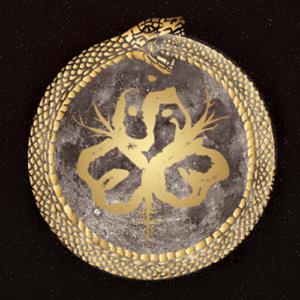
In chaos magic the same basic technique of building a working entity appears under different names.
A servitor is a created spirit given a specific task or set of tasks, fed by attention or other means, and often given a finite lifespan or a clear condition for retirement. Functionally it is a modern form of the created familiar.
An egregore is related but operates at a different scale. It is an entity or current brought into being and sustained by the attention of a group rather than a single operator. It is not a personal familiar in the ordinary sense, yet it demonstrates the same principle: sustained mental and energetic investment can produce a functioning non-physical presence that continues to act.
Both belong in any serious discussion of constructed familiars. The difference is mainly one of ownership and feeding. A servitor is usually private and directed by one practitioner. An egregore is collective and draws power from shared focus, repeated ritual, or group identity.
Practical use
A well-built servitor can perform many of the same functions as a traditional familiar: watching, fetching information, applying pressure, guarding, or maintaining a working over time without the magician having to hold every detail in constant attention. Because it is created rather than encountered, the operator has more control over its purpose, limits, and eventual dissolution. That control is also the responsibility. A servitor left without clear instructions or proper feeding can become weak, erratic, or a drain.
Egregores are less commonly built for private work. They tend to arise around groups, currents, or long-running magical projects. Once established they can be powerful, but they are harder for any single person to direct or dismantle.
Black Witch Coven and the Power of Constructed Forces
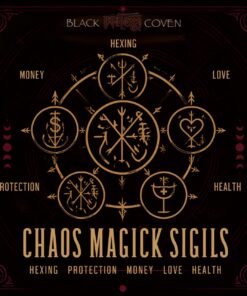
At Black Witch Coven we have built our work around very powerful sigils, familiars, and egregores. Some of these are visible and can be worked with directly. Others have been fed, refined, and strengthened over decades until they function as substantial egregores in their own right. This is not theoretical. It is part of the operational foundation of what we do.
We regard the deliberate creation of these forces as one of the most practical and effective approaches available. A well-made familiar or servitor becomes a working assistant that extends the practitioner’s reach. A properly established egregore becomes a sustained current that continues to act and accumulate power through repeated use and attention. Both are tools of real magical advantage when they are built with clarity, fed with consistency, and governed with discipline.
This is why we recommend their creation so strongly. Independent spirits have their place. Long-term relationships with demons and other intelligences have their place. But the ability to construct, empower, and direct your own working entities is a form of self-reliance that sits at the centre of serious occult practice. It is one of the methods we have used, tested, and refined for decades, and it remains one of the most reliable ways to build lasting magical infrastructure.
Binding
Chaos Magick
Chaos Magick
Chaos Magick
8 thoughts on “Familiars”
Leave a Reply
You must be logged in to post a comment.
I have 2 servitors. One feeds on my enemy’s energy reserves. The other feeds on all of myself and my friends’ negative energy. I will be getting a familiar to assist with healing. I’m working with Uphir right now, and he is teaching me healing. Uphir is great to work with! He is so knowledgeable about nature and healing, and even some other magic too. He can teach you how to unblock chakras, take care of yourself, and more!
Hello black people,
Why on earth do we need familiars when Demons can help us? thats what I cant get.
Also, please contact if you have the time, as I do have other questions for you as well. The familiar I was granted is a Kitsune and I feel that he had special needs ordingly.
This is very helpful.. I was given a familiar a year ago and have been at something of a loss as how to bond with him or keeping him happy. Mainly because all information seems to revolve around familiars in “pet” form, and animal ownership is just not viable in my living situations. With no other option for my spirit, I put him in my favorite stuffed animal (a cow puppet and my first mistake) being a fox spirit, he’s not exceptionally happy with his lodgings, yet even with that we’ve had a few bonding dream moments, and he’s showed up on occasion to be helpful, like saving my phone and teaching me a little trickery via misdirection. But I feel that he was grumpy alot, especially when I’d haul him around in a crowded backpack when taking him with me everywhere (which I thought I had to do). Lately I’ve left him at home on his fox chair throne I bought him for solstice, and now I think he feels ignored. I’m going to try and reconnect with him using these methods starting with reawakening him. I don’t think I could ever punish him too harshly (like destroying him) I am quite fond of him.
What do you feed a familiar? As I have read, He/She needs to be fed weekly
herbs, stones, etc.
Thanks for sharing I love this, I working sometimes in Black Magkic !
Awesome – Don’t be shy and let us know of your successes – Lady Hannah