
 New Years Eve Ritual 2026/2027 with Savannah
Blog, Luciferianism, Rituals
Self-Deification: Taking Left-Hand Path Theory Into the Ritual Chamber
Jun
Self-deification is the deliberate act of claiming total authority over one’s own existence through pacts, deific masks, and sustained ritual will, rather than seeking union with an external god. It succeeds when the witch’s identity, perception, and behavior shift permanently toward sovereign command of their own reality. The mechanisms that produce this shift are consistent across Luciferian, Setian, and Goetic currents: formal commitment, embodied practice, and repetition.
Table of Contents
- Core Theory: Left-Hand Path Framing and Sovereign Will
- Practical Ritual Components Used in Apotheosis
- Sample Ritual Protocol: A Single-Cycle Working Template
- Working With Deific Masks and Pacts: Maintaining Sovereignty
- Integration and Ongoing Maintenance Practices
- A Magician’s View on Claiming Personal Divinity
- How We Support Your Self-Deification Practice
- FAQ
- Sources
Core Theory: Left-Hand Path Framing and Sovereign Will
Academic treatments of the Left-Hand Path describe self-deification as a process in which the witch positions themselves at the center of their own existential universe, becoming the primary author of meaning and authority rather than a supplicant to an external deity, as outlined in analyses of Left-Hand Path discourse. This reframes magick entirely: the operative force is not a god’s grace but the magician’s own will, disciplined into ritual form.
Philosophical scholarship on the Left-Hand Path identifies sovereign will as the normative center of the practice, describing Luciferian configurations in particular as a form of illuminated autonomy where self-legislation replaces external moral authority. The witch does not ask what is permitted. They decide what is true for themselves and act from that decision.
The emphasis shifts by current, though the underlying aim stays constant:
- Luciferian currents frame the self as a bearer of light and knowledge, often working through pacts and conjurations tied to Lucifer as a figure of liberation and sovereignty rather than rebellion for its own sake.
- Setian frameworks, associated with the Temple of Set, emphasize isolate intelligence: the idea that consciousness itself is the divine spark, cultivated through deliberate self-separation from the herd.
- Goetic approaches treat the seventy-two spirits of the Ars Goetia less as external masters and more as specialized currents of power the magician learns to direct toward specific outcomes.
The same scholarship notes a real hazard worth naming: sovereignty can curdle into fixation, where the ritual structure itself becomes rigid dogma instead of a living practice. That caution matters more to serious witches than any outside warning ever could.
Practical Ritual Components Used in Apotheosis
Apotheosis work is built from a small set of recurring tools, each doing a specific job rather than decorating the ritual.
- Deific masks function as energy currents and archetypal interfaces. A witch assumes the mask of Lucifer, Set, or a Goetic spirit not to become possessed by it, but to borrow its current and integrate the qualities it represents.
- Formal pacts give the working a covenantal structure. Contemporary grimoire traditions treat the pact as a contract that organizes conjuration, offering, and obligation into a single coherent frame, as detailed in the Grand Grimoire of Infernal Pacts.
- Invocation and evocation draw the current inward or call it to stand apart, depending on whether the goal is embodiment or dialogue.
- Sigils, offerings, and consecration anchor intent into physical form and mark the ritual space as separate from ordinary time.
- Solitude and repetition convert a single peak experience into a durable shift in identity.
- Embodiment and carnal practices are deliberate levers, not distractions from spiritual work, since LHP traditions often treat physical mastery as a legitimate route to sovereignty rather than an obstacle to transcend.
Pro Tip: Keep one working grimoire per entity or current you engage, and log the exact wording of every pact and invocation you use, since small phrasing changes compound into very different outcomes over repeated workings.
Sample Ritual Protocol: A Single-Cycle Working Template
A single cycle gives you a complete working you can repeat, refine, and scale. The structure below follows the covenantal logic found in modern pact-based grimoires and Luciferian praxis texts.
- Preparation. Choose a fixed date near a lunar phase that matches your intent, consecrate your tools, draft or select the sigil of the entity or current you are engaging, and secure full solitude for the duration of the working.
- Opening and invocation. State your intent aloud in direct, first-person language. Practitioner protocols in Luciferian praxis model this as a dynamic act of pact-making rather than passive petition: you are proposing terms, not begging for favor.
- The pact formula. Name what you offer (discipline, attention, continued practice) and what you claim (a specific expansion of will or perception). Framing the exchange as total commitment, rather than literal barter, matches how modern grimoire adaptations describe the pact’s price.
- Consecration and sealing. Burn, bury, or otherwise physically mark the sigil to bind the working into the material world. This step converts intention into a fact your body remembers.
- Closing. Thank the current for its presence without diminishing your own authority in the exchange, then close the ritual space deliberately.
- Cadence. Repeat the full cycle on a fixed schedule, commonly once per lunar cycle, and record every session’s content and aftermath in the same grimoire so patterns become visible over months rather than days.
Working With Deific Masks and Pacts: Maintaining Sovereignty
The central risk in entity work is subtle: a magician who forgets they are wearing a mask can end up serving the current instead of directing it. Treat every mask and pact as a tool you operate, not an authority you obey.
- Draft pacts in language that names your terms first: what you commit to doing, and only then what you ask the current to amplify.
- Use reciprocity clauses as commitment markers rather than debts, since the exchange is about sustained practice, not a transaction that can be defaulted on.
- Treat a deific mask as a mirror that amplifies a quality already latent in you, never as a replacement identity you disappear into.
- Set maintenance markers: a recurring symbol worn or displayed, a specific behavioral standard you hold yourself to, and a fixed ritual date that renews the pact’s terms.
Pro Tip: Write your pact’s terms as if a skeptical colleague will read them in five years. If the language still holds up as a clear statement of your own authority, it is doing its job.
Integration and Ongoing Maintenance Practices
A single working rarely produces lasting change. Apotheosis holds only when it is reinforced by daily structure.
- Build short daily sovereignty rites: a two-minute invocation of your chosen current’s qualities, performed at the same time each day, outperforms occasional long rituals for identity change.
- Use physical training, sexual discipline, or other carnal practice as deliberate embodiment work, since LHP traditions treat the body as a legitimate instrument of magical progress rather than a lower concern to transcend.
- Mark progress concretely: note shifts in how you make decisions, how others respond to your presence, and how readily you assert your own terms in ordinary situations, and record these in the same grimoire used for ritual logs.
- Schedule a weekly consecration, even a brief one, to keep the pact’s terms active between full ritual cycles.
For readers who want structured daily practices to pair with this cadence, outside guides on grounding and intention-setting offer complementary frameworks for the maintenance side of the work.
A Witch’s View on Claiming Personal Divinity
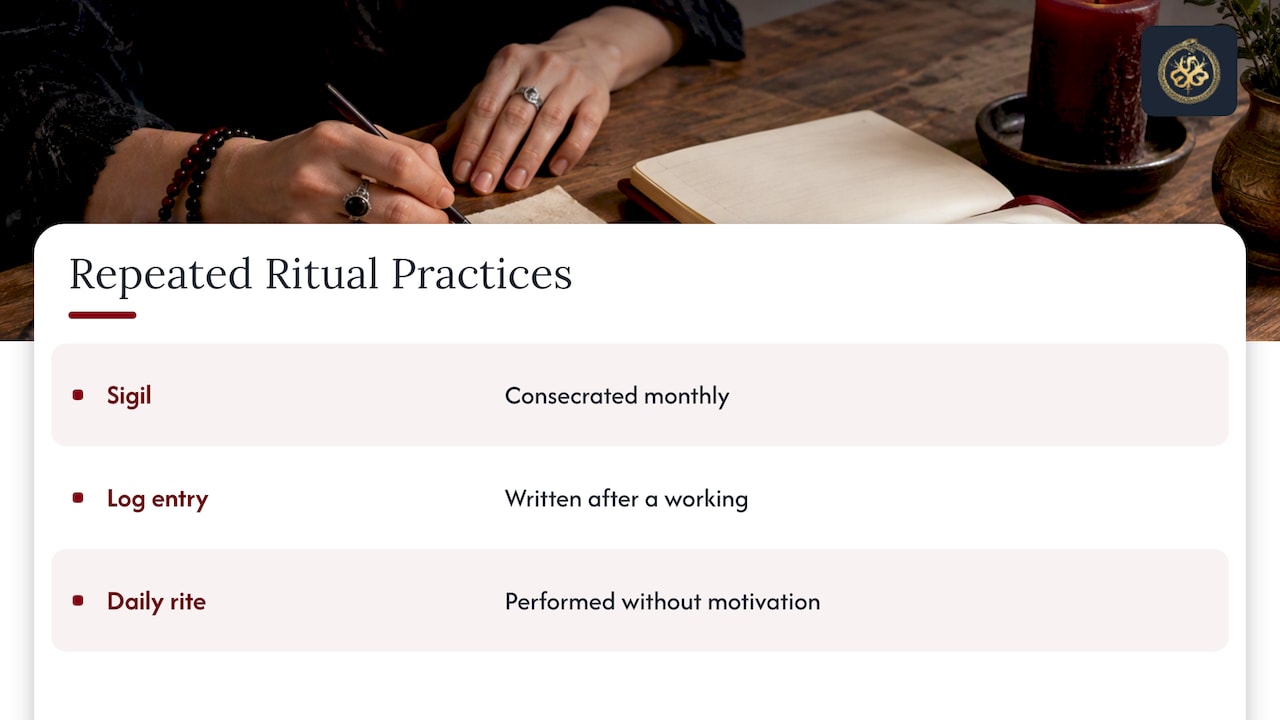
Self-deification gets treated too often as a single dramatic ritual, a peak moment after which the magician is simply different. That framing sells the work short. The pact and the invocation matter, but they are openings, not conclusions. What actually produces a sovereign identity is the unglamorous repetition: the same sigil consecrated monthly, the same log entry written after a working that felt like nothing happened, the same small daily rite performed on a day with no motivation for it at all.
Our work spans daemonic pacts, Luciferian ritual, and Goetic workings built on exactly this kind of sustained structure rather than one-time spectacle. A professional working can shorten the distance between intention and result precisely because it supplies the discipline and formula a solo witch sometimes struggles to maintain alone, especially in the early cycles before the practice becomes habit.
— Black Witch Coven
How We Support Your Self-Deification Practice
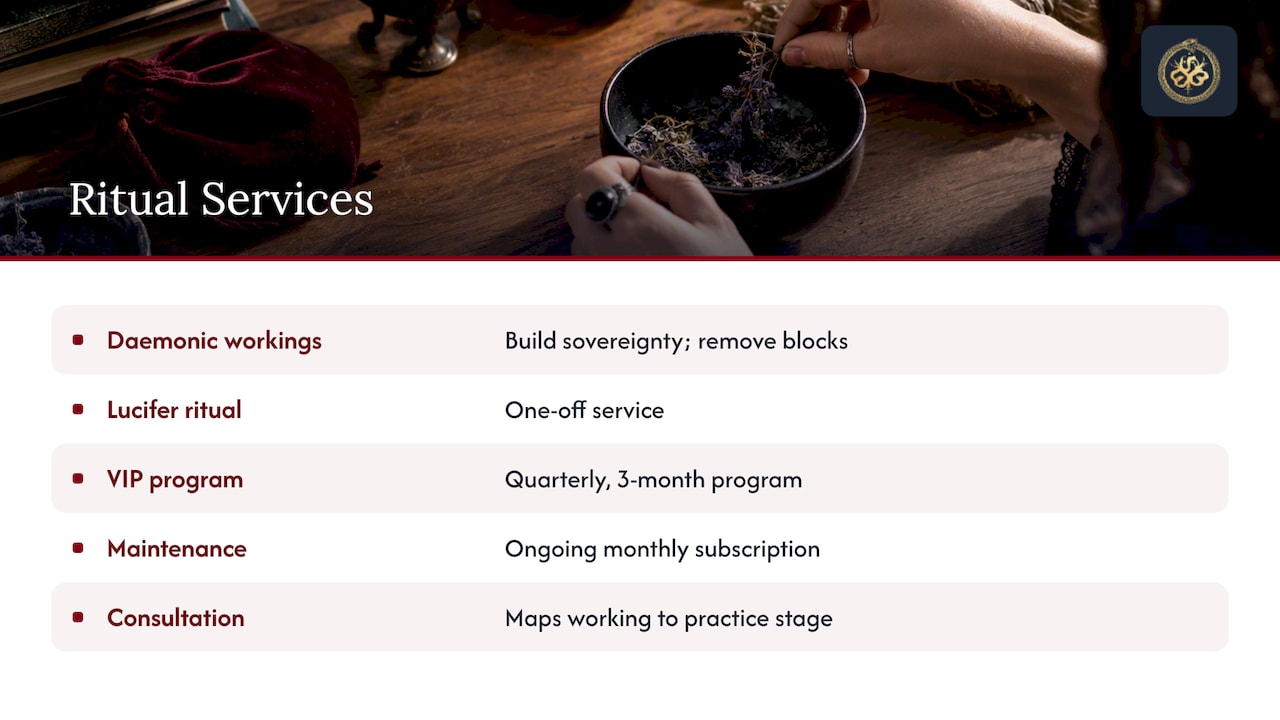
A self-led practice benefits from structure, and that is exactly what our ritual services supply. Our daemonic workings draw on pacts with entities including Lucifer, Andras, and Clauneck to build sovereignty and remove the blocks that stall solo practice. The Ritual to Lucifer: Light of Liberation, Wisdom, and Sovereignty is available as a one-off service and speaks directly to the apotheosis goals covered above.
For readers ready to commit to sustained cycles rather than a single working, our VIP Protection Spells & Rituals, 3 Month Program is offered as a quarterly service, and the Monthly Protection Maintenance Subscription is available for ongoing monthly maintenance between larger workings. Begin with a consultation on our main site to map the right working to your current stage of practice.
FAQ
What does self-deification mean in Left-Hand Path practice?
Self-deification is the practice of claiming personal sovereignty and supernatural authority through ritual rather than seeking union with an external god. It is built through pacts, deific masks, and sustained ritual repetition, as described in Left-Hand Path scholarship.
How is self-deification different from mainstream theistic worship?
Theistic worship positions the divine as external and the worshipper as a supplicant seeking favor or grace. Self-deification positions the magician as the author of their own authority, using entities and currents as tools and allies rather than masters to obey, a distinction central to Left-Hand Path philosophical frameworks.
What is a deific mask and how is it used?
A deific mask is an archetypal persona, often modeled on a figure like Lucifer or a Goetic spirit, that a witch assumes to channel a specific current of power or quality. It functions as a tool and mirror rather than a replacement identity, and occultists are advised to retain their own authority throughout the working.
Do I need to work with demons to pursue self-deification?
No. Entity work through pacts and Goetic or Luciferian currents is one common route, detailed in occult texts like Lucifer: Praxis, but sovereign will can also be cultivated through sustained solitary ritual, embodiment practice, and disciplined repetition without any pact at all.
How long does it take to see results from self-deification work?
Timelines vary by magician and consistency of practice, since the shift is identity-level change rather than a single event. Most working protocols pair an initial pact or invocation cycle with ongoing daily and weekly maintenance rites, tracking change over multiple lunar cycles rather than days.
Sources
- MLiFlow 4.0 Converted Document
- A Philosophical Framework of the Left-Hand Path
- Grand Grimoire of Infernal Pacts: Goetic Theurgy | mitpressbookstore
- Lucifer: Praxis | Scarlet Imprint
