New Years Eve Ritual 2026/2027 with Savannah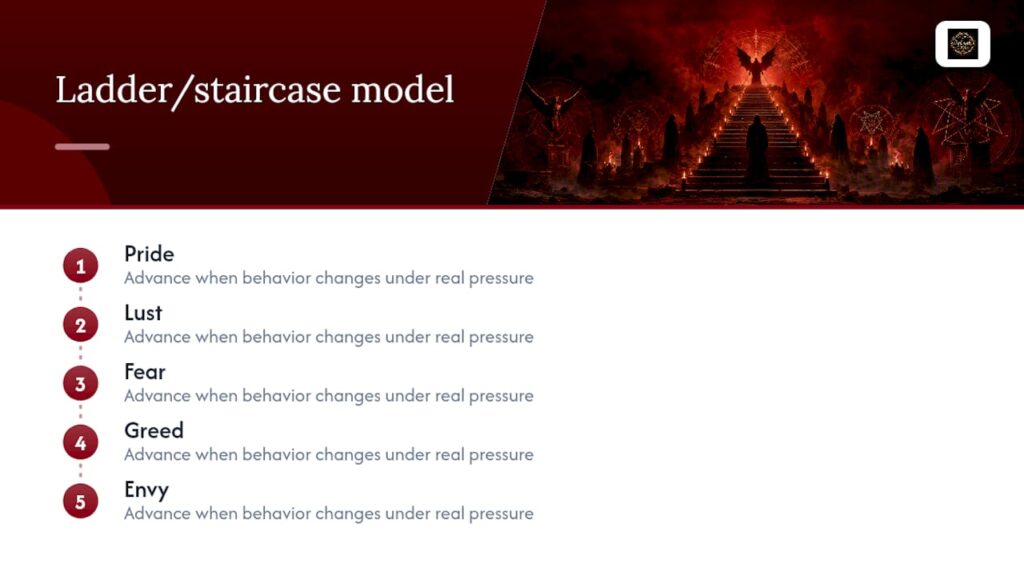
Supporting Rituals for the Initiatory Staircase
These three rites support the Initiatory Staircase.
They help you name pressure, face it cleanly, and lock in real behavioural change. They require no extra systems or prior knowledge.
The only measure that matters remains consistent change in action under pressure.
The Naming Rite
Purpose
This rite turns the readiness check into a clear and deliberate act. You name the three areas where you most consistently fail under pressure and mark them as your first rungs.
When to use
Use this rite at the very beginning of the work. You can also return to it any time you feel you have lost focus and need to reset your starting point.
What you need
- One black candle
- Paper and pen
- A quiet space where you will not be interrupted
Steps
- Sit quietly for a few moments and settle your attention.
- Light the black candle.
- On the paper, write the three areas of your life where you most consistently fail under pressure. Use plain and honest language. Do not soften or justify the patterns.
- Read the first area aloud. Pause.
- Read the second area aloud. Pause.
- Read the third area aloud. Pause.
- Speak these words clearly: “These are the patterns I will watch. I will meet them with different action.”
- Decide whether to keep the paper as a record or burn it. Both choices are acceptable.
- Extinguish the candle.
After the rite
Begin your ordeal log the same day.
The three areas you named are now your starting rungs.
Return to this rite only when you need to reset your focus.
The Pressure Rite
Purpose
This rite interrupts the automatic reaction when pressure appears. It helps you name the pattern clearly and choose a different action instead of repeating the old response.
When to use
Use this rite as soon as you notice real pressure rising in daily life. If you cannot do it in the moment, perform it as soon as possible afterward.
What you need
- Nothing is required in the moment.
- Optional: one black candle if you prefer a more formal version.
Steps (daily version)
- Stop what you are doing.
- Name the pattern out loud or write it down. Speak simply. Examples: “This is the pride pattern.” “This is the fear pattern.” “This is the greed pattern.”
- Take three slow breaths.
- State the different action you will take. Keep the action concrete and small if needed.
- Carry out that action immediately.
- Log it at once. Write the date, the pressure that appeared, the action you took, and the outcome.
Optional formal version
Light a black candle before you name the pattern. Extinguish the candle after you have carried out the new action.
After the rite
The rite exists only to help you act differently under pressure. The written log is the record that matters. Review it regularly to see whether the same pressure continues to produce the old response or whether change is taking hold.
The Anchoring Rite
Purpose
This rite marks and stabilises a real behavioural change once it has been observed over time. It helps the new pattern become more solid.
When to use
Use this rite after you have seen consistent different behaviour under the same pressure for at least 21 to 30 days. You can also use it after completing the four-week sequence with clear results.
What you need
- One black candle
- Paper and pen
- Optional: a small object you will keep as a physical reminder (a stone, a coin, or a simple token)
Steps
- Light the black candle.
- Speak the old pattern clearly: “The old pattern was…”
- Speak the new behaviour clearly: “The new behaviour is…”
- Speak these words: “This change is claimed. I will maintain it.”
- Perform one concrete action that represents the new pattern.
- Write a short record of the change on the paper.
- If you have chosen a small object, hold it and state that it marks this shift. Keep the object somewhere you will see it regularly.
- Extinguish the candle.
After the rite
Continue the daily behaviour that embodies the new pattern for at least another 21 days. Gains fade without steady maintenance. The optional object serves only as a reminder. The real anchor is the repeated action itself.
These three rites work together.
- The Naming Rite starts the work.
- The Pressure Rite carries the daily effort.
- The Anchoring Rite protects the results.
Use them as tools that serve the staircase.
-
 The Initiatory Staircase Workbook
$9.99
The Initiatory Staircase Workbook
$9.99 -
 Lucifer Oleum
Price range: $15.50 through $57.95
Lucifer Oleum
Price range: $15.50 through $57.95