
 New Years Eve Ritual 2026/2027 with Savannah

Nov
Deep ritual is multi-stage, authority-driven ceremonial work bound by pacts and protective architecture, built to pursue lasting, tangible results. Surface-level spell work is a short, intention-focused operation that raises energy toward a single aim and fades once that energy disperses. Deep Goetic and Luciferian ritual invokes named authorities such as Lucifer, Andras, Clauneck, and Astaroth, using operational frameworks laid out in the Ars Goetia) and the Grimorium Verum. That distinction changes everything downstream: how long the work takes, what it costs, what skill it demands, what the client must commit to, and how long the results actually hold.
Key Takeaways
Deep Goetic and Luciferian ritual differs from surface spell work in authority, structure, cost, and durability, and skipping any core stage undermines both safety and results.
| Point | Details |
|---|---|
| Authority changes everything | Deep ritual borrows power from named entities like Lucifer or Astaroth; surface spells rely on your own will alone. |
| Stages are non-negotiable | Preparation, protective architecture, evocation, sealing, and banishment each guard against partial or reversed results. |
| Vet before you pay | Demand written pact terms, containment protocols, and milestone payments before committing to any ritualist. |
| Integration is not optional | Post-ritual follow-up determines whether a working’s effects stabilize or unravel. |
| Black Witch Coven structures deep ritual professionally | Sixteen-plus years of entity-specific work with documented contracts, containment protocols, and integration check-ins. |
Table of Contents
- The Difference Between Surface-Level Spell Work and Deep Ritual
- Surface Spells vs. Deep Ritual: A Side-by-Side Breakdown
- How Does a Goetic or Luciferian Deep Ritual Actually Work?
- What Should a Ritualist Provide, and What Risks Should You Expect?
- How Do You Vet a Ritualist Before Committing to Deep Ritual Work?
- What Should Clients Prepare Before Commissioning a Deep Ritual?
- What Do Real Pact and Evocation Cases Look Like?
- The Witch’s Bottom Line on Deep Ritual
- Ready for Results-Driven Deep Ritual Work?
- Sources
- FAQ
The Difference Between Surface-Level Spell Work and Deep Ritual
A candle spell for quick clarity and a Goetic pact for permanent wealth reversal are not the same category of magick, even though both get filed under “spell work” by people who have never done either. Surface-level work draws on your own will and a handful of correspondences (color, herb, moon phase) to nudge probability in your favor. It is fast, low-cost, and appropriate for small, contained goals. Deep ritual borrows or negotiates power from an external authority. Left-Hand Path tradition frames this as a deliberate departure from conventional, taboo-respecting practice: the operator claims sovereignty and treats the working as both practical and initiatory, per the historical framing of left-hand path practice. You are not asking the universe nicely. You are constructing a legal-feeling agreement with a named entity, under protective conditions, with terms both sides are expected to honor.
That authority relationship is what makes deep ritual slower, riskier, and far more consequential than surface spell work, and it’s why the two should never be priced, scheduled, or vetted the same way.
Surface Spells vs. Deep Ritual: A Side-by-Side Breakdown
- Complexity: Surface spells use a handful of correspondences and a short verbal charge; deep ritual requires sigil verification, divine name construction, and a full protective circle and triangle setup.
- Duration/timeline: A jar spell can be cast in an evening; a Goetic pact working typically spans a considerable period, from research and consecration through the evocation session and follow-up integration.
- Hands-on expertise required: Surface work rewards intuition and correspondence knowledge; deep ritual demands trained command of conjuration liturgy and demonstrated experience with the specific entity being called.
- Client commitment/pact-binding: Surface spells ask for intention and patience; deep ritual asks the client to accept binding terms, sometimes for years, sometimes for life.
- Risk/contingency: Surface spells rarely backfire badly; deep ritual carries real risk of partial results, psychological shock, or lingering attachment without proper containment.
- Durability/permanence: Surface effects fade and need recasting; a well-sealed pact or evocation aims for results that hold for years.
- Confidentiality and ethics: Surface work is largely private by nature; deep ritual involves a third-party spell caster and demands explicit confidentiality terms and informed consent.
- Cost/investment: Surface spells run cheap; deep ritual is a high-investment commitment reflecting the skill, risk management, and time involved.
Clients are consistently blindsided by three things: the actual terms of a pact, the real risk profile of evocation, and the fact that integration work continues long after the ritual night ends.
How Does a Goetic or Luciferian Deep Ritual Actually Work?
A credible deep ritual is not theater. It follows a sequence, and skipping a stage is where things go wrong.
- Preparation. The magician researches the entity, gathers appropriate offerings, and consecrates tools and space. This stage determines whether the entity being called is even the right one for the client’s goal.
- Authority construction. The ritualist assembles divine names, seals, and a lamen. This is the theurgic half of the work: borrowing recognized authority to command rather than merely request. Practice-facing frameworks increasingly describe combining theurgic authority with goetic command as the mark of mature, results-oriented practice.
- Protective architecture. The magick circle protects the operator; the triangle of art contains the entity. Both are load-bearing, not decorative, according to traditional Goetic ritual mechanics.
- Evocation or invocation. Conjurations are spoken, sigils are traced or charged, and the entity is called into the triangle or into the operator’s awareness.
- Negotiation and pact formation. Terms are set, boundaries drawn, and a witness structure (spoken, written, or both) establishes what each party owes.
- Sealing and binding. The agreement is locked in, often with a signed or symbolically sealed document specific to the working.
- Integration and aftercare. The client processes what happened. This stage is chronically skipped and is where most “it didn’t work” complaints actually originate.
- Banishment and containment. The space and the operator are cleared. This closes the working and prevents lingering attachment.
What Should a Ritualist Provide, and What Risks Should You Expect?
A competent ritualist hands you more than a ceremony. Expect a written ritual script, verified sigils and seals specific to the entity involved, documented pact terms, and containment and banishment protocols applied both before and after the working. You should also receive an integration plan and, where appropriate, anonymized case outcomes or references that demonstrate real experience.
- Ritual script and entity-specific sigil verification
- Documented pact terms in plain language
- Pre- and post-ritual containment and banishment protocol
- Post-ritual integration plan with a defined check-in window
- Anonymized case summaries or verifiable references
- Milestone-based or escrow-style payment structure
The real risks are worth naming plainly: psychological shock during or after evocation, partial or incomplete manifestation, persistent energetic attachment when containment is skipped, and financial loss from unqualified operators. Serious witches mitigate these with staged payments tied to deliverables, an emergency banishment protocol on standby, and a referral plan if a client shows signs of genuine psychiatric distress rather than spiritual disturbance.
Pro Tip: Ask any ritualist how they handle a working that produces a partial result. If they don’t have a contingency answer ready, they haven’t done enough of these to be trusted with a high-investment pact.
How Do You Vet a Ritualist Before Committing to Deep Ritual Work?
Before paying for Goetic or Luciferian work, ask direct questions: What is your documented experience with this specific entity, whether Lucifer, Andras, Clauneck, or Astaroth? Can you show anonymized outcomes from past pact work? What is the exact timeline, and will I see a written pact or sample contract before we begin? What containment and banishment steps are built in, and what are your confidentiality terms?
- Red flags: refusal to put any terms in writing, guaranteed outcomes with zero contingency plan, blanket secrecy that forbids basic questions, no mention of containment or banishment, and demands for full non-refundable payment upfront.
- Trust signals: verifiable years of hands-on experience, milestone or escrow-style payment structures, a written contract with clear pact language, documented safety protocols, a scheduled follow-up and integration plan, and anonymized case summaries you can actually evaluate.
Sixteen years in this work teaches you that the occultists worth hiring are the ones comfortable being questioned. Evasiveness about terms is the single most reliable predictor of a bad outcome.
What Should Clients Prepare Before Commissioning a Deep Ritual?
Before you commission Goetic or Luciferian work, expect the witch to ask about your intent, any prior workings, and personal vulnerabilities that could affect the ritual’s design. You’ll need availability windows for a multi-stage rite, since evocation and pact work rarely completes in a single session.
- Disclosure and intake. Share your goal, history with prior workings, and anything relevant to your mental and physical state.
- Research and contract phase. The magician selects the entity, drafts terms, and you review a written agreement.
- Consecration and preparation. Offerings are gathered; you may be asked to fast, abstain, or ground yourself beforehand.
- Evocation or pact session. The core working takes place, often requiring your availability at a specific time tied to lunar or planetary timing.
- Sealing, integration, and follow-up. Expect scheduled check-ins after the ritual, not silence.
Payment structures for high-investment work typically use milestones or escrow-style releases tied to each phase rather than one lump sum, with confidentiality clauses protecting both parties. Timing details around lunar phases matter more than most clients expect, and a phase-by-phase approach to ritual timing is worth understanding before you lock in a date.
What Do Real Pact and Evocation Cases Look Like?
Wealth pact with Clauneck. Structure typically centers on a defined prosperity goal, specific offerings tied to Clauneck’s traditional associations with treasure and commerce, a written pact clarifying duration and renewal terms, and containment steps immediately following the exchange.
Authority and domination working with Andras. This entity is associated with discord and command over adversarial situations; workings tend to require tighter containment given Andras’s volatile reputation in the Ars Goetia, plus a clear post-ritual integration period to process the shift in personal authority.
Knowledge and contract work with Astaroth or Lucifer. These workings often revolve around truth-seeking, personal sovereignty, or formal pact-making, with pact terms carefully worded around duration and mutual obligation.
Grimoires disagree on details, correspondences, and even entity offices. The Ars Goetia and Grimorium Verum remain the shared starting points, but experienced ritualists adapt protocol to the entity and the client, not the other way around.
The Witch’s Bottom Line on Deep Ritual
Authority and containment aren’t optional flourishes. You borrow real power when you call these entities by name, and you answer for how you handle it. Every serious working I respect prioritizes safety, durable results, contractual clarity, and real integration after the fact. Anything less is theater with worse consequences.
Ready for Results-Driven Deep Ritual Work?
Black Witch Coven’s advantage over generic spell-casting sites is straightforward: sixteen-plus years of documented Goetic and Luciferian work, entity-specific expertise with Lucifer, Andras, Clauneck, and Astaroth, and contract terms that spell out containment, banishment, and follow-up before you pay a cent. Our services span Goetic evocations, formal demonic pacts, Luciferian marriage rites, and entity-specific campaigns built around milestone payments rather than lump-sum risk. Every deep ritual we take on includes documented containment protocols and a scheduled integration check-in, because a pact without aftercare is an unfinished working.
If you’re ready to move from surface spells to a structured pact, start with making a pact through Lucifuge Rofocale to see how we structure terms and confidentiality for high-investment clients.
Sources
FAQ
What’s the main difference between a surface spell and a deep ritual?
A surface spell uses your own will and simple correspondences for a short-term goal; deep ritual invokes a named authority like Lucifer or Clauneck through a structured, multi-stage ceremony bound by pact terms.
How long does a Goetic pact ritual typically take?
Deep ritual work usually spans weeks, covering research and contract review, consecration, the evocation or pact session itself, and a scheduled integration period afterward.
Is deep ritual work riskier than surface spell casting?
Yes. Deep ritual carries real risks including psychological shock, partial results, and lingering attachment if containment and banishment protocols are skipped, which is why vetting a magician matters.
What should a written pact or contract include?
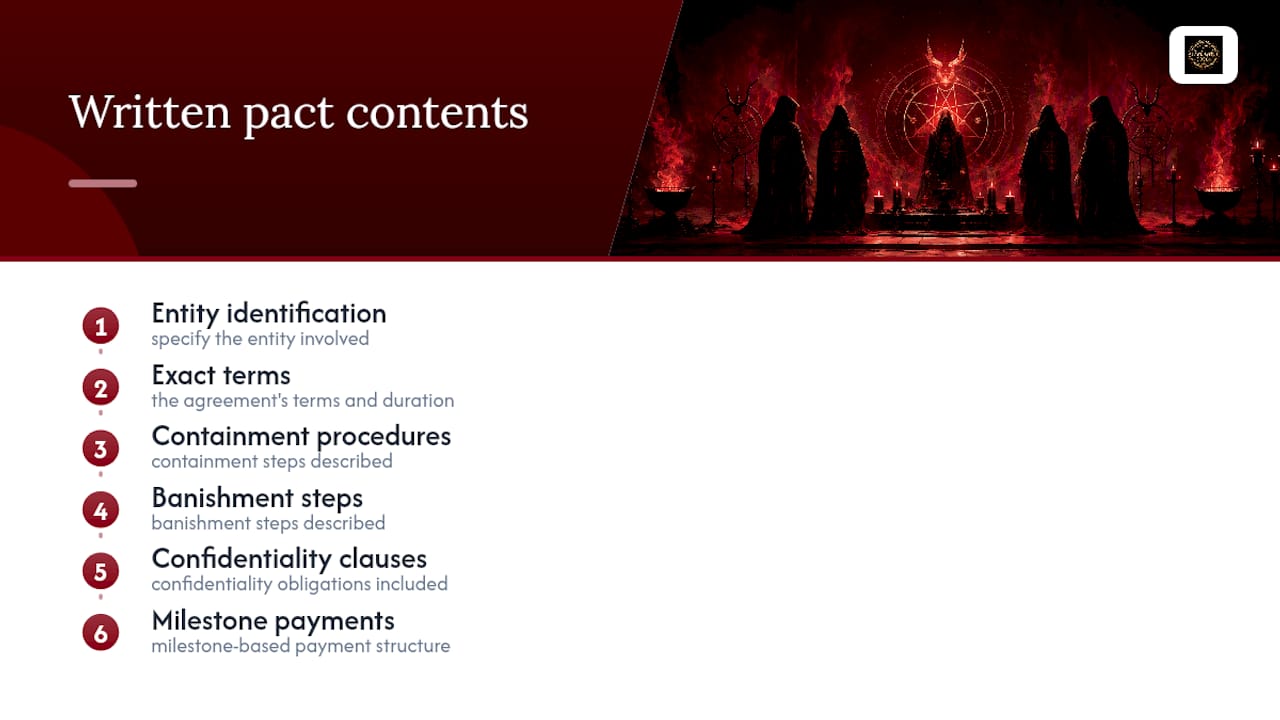
It should specify the entity involved, the exact terms and duration of the agreement, containment and banishment steps, confidentiality clauses, and a milestone-based payment structure.
Does Black Witch Coven offer pact and evocation services?
Yes, Black Witch Coven provides Goetic evocations, formal demonic pacts, and Luciferian ceremonial rites with documented containment protocols and post-ritual follow-up built into every engagement.
