
 New Years Eve Ritual 2026/2027 with Savannah
Nov
In this article, New Orleans witchcraft refers to results focused Left Hand Path ritual work: Goetic and Luciferian rites, pacts, and outcome driven spellwork rather than folkloric or tourist practice. Clients hire experienced covens like Black Witch Coven for pact making, prosperity work, protection, and reconciliation. Spirits such as Lucifer and Clauneck anchor much of this practice, and the goal is always a measurable change in the client’s circumstances.
Table of Contents
- Left-Hand Path and Goetia: the vocabulary you need before you hire anyone
- Ritual formats and the spirits behind results-focused work
- How to vet a professional coven or ritualist before you pay
- What to expect once you engage a witch
- Black Witch Coven: the practice behind this guide
- Where New Orleans fits into Left-Hand Path and Goetic practice
- What to weigh before engaging a spirit or signing a pact
- A step-by-step look at the engagement process
- Fit over force: a note on choosing rites deliberately
- How Black Witch Coven supports results-driven ritual work
- Sources
- FAQ
Left-Hand Path and Goetia: the vocabulary you need before you hire anyone
The Left Hand Path is not a single tradition. It is an umbrella covering Luciferianism, Thelema, chaos magick, and both theistic and atheistic currents, and the distinction matters because it shapes what a magician will actually do in your ritual. The Left-Hand Path of Magick frames the Left Hand Path as this kind of umbrella and argues that a professional consultation should pin down which current a witch works in before a spirit or method gets chosen. This is a separate conversation from Louisiana folk traditions or museum style tourist accounts of regional magick, which belong to a different subject entirely.
The Ars Goetia, the first book of the Lemegeton or Lesser Key of Solomon, catalogs 72 spirits along with assigned offices and seals, and that catalogue is where most practical ritual roles come from. A spirit’s “office” describes its traditional sphere of influence, which is what a magician uses to match an entity to your actual goal.
Two practice models dominate contemporary work:
- Ontological models treat spirits as independent entities with their own agency, approached through pact or petition.
- Symbolic or psychological models treat the same rites as structured tools for internal transformation, a reframing that traces partly to Crowley’s interpretive essays.
Neither model is more legitimate than the other. What matters is that your spell caster names which one they are using, because it changes how a pact is written and how results get evaluated.
Ritual formats and the spirits behind results-focused work
Professional Goetic and Luciferian practice draws on a short list of formats, each suited to different objectives.
-
Evocation and invocation: direct ritual contact with a named spirit, used for petitions or pact negotiation.
-
Pact work: a negotiated agreement, often with defined terms, offerings, and duration, used when a client wants a sustained working relationship with an entity.
-
Sigil, candle, and jar work: condensed symbolic rites suited to narrower, faster objectives like reconciliation or minor protection.
-
Maintenance subscriptions: recurring ritual attention that reinforces an earlier working, common for protection or prosperity goals that need upkeep.
The principal spirits in this field each carry a traditional office that shapes what clients typically request. Lucifer is associated with sovereignty, illumination, and initiation, making him a frequent choice for self-mastery or liberation workings. Andras, by tradition, governs discord and is often invoked in adversarial or domination contexts rather than gentle persuasion. Clauneck is tied to wealth and commerce, and operations built around him tend to target business growth, debt relief, or steady income. Astaroth carries associations with hidden knowledge and influence, useful when a client needs insight into a situation before acting on it.
A skilled witch matches the spirit’s office to the stated goal, then sets rite duration and any maintenance schedule around that goal rather than using a single generic ritual for every request.
Pro Tip: Ask a prospective spell caster which spirit’s traditional office matches your goal before you ask about price. The alignment matters more than the ritual’s dramatic appearance.
How to vet a professional coven or ritualist before you pay
Vetting a magician is a matter of clear questions and clear answers, not reputation alone.
- Check that the service description names the rite, the spirit or method involved, and the expected deliverable, rather than a vague promise of “powerful magick.”
- Ask which model the witch uses: ontological, symbolic, initiatory, or contractual, since this determines how the pact or rite is structured.
- Ask how results will be observed and over what timeframe, and insist on a concrete answer rather than an open ended “soon.”
- Ask what maintenance, if any, the working requires after the primary rite is complete.
- Confirm confidentiality practices and what, if anything, gets documented or shared with you afterward.
- Review the intake process: a magician who skips questions about your specific situation before quoting a price is skipping a step that affects outcomes.
Red flags include vague deliverables, secrecy about method when you’ve specifically asked for clarity, and promises that sound closer to theater than ritual craft. Positive signals include clearly organized service pages, documented case histories, and subscription maintenance options that show the witch expects ongoing results rather than a single dramatic event. Scholarship on Left-Hand Path antinomianism notes that transgressive elements in ritual function inside systems of identity and initiation, so for results driven work the useful question is which role the rite plays: devotional, contractual, initiatory, or strategic.
What to expect once you engage a magician
Professional engagement moves through a predictable sequence: intake and goal setting, ritual design, execution, immediate follow-up, and scheduled maintenance where relevant.
- Intake: the witch clarifies your goal, relevant background, and any constraints before selecting a rite.
- Design: the spirit, format, and timeline get chosen to match the stated goal.
- Execution and follow-up: the rite is performed, and the magician typically provides some account of what occurred.
- Maintenance: ongoing goals, particularly protection or prosperity, often call for recurring attention rather than a single rite.
Timelines vary by objective. Reconciliation work tends to show early indicators sooner than prosperity work, which often unfolds alongside practical action the client takes in parallel. Protection and legal workings frequently pair an initial rite with a maintenance period to reinforce the working as circumstances develop. None of this should be framed as guaranteed, and a witch who offers nothing but guarantees is offering theater rather than craft.
Documented ritual records paired with a maintenance program are among the more common service shapes for outcomes focused work, and clients should ask for both.
Outcomes are typically tracked through a combination of ritual records, client-observed indicators in daily life, and incremental markers tied to the original goal. When nothing shifts within the discussed window, the appropriate response is a follow-up consultation to adjust the rite or schedule an additional working, not abandoning the practice altogether.
Black Witch Coven: the practice behind this guide
A professional coven may have extensive experience providing Goetic pacts, Luciferian ritual work, and results-focused spellwork aimed at outcomes such as love, wealth, protection, and justice. The coven’s service catalog covers daemonic pact work, prosperity magick tied to spirits like Clauneck, monthly maintenance programs, and protection rites, each mapped to the categories discussed above.
Clients who want structured proof points should look for documented case outcomes and clear service descriptions when evaluating any spell caster, including this one, rather than relying on dramatic claims alone. The coven’s approach treats each engagement as a matched pairing of spirit, rite, and client goal rather than a one-size ritual applied regardless of circumstance.
Where New Orleans fits into Left-Hand Path and Goetic practice
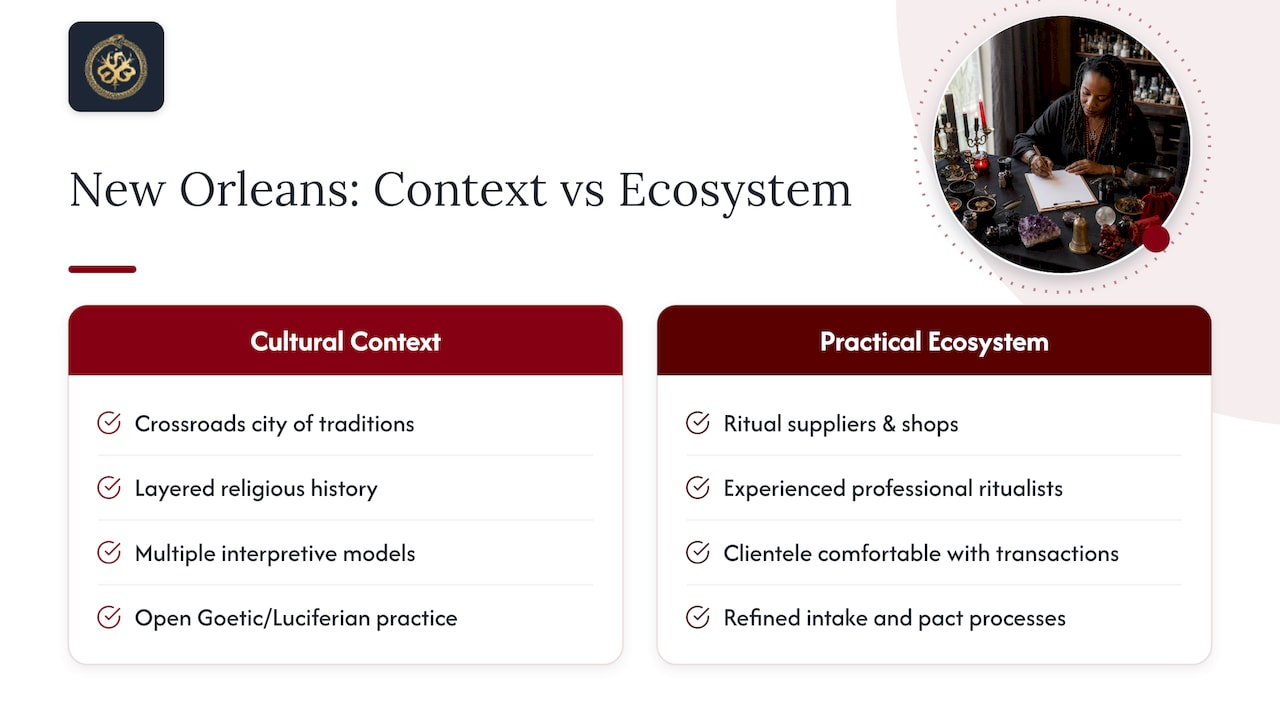
New Orleans has long functioned as a crossroads city, where competing spiritual currents settled alongside each other rather than displacing one another. That layered religious history created space for occultists working explicitly in Goetic and Luciferian traditions, distinct from the city’s better known folk practices, to operate openly as professional ritualists. Scholarship on Western esotericism describes Left Hand Path practice broadly as heterogeneous rather than monolithic, and New Orleans reflects that heterogeneity at a local level: multiple interpretive models coexist among magicians rather than one standardized approach.
The city’s reputation for occult commerce, built over more than a century, also created a practical ecosystem: ritual suppliers, experienced witches, and a client base comfortable discussing spiritual work in direct, transactional terms. That commercial infrastructure matters for results focused clients because it means established covens have had decades to refine intake processes, pact structures, and maintenance models rather than improvising from scratch. Contemporary Goetic and Luciferian practice in the city draws on that accumulated professional experience even when the specific rites trace back to older grimoire traditions like the Lemegeton.
What to weigh before engaging a spirit or signing a pact
Working with Goetic or Luciferian spirits is a serious undertaking that calls for clear thinking rather than impulsive decisions. A pact, by definition, establishes obligations on both sides, and a client who skips the terms discussion is entering an agreement without understanding what they owe.
The practical risks are mostly about mismatched expectations rather than anything mystical: choosing a spirit whose office does not match the goal, committing to a maintenance schedule you cannot keep, or working with a magician who will not specify their model. Academic work on antinomianism in Left-Hand Path practice situates transgressive or boundary-crossing elements of ritual inside structured systems of initiation and identity, which is useful context for deciding whether a particular rite’s intensity actually serves your stated goal or simply adds drama without function.
Clients considering a pact should think through its duration, what offerings or ongoing attention it requires, and what happens if their goal shifts partway through. A witch who walks through these terms before the ritual, rather than after, is giving you the information needed to make a considered decision rather than a reactive one.
A step-by-step look at the engagement process
The path from first contact to completed ritual follows a consistent shape across most professional practices.
First, an initial consultation establishes the goal, relevant background, and any time constraints. Second, the magician proposes a specific rite, naming the spirit or method and the practice model being used, ontological, symbolic, or contractual. Third, pricing and terms are confirmed, including any maintenance requirements tied to the objective. Fourth, the witch schedules the ritual date and communicates what materials or information, if any, are needed from the client beforehand. Fifth, the rite is performed, typically with some form of record kept by the magician. Sixth, the client receives follow-up communication describing what occurred and what indicators to watch for. Seventh, if the goal calls for ongoing support, a maintenance schedule or subscription service continues the working at defined intervals.
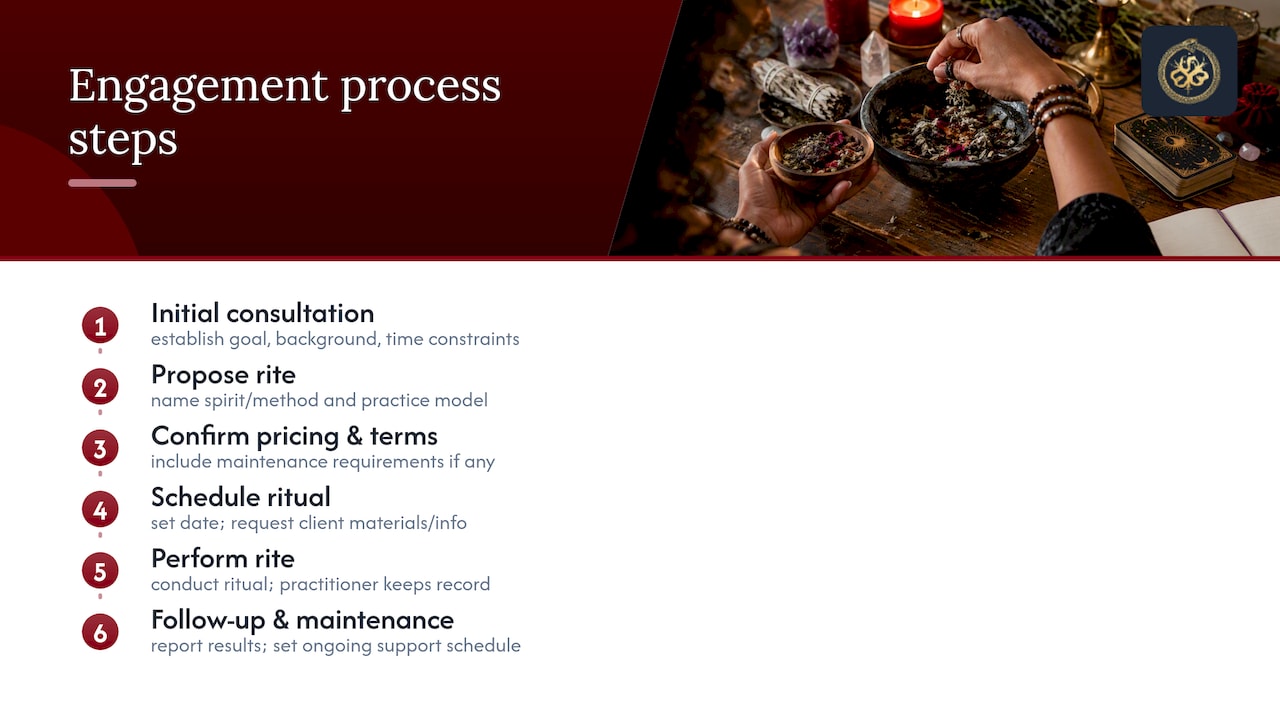
Each step exists to keep the rite aligned with the original goal, and skipping steps, particularly the initial consultation or the terms discussion before a pact, is usually where mismatched expectations begin. A witch who moves straight from first contact to ritual without clarifying the model or the deliverable is skipping work that protects both parties.
Fit over force: a note on choosing rites deliberately
The biggest mistake in results focused ritual work isn’t picking the wrong spirit. It’s picking a dramatic rite because it sounds powerful, instead of a rite that actually matches the goal. Andras invoked for a prosperity goal, or a quiet sigil working attempted for a legal crisis that needs sustained attention, both fail for the same reason: mismatch, not weak magick.
New Orleans has no shortage of occultists with real experience in Goetic and Luciferian work, and that experience shows up as precision, not spectacle. Document what you ask for, document what happens, and follow up methodically rather than treating one ritual as the end of the process.
— Black Witch Coven
How Black Witch Coven supports results-driven ritual work
Clients who want a pact with Lucifer, a prosperity working with Clauneck, or sustained protection through a maintenance plan each have a specific service built around that goal rather than a generic catalog entry.
- Daemonic pact and prosperity work covers Goetic and Luciferian pacts, including wealth operations tied to Clauneck’s traditional office.
- Monthly and VIP programs provide the maintenance structure that ongoing protection or prosperity goals typically require.
- Recurring subscription services keep a working reinforced between major rites.
Before an initial consultation, it helps to have a clear statement of your goal, a preferred timeline, any relevant background on the situation, and a rough budget range in mind. From there, Black Witch Coven can match the rite, spirit, and schedule to what you’re actually trying to achieve.
Sources
- The Lesser Key of Solomon
- The Book of the Goetia (Hermetic Library – Crowley edition)
- The Left-Hand Path of Magick (Angela Puca)
- Henrik Bogdan — University of Gothenburg profile
FAQ
What does “New Orleans witchcraft” mean in this guide?
Here, it refers to Left Hand Path Goetic and Luciferian ritual work: pacts, evocation, and outcome focused spellwork aimed at goals like prosperity, protection, and reconciliation. It does not refer to folk or tourist oriented practices.
What is the Ars Goetia and why does it matter to a magician?
The Ars Goetia is the first book of the Lemegeton, listing 72 spirits with assigned offices and seals used in evocation traditions. Magicians use those offices to match a spirit’s traditional sphere of influence to a client’s specific goal.
Is a pact with a spirit treated as literal or symbolic?
Both models exist in contemporary practice: some witches work with spirits as independent entities, while others, following Crowley’s reframing, treat the same rites as symbolic or psychological tools. A professional spell caster will tell you directly which model they use before the ritual begins.
How much does professional ritual work with Black Witch Coven cost?
Pricing depends on the specific service: individual spell and pact work generally runs in the low hundreds of dollars, while VIP three-month programs and ongoing subscriptions are priced separately for sustained support. Exact current pricing is listed on each service page.
How long does it take to see results from Goetic or Luciferian ritual work?
Timelines vary by objective and are never guaranteed, with reconciliation work often showing early indicators sooner than prosperity or legal workings. Many occultists pair an initial rite with a maintenance schedule and ask clients to track observed indicators over the following weeks.
