
 New Years Eve Ritual 2026/2027 with Savannah
The Magic of Hinduism
Hinduism is one of the world’s oldest and most diverse living religious traditions. It encompasses philosophy, devotion, meditation, ritual, sacred storytelling, yoga, temple worship, astrology, mantra, deity practice, and many forms of spiritual discipline.
For Black Witch Coven, Hinduism offers a profound way to explore sacred darkness, transformation, protection, death and rebirth, shadow work, and the mysteries of the unseen.
We do not include Hinduism because it is “evil,” demonic, or inherently dark. Nor do we treat Hindu deities as interchangeable figures for Western occult practice. Hinduism is a living religion with its own communities, lineages, teachers, ethics, and sacred responsibilities. Our purpose is to approach its magical and mystical dimensions with respect, humility, and care.
The sacred is not always gentle
Many spiritual traditions focus primarily on divine qualities such as beauty, peace, love, and healing. Hinduism also recognizes that the sacred may appear through destruction, death, fire, wilderness, battle, night, and the dissolution of the ego.
This does not necessarily make these forces evil.
In many Hindu traditions, destruction is part of the natural cycle of existence. What ends may create space for what is new. What is frightening may reveal hidden truth. What appears chaotic may be part of a larger process of transformation.
This understanding resonates with the work of witchcraft, particularly practices involving:
- Shadow work and self-examination
- Protection and spiritual boundaries
- Death and rebirth symbolism
- Ancestral and liminal spaces
- Releasing old patterns
- Confronting fear
- Personal transformation
- The mysteries of night, wilderness, and the unseen
Kālī and sacred darkness

Kālī is one of the most recognizable fierce forms of Hindu divinity. She is associated with time, death, transformation, liberation, and the destruction of illusion.
Her imagery can be intense: dark skin, wild hair, weapons, severed heads, blood, and cremation-ground symbolism. These images are not simply expressions of evil. They may represent the destruction of ego, ignorance, attachment, fear, and false identity.
Kālī’s darkness can be understood as the darkness of:
- The infinite cosmos
- The unknown
- The womb of creation
- The night
- The cremation ground
- The truth beyond appearances
- The space between one life phase and another
She is often understood not only as a destroyer, but also as a mother, protector, and liberating force. Her fierceness can be directed toward the forces that bind, oppress, or deceive—not toward those who approach her with sincerity and devotion.
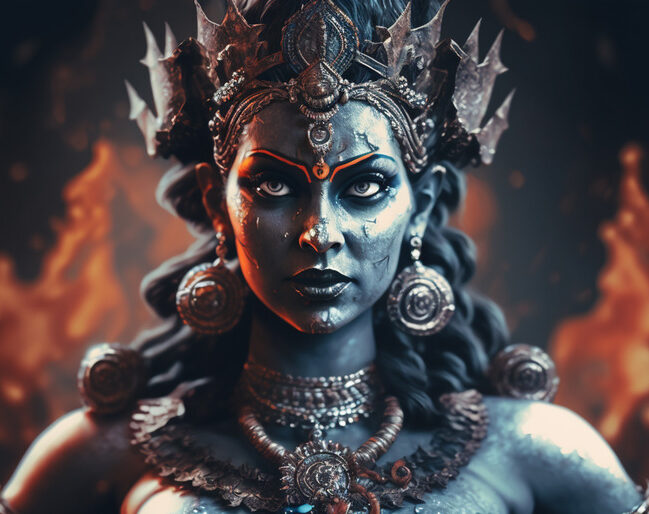
For the witch, Kālī may inspire questions such as:
- What am I ready to release?
- Which fears are controlling my life?
- What illusion is preventing my growth?
- What must end before something more authentic can begin?
- Can I face transformation without trying to control every part of it?
Durgā: protection and divine strength
Durgā is another powerful form of the Goddess. She is commonly portrayed as a warrior riding a lion or tiger, carrying weapons given to her by the gods. Her story centers on the defeat of forces that threaten cosmic and social order.
Durgā represents courage, protection, strength, justice, and the ability to confront destructive forces. Her power is not passive. She demonstrates that compassion and protection can sometimes require firm boundaries and decisive action.
Her symbolism may speak to magical practices centered on:
- Warding and protection
- Courage during difficult transitions
- Defending one’s home or spiritual space
- Overcoming oppression
- Restoring balance
- Claiming personal authority
Yet Durgā should not be reduced to a generic “warrior goddess” archetype. She is a revered Hindu deity with specific religious, cultural, and devotional significance.
Bhairava and the threshold
Bhairava is a fierce form associated with Śiva. He is connected with time, death, destruction, the limits of social order, and places considered spiritually or physically dangerous. In some traditions, he is understood as a guardian of sacred spaces and thresholds.
Bhairava’s symbolism reflects the idea that spiritual power may be encountered at the edges of ordinary life—in the wilderness, at night, in places of death, and in moments when familiar identities fall away.
This threshold quality has a natural point of connection with witchcraft. Witches often work symbolically with boundaries:
- The boundary between life and death
- The boundary between the ordinary and the sacred
- The boundary between fear and courage
- The boundary between the known and the unknown
- The boundary between an old self and a new one
Bhairava reminds us that thresholds deserve respect. They are not places to enter carelessly, and they are not merely aesthetic settings for occult imagery.
Tantra and transformation
Tantra refers to a wide range of Hindu and Buddhist traditions involving ritual, meditation, mantra, visualization, sacred diagrams, deity practice, initiation, and disciplined spiritual transformation.
In popular Western culture, Tantra is often misunderstood as simply “dark magic,” sexuality, or secret spellcraft. These simplified ideas do not accurately represent the depth and diversity of Tantric traditions.
Some Tantric paths engage directly with subjects that ordinary religious practice may avoid: death, desire, fear, the body, impurity, the cremation ground, and the forces of attachment. The aim is not necessarily to glorify these things or to cause harm. In many cases, the goal is to transform fear and limitation into awareness, power, and liberation.
This can be compared—carefully—to aspects of witchcraft that explore:
- The shadow and the taboo
- Death and rebirth
- The body as a source of spiritual knowledge
- Fierce protection
- Ritual concentration
- Devotion to powerful divine beings
- The transformation of suffering and fear
However, Hindu Tantra has its own lineages, initiations, practices, and theological foundations. It should not be treated as a collection of techniques available for extraction from their cultural and religious context.
Are Hindu gods “dark gods”?
The phrase “dark gods” can be useful in some occult conversations, but it can also create misunderstandings.
Hindu deities associated with death, destruction, night, battle, or the cremation ground are not automatically evil. Their fierce appearance does not always indicate moral darkness. A terrifying form may represent protection, liberation, the destruction of ignorance, or the removal of obstacles.
Within Hinduism, darkness may be:
- Transformative rather than malicious
- Protective rather than threatening
- Mysterious rather than corrupt
- Destructive of illusion rather than destructive of life
- Part of a cosmic cycle rather than a force opposed to goodness
For Black Witch Coven, the important connection is not the idea that Hinduism contains “darker gods” in the same sense that some Western occult systems discuss underworld or infernal beings. The connection is the recognition that destruction, death, fear, and mystery can possess spiritual meaning.
A respectful approach
Hinduism is not an aesthetic, an occult prop, or a set of exotic symbols. It is a living religious tradition practiced by millions of people around the world.
When exploring Hindu philosophy, mythology, ritual, or deity symbolism, we aim to:
- Learn from reliable Hindu sources and teachers
- Avoid presenting Hindu deities as demons or evil beings
- Avoid treating sacred images as decorative occult tools
- Avoid copying rituals without understanding their context
- Recognize that some practices require initiation or guidance
- Distinguish personal inspiration from traditional religious practice
- Credit the communities and lineages from which these teachings come
- Approach the subject with humility rather than entitlement
A respectful spiritual practice begins with listening. Not every mantra, yantra, ritual, offering, or deity practice is appropriate for casual experimentation. Some forms of worship are deeply personal, culturally specific, or traditionally transmitted through a teacher.
Hinduism and Black Witch Coven
The relationship between Hinduism and Black Witch Coven is found in a shared interest in the transformative power of the unseen—not in the belief that the two traditions are identical.
Hindu traditions offer rich teachings about:
- The cycles of creation, preservation, and destruction
- The relationship between body, mind, spirit, and cosmos
- The power of sound, intention, and disciplined ritual
- The many forms through which divinity may appear
- The destruction of ego and illusion
- The sacredness of death and renewal
- Fierce protection and spiritual courage
- The possibility of liberation through transformation
These themes can deepen our understanding of witchcraft while reminding us that darkness is not always synonymous with evil.
Sometimes darkness is the place where hidden things become visible. It is the fertile soil beneath the surface, the silence before change, the night in which the stars appear, and the threshold through which an old self must pass before a new one can emerge.
Our intention
Black Witch Coven approaches the magical dimensions of Hinduism as a subject of study, reflection, and respectful dialogue. We honor the complexity of the tradition and recognize that we are engaging with a living religion—not claiming ownership over it.
We are drawn to the fierce, protective, and transformative aspects of Hindu spirituality because they speak to the realities of magical practice: endings, uncertainty, fear, power, devotion, and rebirth.
The lesson is not that darkness is evil.
The lesson is that darkness, approached with wisdom and respect, can become a teacher.
Abundance & Transformation
My Relationship with Lakshmi and Saraswati
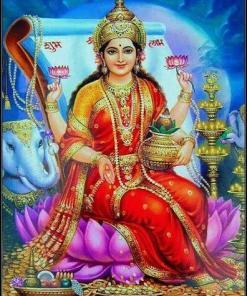
For more than twenty-five years, Lakshmi and Saraswati have been part of my spiritual life and personal practice. My relationship with these goddesses has developed over decades through devotion, prayer, study, ritual, experience, and a willingness to listen to the lessons they have brought me.
I have shared parts of this journey with my audience through blogs and videos because their presence in my life has been continuous and deeply meaningful. These are not simply figures I discovered through books or symbols I chose because they fit an aesthetic. They are divine beings with whom I have built an enduring relationship—one that has shaped the way I understand abundance, beauty, health, knowledge, wisdom, business, creativity, and love.
Lakshmi has taught me to recognize abundance not only as financial prosperity, but also as beauty, nourishment, opportunity, generosity, self-worth, and the ability to receive. Through my work with her, I have learned that prosperity carries responsibility. It asks us to care for what we are given and to understand that true abundance is not limited to material possessions.
Saraswati has guided me through knowledge, learning, communication, creativity, and wisdom. Her presence has encouraged me to continue studying, asking questions, expressing myself, and seeking deeper understanding. She has reminded me that knowledge is not merely information—it is something that can transform the way we see ourselves and the world around us.
Both goddesses have brought blessings into my life, but they have also brought lessons. They have challenged me to grow, to become more discerning, to honor my gifts, and to remain grateful. Their influence has touched my business, my beauty and health practices, my creative work, my education, and my understanding of spiritual power.
“Lakshmi and Saraswati have blessed my life with more than success or knowledge. They have taught me how to receive, how to create, how to learn, how to recognize beauty, and how to use my gifts with greater wisdom. I have shared my journey with them for many years because their love and guidance have been real, continuous, and transformative in my life.”
I share this relationship with respect and humility. Hinduism is a living religious tradition with its own histories, communities, practices, and lineages, and I do not claim to speak for all Hindus or define these goddesses for anyone else. I can only speak honestly about my own experience and the ways Lakshmi and Saraswati have walked with me.
Their presence in my practice also reminds me that spiritual power cannot be placed into a simple category of “light” or “dark.” The divine may be experienced through prosperity, beauty, knowledge, fierce protection, destruction, mystery, healing, or transformation. What matters is the relationship, the reverence, the responsibility, and the lessons received.
For me, Lakshmi and Saraswati belong within this work because they have been part of my work, my life, and my spiritual path for more than twenty-five years.
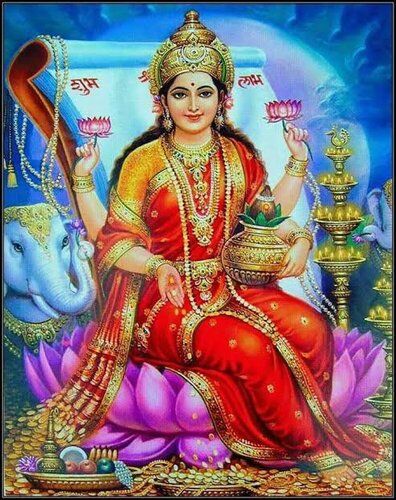
Lakshmi
Hindu Goddess