
 New Years Eve Ritual 2026/2027 with Savannah
Blog, Demonolatry, Demons
Demonolatry vs Demonology: Worship, Study, and the 72 Spirits
Dec
Demonology is the study and cataloguing of demonic entities across folklore, theology, and grimoire literature. Demonolatry is the devotional worship or reverence of those same entities through ritual, offerings, and pacts. One is analysis; the other is practice. Whether you’re researching hierarchies in the Lesser Key of Solomon or building an altar for a patron entity, knowing which category you’re in changes everything about how you read a text and how you approach the work.
Table of Contents
- Demonology: Scope, Typical Activities, and Where You’ll See It
- Demonolatry: Devotional Forms, Rites, and How Witches Describe It
- Historical and Etymological Context: Why Meanings Shifted
- Canonical Names and Texts You’ll Keep Running Into
- Practical Differences: Methods, Aims, and Outcomes
- A Witch’s View on Telling Study Apart from Devotion
- How to Decide Which Label Fits: A Quick Checklist
- Why This Distinction Actually Matters
- Sources
- FAQ
Demonology: Scope, Typical Activities, and Where You’ll See It
Demonology is the academic, theological, or historical study of demons, focusing on their origins, classification, and depiction across folklore, mythology, and religious texts. It’s descriptive by nature. A demonologist catalogs names, ranks entities within hierarchies, and traces how a given figure moved through different cultures and centuries. The work doesn’t require an altar or a pact. It requires patience, primary sources, and a willingness to sit with contradictory accounts.
Grimoire lists such as those in the Lesser Key of Solomon serve a dual function here. Researchers cite the same seventy-two spirit catalog that occultists use as a working inventory. That overlap is precisely why demonology and demonolatry get confused so often. A person analyzing the Goetia’s descriptions of rank and seal is doing demonology. A person invoking one of those same seventy-two spirits for a working has crossed into demonolatry, even though they opened the same book to get there.
If you’re approaching this from the study side, a few practical entry points help:
- Read the Lesser Key of Solomon alongside a modern annotated translation rather than a raw scan of the original manuscript.
- Cross-reference named entities against multiple grimoires. Names shift meaning depending on the source.
- Treat dictionary and encyclopedic definitions as your baseline, then layer in primary text analysis once the vocabulary is solid.
Demonolatry: Devotional Forms, Rites, and How Magicians Describe It
The noun “demonolatry” entered English in the mid-1600s, derived from the Latin daemonolatria, and major lexica define it plainly as the worship of demons. Collins and Dictionary.com confirm the same core definition and trace its recorded use back to the same period, giving the term three centuries of continuous lexical grounding before modern occultism ever touched it.
What that “worship” looks like in practice varies widely. Some demonolators build dedicated altars with offerings of incense, food, or drink. Others favor devotional prayer or direct invocation aimed at building a working relationship rather than groveling submission. FAQs are explicit on this point: reverence in demonolatry is not the same as the Abrahamic model of worship, where the worshiper is subordinate by design.
Common devotional forms include:
- Personal or shrine-based altars dedicated to a specific patron entity.
- Regular offerings, ranging from simple libations to elaborate ritual meals.
- Formal pacts that establish ongoing terms of exchange rather than one-time requests.
- Devotional calendars tied to lunar phases or entity-specific correspondences.
The line between reverence and transactional ritual work is where most confusion starts, and it’s worth sitting with rather than rushing past.
Historical and Etymological Context: Why Meanings Shifted
The word “demon” carries baggage that has nothing to do with its origin. Here’s how the meaning traveled:
- Greek daimon. The original term described a neutral or even benevolent intermediary spirit, closer to a guardian or genius than a villain.
- Late antique reinterpretation. As Hellenistic and early Christian writers absorbed and reframed older cosmologies, daimons increasingly took on hostile, adversarial connotations.
- Medieval demonization. Church authorities systematically recast pre-Christian deities and local spirits as demons, a process that Wikipedia’s overview of demonology documents as historically contingent rather than inevitable.
- 17th-century lexical entry. “Demonolatry” appears in English during this period, initially used in theological polemic against perceived demon worship before occultists later adopted it descriptively.
- Modern reclamation. Contemporary Left-Hand Path witches often reclaim these older, demonized figures deliberately, treating the “demonic” framing as a useful lens rather than an insult.
That last point matters more than most casual readers assume. The “evil” label is largely a post-antiquity theological add-on, not an inherent property of the entities themselves.
Canonical Names and Texts You’ll Keep Running Into
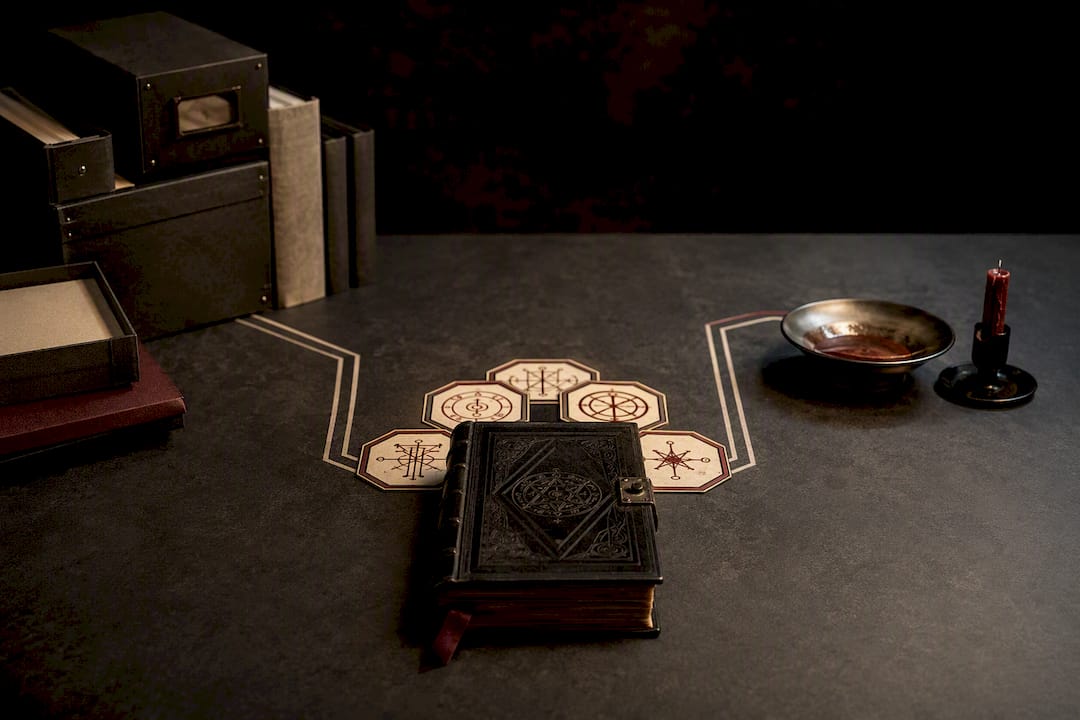
Certain names and texts show up constantly in both scholarly and devotional writing, and knowing the difference between how each camp treats them saves a lot of confusion. The Goetia, the first section of the Lesser Key of Solomon, catalogs seventy-two spirits with their seals, ranks, and reported powers. Academics treat it as a primary historical document worth textual criticism. Occultists treat the same list as a working directory of entities to petition or invoke.
Astaroth is a prime example of how one name serves two purposes. Historically linked to the Canaanite goddess Astarte, Astaroth appears in Goetic catalogs as a duke of Hell, and modern demonolators frequently choose the demonized form deliberately over the older goddess form. The choice is pragmatic and experiential, built around the resonance a magician wants, not a claim about which name is historically “correct.”
Lucifer occupies similar dual territory: a subject of theological and literary study for centuries, and a primary patron for countless Luciferian magicians today.
Statistic worth noting: the mid-1600s date the Oxford English Dictionary assigns to demonolatry’s first English usage means the word predates most of the grimoire literature circulating in modern occult bookstores by decades, if not longer.
- Study the Goetia through an annotated scholarly edition for hierarchy and translation notes.
- Read Astaroth and Lucifer entries in both encyclopedic and occult sources to see the split treatment firsthand.
Practical Differences: Methods, Aims, and Outcomes
Demonology and demonolatry don’t just differ in definition. They differ in what success looks like. A demonologist’s success criterion is accuracy: does the analysis hold up against primary sources and cross-cultural comparison? A demonolator’s success criterion is result and relationship: did the offering land, did the pact hold, did the working produce the outcome sought?
The methods split accordingly:
- Demonology leans on textual analysis, archival comparison, and translation work.
- Demonolatry leans on ritual invocation, offerings, devotional timing, and pact negotiation.
- Popular explainers covering the difference between demonology and demonolatry consistently draw this same study-versus-worship line, which suggests it’s the practical consensus rather than one blogger’s opinion.
Where it gets genuinely blurry is grimoire study. A magician reading the Ars Goetia to understand a spirit’s sigil before an invocation is doing both at once: scholarly preparation feeding directly into devotional or magical action. The label depends on intent and outcome, not the book on the shelf.
Pro Tip: When you’re not sure which category a source falls into, check whether it asks anything of you. A demonology text asks you to understand. A demonolatry text asks you to do something, an offering, an invocation, a pact. That single tell sorts most ambiguous material fast.
A Witch’s View on Telling Study Apart from Devotion
Black Witch Coven works directly with entities including Lucifer, Andras, Clauneck, and Astaroth as part of ongoing ritual practice, not academic exercise. That distinction shapes how we read every source that crosses our desk.
A text is doing demonology when it spends more time on etymology, comparative mythology, or manuscript history than on procedure. A text is doing demonolatry the moment it gives you a working: an offering schedule, an invocation script, terms for a pact. The Lesser Key of Solomon straddles both, which is exactly why so many readers get confused by it.
When we evaluate naming a patron, the question isn’t “which book mentions this entity most often.” It’s whether the source treats the entity as a subject to be described or a presence to be engaged. Astaroth described in a footnote is demonology. Astaroth given an altar and a Tuesday offering is demonolatry.
When evaluating any spell caster’s claims, look for specifics: named entities, described methods, and a clear account of what devotion or ritual actually involved, not vague spiritual language standing in for real practice.
Pro Tip: Ask any source, book or blogger alike, what happens after the definition. If nothing does, you’re reading demonology. If something is asked of you, you’ve found demonolatry.
How to Decide Which Label Fits: A Quick Checklist
Run any book, blog post, or practice through these five questions:
- Does the source cite primary texts and translation notes? That’s a demonology signal.
- Does it include ritual instructions, an altar setup, or a request for offerings? That’s a demonolatry signal.
- Is the stated goal understanding or outcome? Understanding points to study; outcome points to devotion or magick.
- Does the author describe a personal working relationship with a named entity? If so, you’re reading occult material.
- Is the entity discussed as a historical or literary figure, or as a present, engageable presence? The tense alone often gives it away.
Students of history should start with encyclopedic overviews and annotated grimoire editions before moving into occult commentary. Anyone leaning toward practice benefits from pairing that same historical grounding with structured guidance, since invocation without preparation tends to produce sloppy, unfocused results. Study first. Practice deliberately.
Why This Distinction Actually Matters
We built Black Witch Coven’s approach around treating these as genuinely different disciplines rather than interchangeable jargon. Getting the label right changes what you read, what you expect, and what you’re willing to do next. If demonolatry is the path calling you, explore Left-Hand Path guidance suited to where you’re starting from.
Sources
Start with the Wikipedia demonology overview for historical scope and hierarchy context, then the OED entry on demonolatry for etymology and earliest recorded use. Cross-check definitions against Dictionary, and read the Demonolatry London FAQ for a magician’s framing of reverence versus worship.
- Demonology – Wikipedia
- demonolatry, n. – Oxford English Dictionary
- Demonolatry FAQs – Demonolatry London
FAQ
Is Demonolatry a Religion?
Demonolatry functions as a devotional practice or belief system for many witches, though it’s not a single organized religion with a unified doctrine. Some practice it as a standalone spiritual path; others fold it into a broader Left-Hand Path or Luciferian framework.
What Are the Five Types of Demons?
There’s no single canonical “five types” system across demonology; classifications vary by grimoire, culture, and era, with the Goetia alone listing seventy-two distinct spirits by rank and seal.
Did King James Write Demonology Before or After the Bible?
King James VI of Scotland wrote his treatise Daemonologie long after the Bible was compiled; his work reflects theological anxieties of his time about witchcraft, not the Bible’s demon references.
Do Christians Believe in Demonology?
Many Christian traditions engage with demonology as a theological framework for understanding evil and spiritual conflict, treating demons as fallen or malevolent entities rather than as neutral or worthy of devotion.
