
 New Years Eve Ritual 2026/2027 with Savannah
Blog, Chaos Magic, Demonolatry, Demons, Luciferianism, Working With Demons
Integrating Demon Work Into Modern Life: A Practitioner’s Guide
Jan
Integrating demon work into modern life is practical, repeatable, and done every day by disciplined Goetic and Luciferian practitioners. The first step is not a ritual. It is building the foundational competence to work safely before you invoke anything. Start there.
Before you proceed:
- Complete a minimum training baseline: sigil literacy, ritual banishing, and basic containment planning
- Begin a consecration cycle for your tools before any entity contact
- Establish an emergency unbinding protocol in writing before your first working
Warning: Demonic work carries real psychological, relational, and legal risks. You are solely responsible for outcomes. If you experience mental health distress, consult a licensed mental health professional. If a working spirals, stop immediately using your pre-written unbinding protocol.
Table of Contents
- What does integrating demon work into modern life actually require?
- How do you manage grimoires, consecration cycles, and sigil practice?
- What daily and weekly practices actually fit a modern schedule?
- How do you protect yourself and contain a working?
- How do you structure a pact that actually holds?
- Lucifer, Clauneck, Andras, and Astaroth: working profiles
- How do you diagnose and fix a ritual that failed?
- When does hiring a professional make sense?
- Key Takeaways
- The results-first view on demon work integration
- Useful sources for further research
- FAQ
What does integrating demon work into modern life actually require?
Luciferian practice frames magick as a disciplined, methodical path built on self-mastery, logic, and slow, habitual work. Habit cycles of multiple weeks are recommended for internal change before attempting external workings. That framing matters because most failures in Goetic and demonolatry practice trace back to skipped foundations, not weak intent.
The realistic training roadmap looks like this:
- Initial phase: Study primary texts (the Ars Goetia, Liber Falxifer, Ford’s Luciferian Witchcraft), master ritual banishing, and develop sigil literacy
- Next phase: Begin consecration cycles, keep a dedicated grimoire, and run low-stakes workings with careful logging
- Advanced phase: Introduce pacts, escalate to more demanding entities, and refine based on documented outcomes
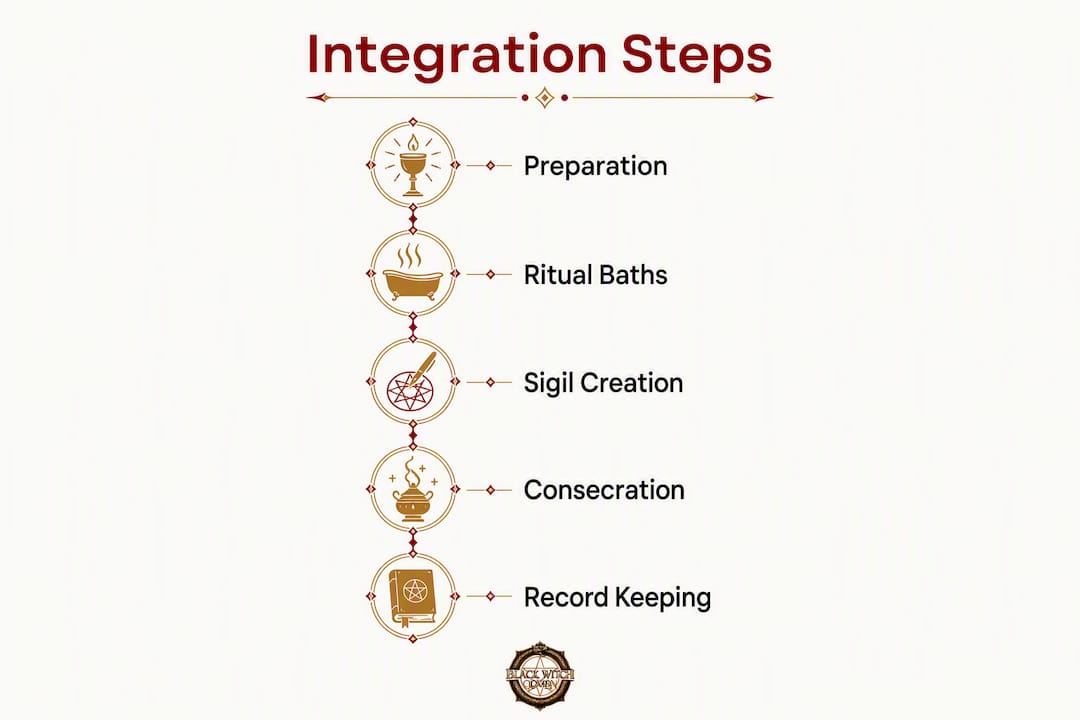
Minimum competence before any entity contact: ritual baths, banishing fluency, sigil creation and charging, record-keeping discipline, and a written containment plan. Grimoire work has real consequences, and the practitioner is the primary safety net. No entity will protect you from your own unpreparedness.
Pro Tip: Treat your path as a scientific experiment. Form a hypothesis, run the ritual, log the result, and iterate. Reproducibility is the standard.
How do you manage grimoires, consecration cycles, and sigil practice?
Dedicated ritual books per spirit system are not optional. Keep one book for Goetic workings and a separate volume for Luciferian rites. Color-code covers or use distinct bindings. Consecration cycles tied to planetary day and hour are the standard in serious Solomonic-adjacent practice. If your schedule cannot accommodate seven consecutive days, map the cycle across two weekends using planetary hours as anchor points.

Multi-day preparation builds what experienced practitioners call magical momentum: ritual baths, liturgical recitations, fasting windows, and memorization fill the preparation period and condition the operator as much as the space. A 24-hour fast before a major conjuration, combined with a purificatory bath and Psalm recitation, is documented across Solomonic traditions for good reason.
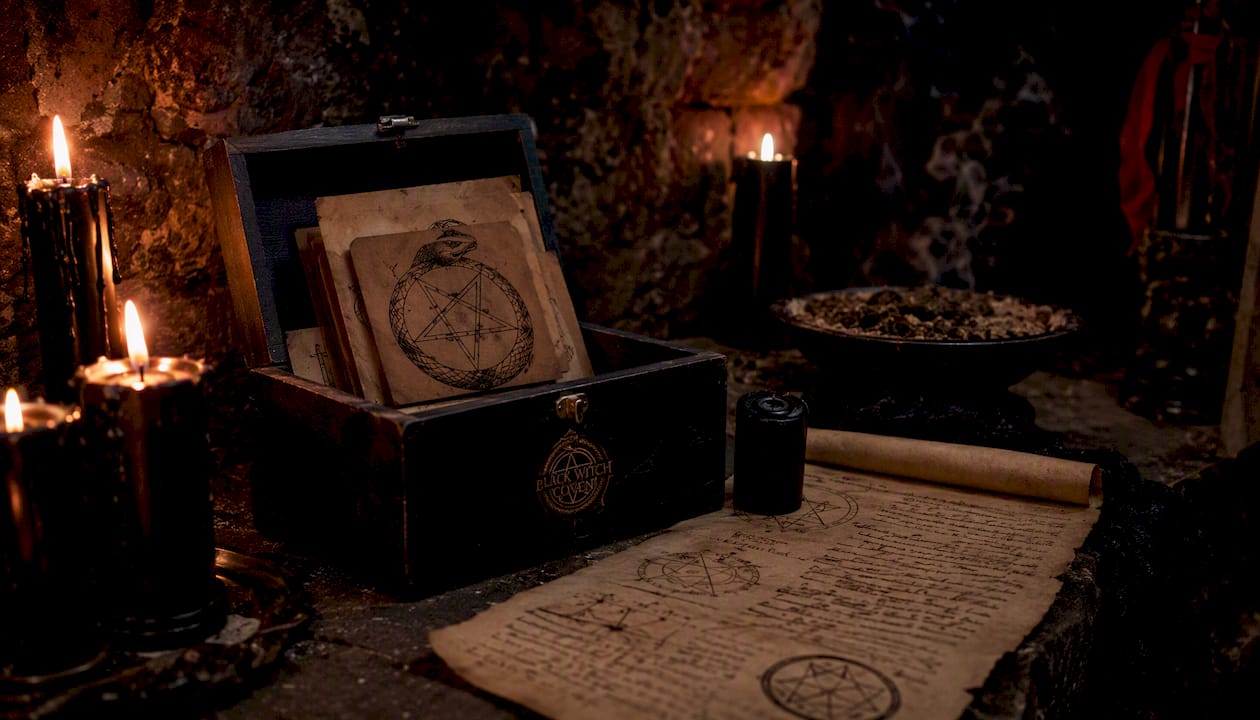
For sigil work in a modern apartment or shared home, use portable lamens on card stock. Store them in a locked box or between book pages. A small altar on a shelf with a cloth cover is functionally invisible to most visitors.
Ritual log entry template:
| Field | What to record |
|---|---|
| Date and planetary hour | Exact time, day, and corresponding planet |
| Entity and working goal | Spirit name, stated objective, and pact reference if applicable |
| Preparation completed | Baths, fasting, consecrations, banishings performed |
| Ritual observations | Sensory phenomena, emotional shifts, unexpected events |
| Outcome metrics | Measurable result, timeline, and deviation from expectation |
| Next action | Repeat, adjust, escalate, or close |
Pro Tip: Use summoning symbols and sigils as the anchor for each grimoire entry. A sigil drawn at the top of a log page links the record to the working instantly.
What daily and weekly practices actually fit a modern schedule?
Micro-rituals are the backbone of consistent demon work integration. A five-minute morning offering, a sigil refresh during a commute, or a mental consecration in the shower before a high-stakes meeting are all legitimate practice. The key is intentionality and consistency, not duration.
- Morning: Light a candle at your altar, state your working’s intent aloud, and close it within five minutes
- Commute or transit: Visualize the active sigil and mentally reaffirm the pact terms or working goal
- Weekly: Full altar maintenance, fresh offerings, and a brief ritual log review every Sunday or on the relevant planetary day
For altar setup on a budget, a single black cloth, a candle, and a printed sigil constitute a functional working space. Travel practitioners use a small tin or pouch with a folded sigil, a tea light, and a vial of offering oil.
Dream-bridge work is underused by modern practitioners. Before a major conjuration, spend three to five nights requesting spirit contact in the hypnagogic state. Ask the entity about ritual feasibility and setup. This pre-consultation reduces surprises and refines your approach before you commit to a full working.
Pro Tip: Chain rituals: close one working formally before opening the next. Overlapping active workings with different entities creates interference patterns that are difficult to diagnose.
How do you protect yourself and contain a working?
Layered protection is non-negotiable. A single banishing is not a containment strategy.
- Layer 1: Daily Lesser Banishing Ritual of the Pentagram or equivalent, performed before and after any working
- Layer 2: Physical barriers: salt lines, iron, or black tourmaline at entry points of your working space
- Layer 3: Psychological conditioning: maintain clear mental boundaries between ritual space and daily life; do not discuss active workings with uninitiated people
- Layer 4: Legal awareness: in the United States, no ritual activity exempts you from civil or criminal liability for actions taken in connection with a working
Containment protocols belong in writing before you begin. Every working should have a temporal limit (“this agreement is active for 90 days”), a service clause (“the entity is bound to the stated goal only”), and a sigil-based binding that can be physically destroyed to terminate the operation.
If a working produces unintended escalation, stop all offerings immediately, perform a full banishing, and execute your emergency unbinding protocol. Do not attempt to renegotiate mid-crisis without prior experience in that type of operation.
Pro Tip: A psychic shield working run in parallel with any aggressive or high-stakes operation is standard practice, not optional insurance.
How do you structure a pact that actually holds?
A pact is a formal agreement, not a wish. Every clause matters.
Core pact structure:
- Intent clause: State the specific, measurable outcome requested
- Reciprocity clause: Name what you offer in return (time, devotion, material offerings, a specific act)
- Term: Define the active period with a hard end date
- Limits clause: State explicitly what the entity is NOT authorized to affect
- Exit clause: Define the cancellation procedure and what constitutes breach
- Witness/recording: Sign, date, and store in your grimoire; photograph for backup
Sealing mechanisms vary by tradition. Common approaches include burning a written pact after verbal recitation, pressing a blood or oil seal onto the document, and performing a seven-day consecration cycle over the sealed agreement. Verbal formulae should be memorized, not read.
To cancel or amend a pact, perform a formal dissolution ritual, destroy the physical seal, and state the cancellation aloud in the same space where the original was sealed. Log the dissolution in your grimoire with the same detail as the original working.
Pro Tip: Use pre-ritual dream consultations to negotiate pact terms before the formal sealing. Spirits often indicate preferred reciprocity terms through these exchanges, which reduces renegotiation later.
Lucifer, Clauneck, Andras, and Astaroth: working profiles
| Entity | Primary domains | Compatible offerings | Key caution |
|---|---|---|---|
| Lucifer | Illumination, sovereignty, pact authority, initiation | Frankincense, white or gold candles, written oaths | Demands intellectual honesty; punishes self-deception |
| Clauneck | Wealth creation, financial flow, business success | Coins, green candles, whiskey, written financial goals | Reciprocity must be concrete; vague offerings produce vague results |
| Andras | Conflict, disruption, targeted destruction, domination | Black candles, iron, blood offerings | High volatility; containment clauses are mandatory |
| Astaroth | Knowledge, hidden truth, career advancement, self-knowledge | Incense, copper, offerings of time and study | Can expose uncomfortable truths about the practitioner |
For financial workings, a Clauneck money spell or a formal pact with Clauneck requires a specific financial target, a concrete reciprocity commitment, and a term. Vague requests for “more money” consistently underperform. Andras is not appropriate for practitioners without established containment protocols. His domain is disruption, and he will not distinguish between your target and your household if the working is poorly bounded.
Pro Tip: After every working with any of these entities, log sensory phenomena, emotional shifts, and external events within 24 hours. Patterns across multiple sessions reveal how each spirit communicates with you specifically.
How do you diagnose and fix a ritual that failed?
When a ritual appears to fail, refine the framework and repeat rather than abandoning the spirit or the concept. Most failures have identifiable causes.
Stepwise troubleshooting:
- Review your grimoire log for the failed working: was preparation complete?
- Isolate one variable: timing, offering type, sigil fidelity, or mental state during the rite
- Adjust that single variable and re-run the working under otherwise identical conditions
- Log the result and compare against the previous attempt
- After three failed iterations with the same variable adjustments, escalate to a professional
Common failure causes: incomplete consecration, wrong planetary timing, sigil errors (incorrect attribution or charging method), and expectation mismatch (the outcome was delivered in an unrecognized form). Recognizing post-ritual signs and synchronicities is a skill that develops with logged practice. If you cannot identify the failure cause after three iterations, the working has exceeded your current skill level.
When does hiring a professional make sense?
When iterations fail, risk is high, or the operation involves legal, financial, or relational stakes you cannot afford to mishandle, professional execution is the rational choice. Black Witch Coven has extensive experience with many documented client outcomes across Goetic pacts, Luciferian rites, domination workings, and protection operations.
The intake process is straightforward: a confidential consultation to assess your situation, followed by bespoke ritual design, consecration, execution, and aftercare. Every client engagement is handled with full confidentiality. For major pact work, see the guidance on guaranteeing a successful pact or review the Lucifer pact case study to understand what professional-grade execution looks like. Contact Black Witch Coven directly to begin your consultation.
Key Takeaways
Integrating demon work into modern life requires foundational training, written containment protocols, and disciplined record-keeping before any entity contact begins.
| Point | Details |
|---|---|
| Train before invoking | Complete foundational study, sigil literacy, and banishing practice first. |
| Consecrate systematically | Use seven-day cycles tied to planetary hours; map across weekends if needed. |
| Write every pact clause | Include intent, reciprocity, term, limits, exit clause, and a signed, dated record. |
| Layer your protections | Daily banishing, physical barriers, psychological discipline, and a written unbinding protocol. |
| Black Witch Coven | Offers professional Goetic and Luciferian ritual execution with extensive experience and full confidentiality. |
The results-first view on demon work integration
The most common mistake serious practitioners make is treating demon work as a spiritual practice rather than an operational discipline. Those are not the same thing. A spiritual practice tolerates ambiguity. An operational discipline demands that you define the goal, execute the method, measure the outcome, and iterate until the result is reproducible.
Luciferianism is explicit about this: the path is apotheosis through disciplined, logical, self-directed work, not devotion to an external power. That framing changes everything about how you approach a working. You are not petitioning. You are negotiating with a force that respects competence and punishes sloppiness.
The practitioners who get consistent results from Goetic and demonolatry work share one trait: they treat every failed working as data, not defeat. They adjust one variable, re-run the operation, and log the difference. That is not mysticism. That is method. And method, applied over years with proper containment and honest record-keeping, produces outcomes that are genuinely difficult to explain any other way.
Useful sources for further research
- Exorcism, Conjuration and the Historiography of Early Modern Ritual Magic — Academic analysis of the magus as operator, tracing the shift from medieval Christian practice to the willful, operational model that underlies modern Goetic work. Essential for understanding the intellectual lineage of conjuration.
- Beginning Luciferian Magick — A foundational text on Luciferian philosophy and practice. Maps directly to the mindset and training roadmap sections above.
- The History of Goetic Magic — Neural Grimoire — Traces the survival of Goetic methodology from antiquity through the digital era. Useful for contextualizing modern practice within the long tradition.
- Claves Intelligentiarum — Hadean Press — David Rankine’s complete practical manual for conjuration of planetary intelligences. The source for seven-day consecration cycles and modern adaptations of Solomonic method.
- Reflections on Grimoire Practice — Theomagica — Long-form practitioner reflection on responsibility, training timelines, and the real consequences of spirit work. Read this before your first conjuration.
- Introduction to Luciferian Magick — Assembly of Light Bearers — Covers habit cycles, scientific approach to internal training, and the methodological foundations of Luciferian practice.
This article is general practitioner guidance, not legal or mental health advice. Confirm any legal questions with a licensed attorney and any mental health concerns with a licensed professional.
FAQ
Can you integrate demon work into a regular daily schedule?
Yes. Micro-rituals of five to ten minutes, combined with weekly altar maintenance and a consistent grimoire practice, fit within most modern schedules without disrupting work or family life.
How long does it take to be ready for Goetic pact work?
Most experienced practitioners recommend a minimum of two years of foundational training, including sigil literacy, banishing fluency, and documented low-stakes workings, before entering a formal pact.
What is the safest way to end an active working?
Perform a formal dissolution ritual, physically destroy the sigil or seal, state the cancellation aloud in your working space, and log the closure in your grimoire. Black Witch Coven also offers professional spell-breaking services for operations that have escalated beyond the practitioner’s control.
Which entity is best for financial workings?
Clauneck is the most consistently cited entity for wealth and financial flow in Goetic tradition. Workings require a specific financial target, concrete reciprocity, and a defined term to produce results.
When should you hire a professional instead of working alone?
Hire a professional when three or more iterations have failed, when the stakes involve legal or financial consequences you cannot reverse, or when containment has broken down and you need experienced intervention.
