
 New Years Eve Ritual 2026/2027 with Savannah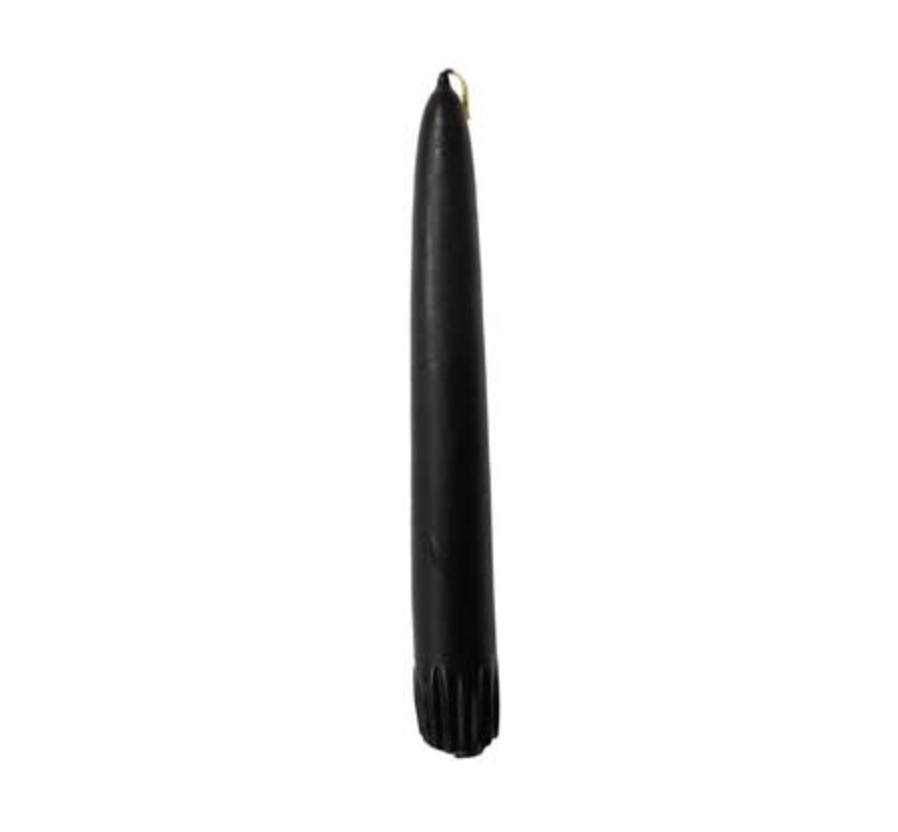

Meticulously charged by experienced practitioners at Black Witch Coven, this potent 7-inch candle is anointed with sacred oils, inscribed with ancient Theban script for amplified intent, and infused with powerful energies to act as a beacon for your ambitions.
With a burn time of approximately 1 inch per hour (lasting 6-8 hours total), it’s designed for concise, impactful rituals that fit seamlessly into your daily practice. Remember, you don’t have to burn all of the candle at once. Depending on what you’re doing magically, you can burn the candle inch by inch over a series of days for another powerful way to do a candle spell.
Praising Demons Honored with Black Candles
In the Ars Goetia (the first section of the Lesser Key of Solomon), the 72 demons are often honored through rituals involving specific correspondences, including candle colors tied to their planetary associations, elemental affinities, or thematic energies (e.g., banishing, protection, or hidden knowledge).
Black candles, symbolizing earth, Saturn, darkness, mystery, binding, death, and profound transformation, are commonly used for demons aligned with these qualities. While not all demons have rigid color requirements—practitioners may adapt based on intuition or tradition—black is frequently recommended for those with Saturnine (Saturn) influences for restriction and wisdom, or themes of curses, necromancy, secrecy, or shadow work.
Based on occult correspondences from sources like Golden Dawn systems, demonolatry guides, and practitioner resources, the following Goetia demons can be effectively honored with a black candle.
I’ve included brief reasons for each, drawing from planetary links (Saturn = black), ritual guides, and common practices. This is not exhaustive, as interpretations vary, but focuses on demons with documented black associations.
Personally, black is my go to colour for most of my daemonic workings regardless. Workings with Lucifer, Satan, or any other high-level Demon can be worked with a black candle.
- Andras (Marquis, Saturn): Black evokes his sower-of-discord and slaying powers; use for rituals of vengeance or severing ties through shadowed justice.
- Bifrons (Earl, Saturn): Black for his necromantic teachings and grave-tending, symbolizing deathly wisdom and ancestral connections.
- Forneus (Marquis, Saturn): Deep black to honor his linguistic eloquence and sea-monster form, ideal for protective or rhetorical bindings.
- Andrealphus (Marquis, Saturn/Moon blend): Black enhances his geometry-teaching and bird-transformation abilities, fostering hidden mathematical mysteries.
- Asmoday (King, Saturn/Sun influences): Black (or black-gold) for his wrathful knowledge-granting, representing binding fury in scholarly pursuits.
- Sabnock (Marquis, Saturn): Black to invoke his fortress-building and wound-inflicting energies, suited for defensive curses or fortification spells.
- Shax (Marquis, Saturn): Black for his thievery and sensory-depriving powers, evoking secrecy in deception or retrieval rituals.
- Vine (King/Earl, Saturn): Black to fuel his tower-demolishing and witch-revealing abilities, for destructive revelations or storm-calling.
- Decarabia (Marquis, Saturn): Black for his bird/plant knowledge and illusion-breaking, symbolizing earthy illusions in natural magic.
- Seere (Prince, Saturn): Black or dark shades for his swift travel and treasure-finding, honoring rapid, shadowy movements across realms.
- Dantalion (Duke, Saturn/Moon): Black to amplify his mind-reading and love-inciting illusions, ideal for psychic bindings or emotional manipulations.
- Andromalius (Earl, Saturn): Black for his thief-punishing and lost-item recovery, representing karmic justice in the dark.
- Asmodeus (Sun/Saturn, lust): Gold/Black—gold for solar lust, black for Saturnine wrath.
- Lilith (Demon/Goddess, Venus/Mars influences): Red or black candles symbolize her fiery passion, blood rites, and nocturnal rebellion; use red for seduction/empowerment, black for shadow work or protection against oppression.
- Hecate (Goddess/Demon, Moon/Saturn affinities): Black, purple, or silver candles represent her crossroads magic, darkness, and lunar intuition; black for banishing/necromancy, purple for witchcraft wisdom, silver for moon-guided protection.
For general use, carve the demon’s sigil into the candle, anoint with corresponding oils (e.g., patchouli for Saturn demons), and light during evocation while reciting their enn or invocation. Always work in a protected circle, offer incense like myrrh, and state your petition clearly—black candles excel in low-light settings to deepen mystery.
In Luciferian magic (which often incorporates Goetia for self-deification and enlightenment), black candles align with Lucifer’s shadow side—use for demons like Bifrons or Dantalion to invoke inner alchemy, embracing darkness as a path to light through meditations on the void’s wisdom. Pair with obsidian offerings or reflections on personal taboos.
What Colour for Satan?
In daemonic and Luciferian traditions, selecting a candle color to honor Satan is a deeply symbolic act, as his archetype encompasses rebellion, enlightenment, power, and individuality. Unlike the 72 demons of the Ars Goetia, Satan is a broader, multifaceted figure, often viewed as the Adversary, the Light-Bearer, or the embodiment of primal will across various occult paths (e.g., theistic Satanism, LaVeyan Satanism, Luciferianism). The choice of color depends on the practitioner’s intent, the aspect of Satan being invoked, and the tradition followed. Based on occult correspondences, practitioner resources, and symbolic associations, black and red are the most commonly recommended colors for Satan, with gold and purple as secondary options in specific contexts.
Black: Represents darkness, the void, rebellion against divine authority, and the shadow self. In theistic Satanism and demonolatry, black aligns with Satan’s role as the ruler of the infernal, embodying mystery, protection, and the rejection of external dogma. It’s tied to Saturn (discipline, karma, endings) and the Earth element, grounding rituals in raw power. Practitioners often use black to invoke Satan’s strength in banishing, binding, or shadow work.
Black Candle (Rebellion and Protection): Use a black candle to honor Satan as the Adversary, rejecting external control. Place it on an altar with obsidian or black salt, chanting, “Satan, lord of shadows, accept this black flame; empower my rebellion and shield my path.” Ideal for banishing negativity or embracing shadow work, visualizing darkness as strength. In Luciferian magic, this invokes Satan’s chthonic wisdom, chanting, “By Satan’s black flame, I forge my inner divinity.”
Binding Spell (Black Candle): To bind an enemy, carve Satan’s sigil and “bind [name]” into a black candle. Anoint with patchouli, invoking, “Satan, dark sovereign, honor this black flame; restrain [name] from harm.” Burn a petition, tying black thread around remnants, and bury at a crossroads. Offer smoke as tribute, aligning with Satan’s protective power.
Saturn (Primary for Black): Black reflects Saturn’s discipline and endings, ideal for Satan’s shadow work. Light on Saturdays, inscribing (♄). Anoint with myrrh, chanting, “Saturn, keeper of limits, align thy black veil with Satan; bind and empower.” Suits banishing or karmic rituals in Luciferian disciplined ascent.
Using Black in Magic, Demonology, Theurgy, or Luciferianism
Black’s profound, absorbing quality makes it a staple across occult traditions, often linked to Saturn—the planet of limits, time, karma, and elder wisdom—for rituals of banishing, protection, or deep introspection. In demonology, black candles ground invocations to earthy or chthonic demons, absorbing negativity while binding energies (e.g., in curses or pacts).
Elementally, it ties to Earth, stabilizing volatile forces during Goetia workings to prevent backlash.
In theurgy (divine magic for spiritual ascent), black represents the prima materia—the chaotic void from which creation emerges—used in invocations to higher intelligences for purification, as in Hermetic rites where Saturn’s lead transmutes to gold.
Luciferianism elevates black as the “Black Flame” of inner divinity, symbolizing rebellion against illusion; candles in this hue facilitate shadow integration, honoring Lucifer’s descent as a necessary darkness for enlightenment.
Practically, incorporate black for Saturn hours (Saturday) or retrogrades, pairing with onyx or coal for amplified gravity. In black magic spells, it excels in hexes (e.g., binding foes with black thread around the candle) or necromancy (lighting at graveyards for spirit communion).
Always balance with white elements to avoid energetic depletion, emphasizing black’s role as a canvas for rebirth rather than mere void.
Basic Black Magic Spells with Lilith or Hecate and Their Candles
- Protection Spell with Lilith (Black Candle): Inscribe Lilith’s symbol and “shield.” Light with myrrh oil, chanting, “Lilith, dark defender, honor this black glow; ward off oppressors.” Tie black thread around the base for binding harm, offering the smoke as gratitude.
- Banishing Spell with Hecate (Black Candle): Inscribe Hecate’s symbol and “banish [issue].” Light with lavender oil, affirming, “Hecate, shadow mistress, cleanse with this black light; remove obstacles.” Burn a petition of negatives, burying remnants at a crossroads for release.
- Lilith with Black Candle (Shadow and Protection): Use a black candle amid obsidian, affirming, “Lilith, night mother, honor this black flame; shield me in darkness and reveal inner strength.” Perfect for shadow work, banishing self-doubt, or invoking her as a protector against patriarchal forces.
- Hecate with Black Candle (Mystery and Banishing): Surround a black candle with crossroads dirt or yew branches, intoning, “Hecate, queen of shadows, receive this black light; guide through darkness and banish ills.” Suited for necromancy or protection at life’s crossroads.
Always thank the entity, offering the candle’s smoke as incense, and ground yourself to integrate their energies without overwhelm.
| Weight | 0.3 lbs |
|---|
Only logged in customers who have purchased this product may leave a review.



Reviews
There are no reviews yet.