
 New Years Eve Ritual 2026/2027 with Savannah
Demons, Working With Demons
Duke Syrach and His Servitors
Aug
Duke Syrach and His Servitors
Duke Syrach is the name the Grimorium Verum gives to the spirit who holds a working bench of eighteen inferiors, and those inferiors are the servitors: specialists already employed in his court, listed for the practical jobs that remain once the chiefs and the deputies have been set in their places.
Lucifer, Belzebuth, and Astaroth sit above, the deputies sit under the chiefs, and Syrach holds the eighteen an operator actually calls when the work is specific.
A servitor of the duke is a spirit on that bench, already named, already given an office, already answerable upward through him.
That is the relation the book is describing. Syrach is the seat. The eighteen are the hands.
How the court is built
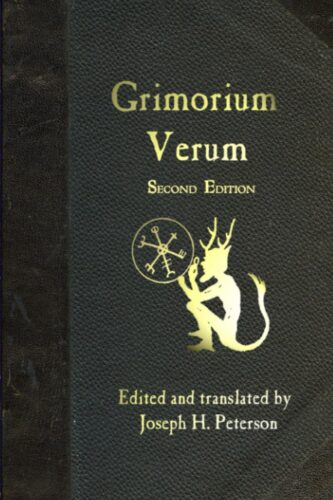
The Verum comes down in French and Italian printings dressed as Memphis, 1517, Solomon, and Alibek the Egyptian, which is the costume these books like to wear, and the copies operators actually handle sit later than that title page, in the eighteenth-century family of infernal and Solomonic lists.
Inside that hierarchy the three chiefs divide the world among themselves, each chief keeps deputies, and below that apparatus there are still other daemons, as the text puts it, who are under Duke Syrach, eighteen of them, with characters and offices attached.
The book even pauses to say there are further names it will not bother with because they lack power, which is a blunt way of telling you where the working list stops.
Servitor, in that sentence, is rank.
It means inferior, employed, specialist, held by the duke the way a quarter’s worth of names is held by a king in older goetic arithmetic.
Jake Stratton-Kent and others have read Syrach as the Verum’s version of that kind of seat, a ruler of a block of eighteen in a scheme where four great kings divide seventy-two, and have offered guesses at the name itself, from a reversed Greek of love and its Gnostic overtones to a Persian judge of the dead whose sound sits close enough to keep scholars arguing.
The book itself is less interested in his biography than in his function. He holds the eighteen. The eighteen do the jobs.
What it means to be one of his servitors
To be a servitor of Syrach is to belong to a court rather than to a kitchen experiment. The name is already in the list. The office is already written. The character, when the plates survived the printers, is the written face of that name. You are not dating the birth of the spirit to the night you first inked a jar. You are entering a hierarchy that places the specialist under the duke and the duke under the larger infernal arrangement the Verum inherited and rearranged.
That is why this site has always titled those pages the way it has: third servitor, seventh, twelfth, fifteenth of Duke Syrach. The title is a map of employment. It tells you who holds the spirit, where the spirit sits on the bench, and which court you are touching when you pick up the name.
The offices themselves run across the ordinary hungers and the stranger ones: riches and treasure, lords and the affairs of states, weather, passion, dreams and visions, the shake in the ground, travel from one place to another, day and night, animals natural and supernatural, prodigies, the bringing of a distant person, books, the necromantic work, illness, locks, unseen presence, the feast, sleep and the unrest of sleep.
Those jobs will get their own pages and their own faces.
The point here is only that they are jobs on Syrach’s bench, which is what makes their holders servitors in this book’s mouth.
Why the duke matters before the famous names do
People tend to meet this court through whichever office they already want, and the riches name travels farthest, but the structure is older than any one specialist’s popularity. If you start with the spirit and skip the duke, you get a stack of disconnected demons who happen to share a footnote. If you start with Syrach, you get a court: a seat, a bench, a reason the eighteen are spoken of together, and a place to put the characters when we get to how those marks survived the printers.
The Verum is a practical book dressed in Solomonic clothing.
It gives you chiefs so you know the sky of the system, deputies so you know the middle management, and then it gives you Syrach because somebody has to hold the eighteen that operators actually use. That is his history on the page we have.
A name in a late grimoire family, a function as ruler of a working list, a handful of scholarly guesses about where the name itself came from, and a court that still organizes how this house talks about those spirits when it calls them servitors.
The eighteen, as a working list
Spellings drift between manuscripts. The jobs drift less.
- Clauneck holds goods, riches, hidden treasure, and the bringing of money.
- Musisin holds great lords and the affairs of states and allies.
- Bechaud holds winds, storms, lightning, hail, and rain.
- Frimost holds women, girls, and passion.
- Klepoth holds dances, music, dreams, and visions.
- Khil holds earthquakes and the shake in the ground.
- Mersilde carries a person from one place to another in an instant.
- Clisthert gives day or night as wanted.
- Sirchade, also Silcharde, shows natural and supernatural animals.
- Segal shows prodigies and wonders.
- Hicpacth brings a distant person.
- Humots brings the book you want.
- Frucissiere is the necromantic office, the raising.
- Guland causes illness.
- Surgat opens locks.
- Morail renders a person unseen.
- Frutimiere prepares the feast.
- Huictiigaras belongs to sleep and the unrest of sleep, depending on the edition in your hand.
How to Think About This When the History Frays
Most people who come to this court are here for the work. They want the names, the offices, the results. What they do not want is the old reflex that says a thing is true because it is printed, and they also do not want the opposite reflex that says a thing is only a story because the title page is late. The useful way through is to stop asking one question as if it were three.
The first question is historical.
Where did this list come from, who wrote the duke over it, and does Memphis in 1517 survive contact with the printers.
That question has an answer, and the answer is unromantic.
The Verum is a late handbook. Syrach is a title seated over eighteen working spirits. Admitting that is not a spiritual failure. It is literacy.
The second question is operational.
What do I do with these names.
How is the duke used, how are the eighteen approached, what belongs on the table, what belongs in the notebook.
That question is answered by the book as a manual and by the people who have kept using it.
The third question is empirical in the only way this craft gets empirical.
What moved after I worked. What stayed quiet. What changed when I fed the office and what changed when I only rehearsed the legend.
That question is answered in the week, not in the title page.
Dogma is what happens when those three questions are glued together and the first one is forced to carry the other two.
If the date must be true for the rite to be allowed, you are defending paperwork. Fantasy is what happens when the first question fails and you replace it with a story you cannot test: an invented biography, a secret ancient cult with no trail, a feeling offered as proof that the archaeology was wrong. The work does not need either of those.
A cleaner stance looks like this.
Treat the names as addresses in a system that has been used.
Treat Lucifer as the chief this particular book seats above the duke, which is already a Luciferian cosmology even if the compilers assembled it out of older lists. Treat Syrach as the holder of the eighteen, because that is the job the text gives him.
Then let practice do what history cannot do. Keep dates. Keep the petition. Keep what you offered. Keep what arrived.
Over time you are not asked to believe a forged origin. You are asked to notice whether a named office, approached as a named office, does work in the dialect of that office.
That is how it stays this side of fantasy. Fantasy fills the gap with a tale. Dogma forbids the gap from existing. Work leaves the gap visible and still uses the map. The origin story can be late, compiled, and dressed in costume.
The question that remains is whether you are working a court by its offices or decorating yourself with demons you never intend to test.
History tells you the map was drawn by compilers.
Your notes tell you whether the map still gets you to the room.
How We Think About These Spirits
We respect the history of the Grimorium Verum. It is the book that gives Duke Syrach his court and puts eighteen spirits under him, and that arrangement has given a lot of people a way in. What we cannot do is read every line as settled fact. The origin story attached to the book does not hold up well under scrutiny, so there is no clean, unbroken historical record we can lean on and call the truth.
That is where we have to think for ourselves instead of falling back into the old pattern of believing a thing because it is in a grimoire. Other people’s methods and stories are useful. They are not a substitute for your own work. The only way to know how these spirits sit in your practice is to work with them, pay attention, and decide from that, rather than judging the whole court by whether someone else’s way succeeded or failed.
