
 New Years Eve Ritual 2026/2027 with Savannah
Blog, Demonolatry, Demons
The Maskim
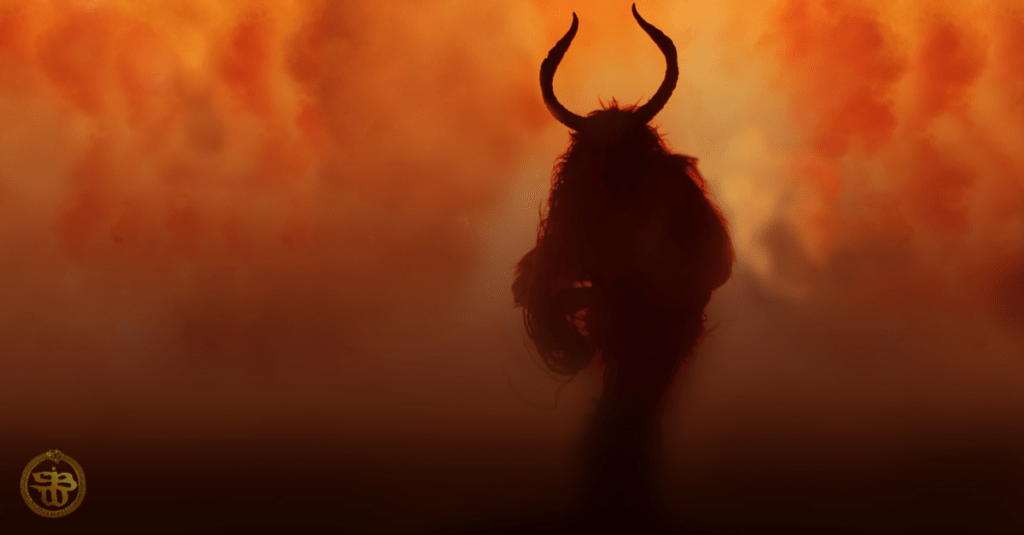
Dec
This is to be considered a working update for this post below.
Many of the posts on Black Witch Coven are left here for Coven members to update when they find out more information about a specific spirit. Therefore, the information may come across as not easy to read, and that is because of the reason above.
If you have info on this demon, feel free to put it in the comment section below and add to our knowledge.
The Maskim
Maskim means ensnarer, lurker, layer of ambush.
In Sumerian it is a title, maškim, the same office that in Akkadian is rābiṣu: a watching power that can stand as bailiff or as predator. It is not, by itself, the personal name of one spirit. When this house says the Maskim, we mean the Seven of the old incantation tablets, the heptad that moves as flood, wind, and night raid against the household and against the settled order of the gods.
They are counted among the most severe of the underworld company.
- The tablets treat them as primeval, spawned from the seed of Anu, a dark counterpart to other sevens in the Mesopotamian world: seven protective gods, seven sages, seven children of the underworld.
- Their own seven answers the Pleiades and the war band that walks with Nergal.
- They are messengers in the orbit of Namtar, whose name is destiny and death, and they are spoken of as throne-bearers in the court of Ereshkigal, Queen of the Great Below, who rules the land of the dead with Nergal.
What the Tablets Say They Do
They work on two scales at once.
On the land and in the sky they are disaster. They shake the ground. They turn the courses of stars. The underworld seven bring plague and quake. Their sky aspect comes as storm, hurricane, lightning, and wind that bring darkness in heaven and cast gloom over the bright day. They are not petitioned like a household god. The descriptions say they are neither male nor female, take no wives, have no children, are strangers to benevolence, and pay no attention to prayer.
On the inner scale they are the part of the human field that civilization spends its life burying: hunger, isolation, fury, the wish to tear a structure down and stand outside it. That is why later sorcerers read them as initiators of change and as a current toward self-rule. The tablets themselves are less philosophical. They describe a force that does not knock.
From house to house they dash along.
No door can shut them out,
No bolt can turn them back.
Through the door, like a snake, they glide,
Through the hinge, like the wind, they storm.
Tearing the wife from the embrace of the man,
Snatching the child from the knees of a man,
Driving the freedman from his family home.
That is the voice to remember. Everything else is commentary.
The Seven Forms
The incantation series gives them bodies of weather and beast. The names attached to each form in later books are unstable. The forms themselves are consistent enough to work with.
The First
The South wind: desert heat, drought, fever in livestock and people, crops burned out. In working it comes as dry air, thirst, a dark hot wind.
The Second
The dragon whose mouth is opened so wide none can measure it. In vision work this is the one that carries, the one that teaches flight and the long body of the serpent.
The Third
The grim leopard that carries off the young. Night hunter. Atavistic, patient, and sudden.
The Fourth
The terrible Shibbu, the serpent of intoxication and venom. Later workers have used this current for shape-change and for drawing life from a target. It is vampiric in character. It is not a beginner’s familiar.
The Fifth
The furious wolf that does not know how to flee. Rage until the human surface drops. Approached with discipline it can become a guide. Approached as a tantrum it eats the operator.
The Sixth
The one that marches against god and king. Rebellion as a principle, not as a slogan. It moves on law, rank, and the story a city tells about itself.
The Seventh
Storm: evil wind, vengeance in rain and lightning, the black-winged figure, the horned serpent of air, the blast that takes trees and roofs. In practice it arrives like weather. It will change a life. It does not ask whether the change is convenient.
These seven belong to the heat of war. The later attribution to Mars is a workable correspondence, not a Babylonian birth certificate. Use it if it helps you time the work. Do not confuse it with the tablets.
Known as: planetary demons of ancient Babylon
Sumerian descriptions of the 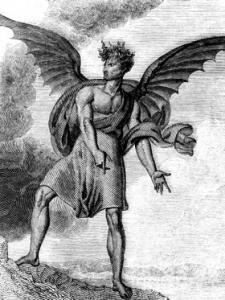 say they are neither male nor female, they take no wives and have no children, they are “strangers to benevolence,” and they pay no attention to prayers or wishes. They rush like flood over the earth:
“From house to house they dash along. No door can shut them out, No bolt can turn them back. Through the door, like a snake, they glide, Through the hinge, like the wind, they storm. Tearing the wife from the embrace of the man, Snatching the child from the knees of a man, Driving the freedman from his family home.”
These ancient gods belong to the energy of Mars. They have a lust for war and for the destruction of what they desire.
.The number seven in Mesopotamian mythology has a great significance. There were seven protective gods, seven wise men (apkallū), seven children of the goddess Ishara, seven sons of the god Enmessara (both deities of the Underworld), and we have analogous seven main demons.
Magical spells had to be spoken seven times, also ritual customs were performed in this number of times (or seven times seven), seven seals were hanged around the neck of an exorcised person etc.
It is hard to find the seven names, normal you will only find these three…
- Azza
- AZAZEL
- MEPHISTOPHELES
MEPHISTOPHELES – Does not have an ancient Sumerian background, so I do question why this name is even on this list. It’s almost like the original author who published the information, gave up the idea of making up more information about this class of Demons!
According to certain extra-biblical texts relating to Christian mysticism, and a number of related works written during the 17th century, Mephistophiles was the first to join with Lucifer during the rebellion against God at the beginning of time. When the rebel jinn were banished from Heaven, Mephistophiles was the second to fall, after Lucifer. In exchange for his loyalty, Lucifer granted him power in Jinnestan, appointing him his second-in-command.
On Names
It is hard to find seven stable personal names. What circulates most often is a short and contaminated list: Azza, Azazel, Mephistopheles.
Azza and Azazel belong to a Levantine and later Jewish register of bound watchers and wilderness spirits. They can be used as comparisons. They are not Sumerian names for the Seven. Mephistopheles is worse. He is Faust’s German devil. He has no business in a Sumerian roster and should be dropped from it.
Until a name is recovered from the incantations themselves, work the Seven as the Seven. Call the office Maskim. Call the company the Sebettu when you mean the war heptad of Nergal and the Pleiades. Do not glue on later European names to look complete.
Other authors have perspective about each Demon of the Maskim in context of its Planetary nature (4):
“The first of the Maskim is “the South wind” demon. It is connected with the desert, the heat of the sun and the drought which brings death of humans and animals, diseases and the destruction of crops. It is an extremely hot dark wind, burning everything that it encounters on its way, like a black, demonic fire or a destructive tornado.In the magical work with this demon one may also experience physical sensations of heat, dry air in the temple, or extreme thirst.
The second demon is the dragon “whose mouth is opened … that none can measure”. While working with this demon, one may
experience visions and dreams of astral transformation into a dragon’s form, or flying on the dragon’s back. One may also see an eternal cosmic dance of the Kundalini serpent.The third demon is “a grim leopard which carries off the young”. This entity embodies atavistic instincts of savage hunting. A leopard is an emblem of a wild predator, a shadow demon which hunts under the cloak of the night, searching for a prey. In magical practice, it replaces the art of shape-shifting on the mundane level. It induces a particular kind of a trance which allows for moving onto the astral level and for a complete transformation into a beast – a manifestation of one’s hidden instincts and lusts. In the case of this Maskim demon, this is a manifestation of atavistic predatory instincts, which become awakened by absorption of this dark energy.
The fourth of the Maskim is “a terrible Shibbu”. The magical power of this Maskim demon is the art of bestial shape-shifting, this time into a serpent, in a trance of hallucinatory intoxication with the astral venomous elixir vitae. The energy of the demon is also very vampiric in its nature and apart from self-initiatory purposes, it could be used in astral vampirism – to poison the victim and drain one’s astral energy through the form of this shadowy wraith.
The fifth demon is “a furious wolf who knoweth not to flee.” During exploration of this Maskim demon, the magician may also experience a rush of insanity, rage and fury, until complete loss of human consciousness. Yet, the cautious approach to this entity may transform it into a guide and spiritual familiar, as it is in the case of totemic animals.
The sixth demon is a mysterious “rampant … which marches against god and king”. This vague description suggests a force of chaos and disorder, a spirit of rebellion against artificial structures established by humans.
The seventh and the last of the demons is “a storm, an evil wind which takes vengeance”. This spirit reveals a close connection with violent forces of nature: storms, hurricanes, tornadoes, heavy rains, thunders and lightning – with all fierce phenomena which belong to the sphere of air. It may appear to the summoner in a form of a black winged figure, or as an airy serpent with a human-like head and horns. It may also manifest as a destructive power of nature: a violent wind that tears trees out of the ground, collapses buildings, and destroys everything on its way. It enters the temple like a hurricane and lifts the magician onto the dark side of nature. On the astral level the demon might be used for offensive attacks. It raises storms on the astral plane and causes severe damage to the enemy. It may also be used to force a change through the astral level which will manifest in the mundane life. Yet, it is a violent demon, and should be approached carefully.”
What They Are Not
They are not the seven great planetary deities of Babylon.
Ninurta, Ishtar, Marduk, Nabu, Nergal, Nanna-Suen, and Utu are high gods. Nergal stands near this current because he is war, plague, and the underworld. That does not make the whole planetary week into a demon list. Keep the pantheon and the heptad in separate rooms or the work gets sloppy.
They are also not every underworld functionary. Galla drag the dead toward Ereshkigal. Neti keeps the gates in the Descent of Inanna. Imdugud, also called Anzu, whips storm into whirlwind. Ishkur is weather. Ninlil is air and a mother of underworld-born gods. Udug, or utukku, is a wider class, some hostile, some not. The evil udug can serve Nergal and take offering. Ekimmu and shedu are neighboring terms, not synonyms you can swap at will. Know the court. Do not flatten it.
There are other spirits that would fall under this category:
GALLA – The Sumerian demons of the underworld who drag humans down to the realm of Ereshkigal. The Galla are featured in the Hymn to Igalima and in The Descent of Inanna where they are sent by Enki to help Inanna and also drag Dumuzi to the underworld.
IMDUGUD – The Sumerian version of Anzu, Pazusu and Zu who had a tendency to whip rainstorms into whirlwinds by flapping his wings. He was especially venerated in the region around the City of Ur.
ISHKUR – (Also known as Iskur, Adad, Addu) – The Sumerian god of weather and storms, twin brother of Enki in some myths.
NERGAL – Also known as Erra/Irra, the Sumerian god of war, pestilence, destruction, death, and the underworld, co-ruler with Ereshkigal, but originally associated with Shamash, the sun god, and a solar deity. His cult center was at Kutha where he was first known as Meslamtaea, an agricultural god associated with the heat of the sun in its negative aspects. The intensity of the summer sun (or the sun at midday) was thought to be caused by Meslamtaea’s fury and shifted from a regional god to a universal god associated with the negative aspects of life. Nergal is best known for insulting Namtar, Ereshkigal’s representative at the feast of the gods, and having to make amends to her, resulting in their love affair and his eventual move to the underworld to live with her. In some myths he is credited with creating human beings and in incantations is invoked for protection because of his great strength. As Erra he is famous from the work The Wrath of Erra in which he destroys Babylon for no reason.
NETI – The Sumerian guardian of the gates of the underworld and scribe. Neti features prominently in The Descent of Inanna.
NINLIL – The Sumerian goddess of air, `The Lady of the Air’, whose name was originally Sud until she married Enlil. In one version of the story, Enlil seduces Ninlil and is banished to the underworld. Ninlil follows him there and gives birth to the gods Nanna, of the moon; Nergal, of war and death; Ninazu, of the underworld, healing and magic incantations; and Enbilulu, of rivers and canals. These gods then rise from the underworld to earth and sky in keeping with the motif of the fertility myth of the dying and reviving god. The Babylonian goddess of the same name is derived from this Sumerian deity, originally introduced by the Akkadians.
SEBITTI – According to Babylonian sources, the Sebitti were seven minor warrior gods, sometimes associated with the Anunnaki of the underworld, who followed the demon Irra into battle. The Sebitti were not comprised of any of the major gods but seem to have been associated with Nergal. They are also associated with the Pleiades.
The seven planetary Demons of ancient Babylon were as follows:
- Ninurta
- Istar
- Marduk
- Nabu
- Nergal
- Nanna Suen
- Utu
You may also be interested in this class of Demon:
udugg (utukku) – A type of Babylonian DEMON who can be either good or evil. A group of evil ones are known as the Seven; they are offspring of the sky god, An, and the Earth goddess, Ki, and they act as assistants to the underworld god, Nergal. In Akkadian lore, the utukku are servants of the underworld, whose task is to fetch the sacrificial offerings made by humans, especially the BLOOD, liver, and organs of animals. The evil utukku are the ekimmu and the good ones are the shedu.
Warning: They do not like humans and attack them with the most severe evil and spells
How This House Reads Them
We treat the Maskim as present forces, not as museum labels. The tablet language is the root. The working language is ours.
Macrocosm: storm, rupture, the breaking of a sealed order.
Microcosm: the instinct that will not stay domesticated.
They are useful when a life or a working has gone stale inside law, courtesy, and delay. They are the wrong current if what you want is peace in the home or a gentle uncrossing. They do not listen to wishes. They answer hunger, command, and a field that is already willing to be weather.
Working Notes
- Speak and seal in sevens. That number is native to the culture that named them.
- Do not bargain as if they were a court devil who wants your signature. That is a later script.
- If you call the wolf or the seventh wind, have a vessel and an aftercare plan for the body. These currents leave heat, insomnia, temper, and a thinned boundary with other people’s fear.
- Do not install them as a standing household presence unless the work of the house is war, necromancy, and the underworld. They do not make a guardian angel.
- Heat in the house. Wind where there is no wind. Animal or storm vision.
- Sleep broken. Temper up. Boundaries thin. A sense of being hunted or accompanied.
- Life arranging itself as rupture: work, bonds, and plans giving way at once.
- In the ancient sources, illness language. In modern work, adrenaline, obsession, and weather in the nervous system.
Are the Maskim Still on the Earth?
Yes. In the religion that named them they never left. In the work of this house they are not museum pieces. People still call them. People still report contact. What follows is how we understand that, without dressing them up as court devils or watering them down into a metaphor.
The Tablets Do Not Place Them in the Past
Mesopotamian incantation religion does not treat the Seven as a closed myth. The hostile udug and the Evil Seven are written as present weather and present illness. They enter the house. They ride wind. They seize a body. The point of the Udug-hul series is that a living person needs an exorcist now. Namtar, the court of Ereshkigal, and the Seven are part of why a child sickens, a marriage splits, or a field fails.
They also do not wait to be invited. The old lines are about a force that ignores door, bolt, and prayer. In that worldview, most human contact is unsought: raid, fever, nightmare, household rupture. The common temple response is protection and expulsion. Partnership is the rarer, later path.
What “Working on Earth” Means
They work on two scales at once. That has not changed.
Outer: disaster language. Quake, storm, plague, famine, the wreck of a home.
Inner: the uncivilized drive in a person. Rage, appetite, isolation, the wish to tear a structure down.
An old exorcist would not have split those into “only weather” and “only psychology.” The same heptad explains a ruined roof and a ruined mind. That is why we can say they still work here without needing a newspaper to print their names.
Do People Summon Them Now?
Yes. Not as a public temple cult with hymns on the hour, and not in the way a congregation prays to a shepherd god. The living traffic is in the current of sorcery.
Practitioners working from MASKIM HUL and related Mesopotamian Left Hand Path books call this heptad by office and by form. Lodge-style groups write rites for the underworld seven. Grimoire workers treat this stream as an older layer under later lists of princes. Independent necromancers and sorcerers, including this house, call the office Maskim or the Sebettu as a war and underworld company.
What is being done is usually evocation or alignment, not worship. The tone is martial, stormy, and antinomian. People ask for rupture, initiation, vision, the breaking of a stuck order, or a current that will not stay domesticated. Some keep one of the seven as a standing familiar force. That is modern use laid on old names. Remember the clay: the tablets are mostly about getting them off a person, not installing them over the bed.
How Contact Actually Shows
There is no laboratory seal on a named Maskim moving a storm. What there is, in the old texts and in living rooms, is a stable pattern.
Read that as the Seven if you work this current. Read it as ritual plus a person finally giving their buried hunger a name if you need a plainer map. The night does not have to choose only one reading. The work still happens.
Invited and Uninvited
They are not courtly. They do not tend a devotee like a guardian angel. Contact feels like weather moving through a life.
Uninvited is the older pattern. The house that will not stay peaceful. The body that will not stay well. The mind that keeps scanning for raid. That is the Maskim as the tablets knew them: through the hinge, like the wind.
Invited is the sorcerer’s pattern. You open. You give form and sevenfold structure. You take the heat. You close, or you get ridden.
If someone is already cracked open by grief, fury, or the need to leave an old law, the current has a door. If someone wants comfort, repair, and a quiet home, this is the wrong company.
How This House Holds It
We treat them as present. We do not treat them as idle. We do not treat them as pets.
Call the office Maskim. Call the company the Seven or the Sebettu when you mean Nergal’s war heptad. Work the forms: wind, dragon, leopard, serpent, wolf, rebel, storm. Do not glue on Faust’s German devil to complete a list of names the clay never gave you.
If you call, speak and seal in sevens. Have a vessel. Have aftercare for the body. These currents leave heat, insomnia, temper, and a thinner skin against other people’s fear. Do not set them over the household unless the work of the house is war, necromancy, and the underworld.
They answer hunger, command, and a field that is already willing to be weather. They do not answer a wish for gentle uncrossing. That was true when the incantations were cut. It is true now.
Further Reading
- For the tablet voice behind the flood and the door: the Udug-hul / Utukkū Lemnūtu incantation series.
- For the war heptad in history and cult: work on the Sebettu.
- For a nineteenth-century collection of the lore, dated but still cited: Lenormant, Chaldean Magic.
- For a modern sorcerer’s reconstruction of this current: Michael Ford, MASKIM HUL.
- For the question of how this stream later colors Solomonic books: Stephen Skinner, Techniques of Solomonic Magic.
- For a contemporary ritual reading of the underworld seven: Lodge Magan, Seven Babylonian Demons of the Underworld.
Use the academic editions to stay honest about what the clay actually says. Use the sorcerers to stay honest about what happens when you call. This page will be updated as the research and the work both deepen.

- Chaldean Magic: Its Origin and Development
- MASKIM HUL: Babylonian Magick by Michael Ford
- Techniques of Solomonic Magic – The Maskim influence on Solomonic magick is examined in Stephen Skinner’s new book
- Seven Babylonian Demons of the Underworld by Lodge Magan
UPDATE: Anthony
- Use it when the work is rupture, initiation, or the end of a stale order.
- Do not use it to ask for peace in the home.
- Afterward, wash, eat salt, and sleep if you can. These currents leave heat.
- If the working is against a person rather than a pattern, that is a different operation and should not be bolted onto this speech as an afterthought.
An Address to the Maskim
To be spoken seven times. Night or storm hour. Face the dark of the room, not an altar of comfort.
Maskim. Ensnarers. Layers of ambush.
Seven who pass the hinge like wind.
Seven whom no bolt turns back.I do not call you as a shepherd calls a flock.
I do not ask you to be kind.
I name the office and I open the door that is already cracked.By Anu who seeded the hostile seven,
by Namtar whose name is destiny and death,
by Ereshkigal of the Great Below,
by Nergal of war and the burning earth:
the lurkers are called.First: South wind, dry fire, thirst in the field.
Second: dragon whose mouth cannot be measured.
Third: leopard that takes in the night.
Fourth: Shibbu, serpent of venom and thirst.
Fifth: wolf that does not know how to flee.
Sixth: the one that marches against god and king.
Seventh: storm, black wing, vengeance in the air.I am not a sealed house.
I am not a prayer you are required to ignore.
I stand in the ruin of delay and I ask for weather.Enter as wind. Enter as seven.
Strip what will not live.
Break what only stands because no one has shaken it.
Leave me the spine to remain when the roof comes off.Seven times named.
Seven times sealed.
The door was never locked against you.
Now it is aimed.
Ritual Feedback & Advice
Treat this as weather work, not candle-wish work. The useful tips are almost all about container, aftermath, and knowing when you have opened the wrong door.
Before you speak
- Have a reason that can survive daylight. “I want something to move” is not a reason. “This structure is dead and I will stand through the breaking” is closer. If what you actually want is a repaired marriage, a quiet house, or a soft uncrossing, do not use this address.
- Work in sevens. Seven recitations. Seven knocks. Seven breaths. Seven nights if you are running a sequence. That number belongs to them. Odd, leftover counts make sloppy openings.
- Do not offer a soul contract, a signed pact, or Faust language. That is a later script and it trains you to negotiate with something that, in the old texts, does not negotiate. Name, open, direct, close.
- Clear the room of work you still need intact: sleep, children, a job you cannot afford to detonate this week. If the whole life is already in demolition, that is a different calculation. If only one room is on fire, do not invite a hurricane into the building.
- Eat beforehand. These currents spend the body. Calling them fasted and fragile is how operators confuse collapse with contact.
- Have a close. Write it before you start. A close can be simple: salt at the threshold, water on the face, a plain sentence that the working is finished and the door is no longer aimed. You do not have to “banish the Seven from the cosmos.” You have to stop feeding the opening.
What can happen
- In the room: heat, pressure, a sense of wind with the windows shut, animal images, a taste like metal or dust, the urge to pace or to get outside. Some people get sexual charge. Some people get nausea. Both can be the same storm hitting different tissue.
- In the hours after: insomnia, short temper, a thinned skin against other people’s moods, dreams of chase, flood, teeth, or empty houses. Appetite goes odd. The voice comes out harder than you meant.
- In the life: rupture first, arrangement later if it comes at all. Jobs, bonds, and delays that were only standing because no one shook them can go. That is the point of the sixth and the seventh. It is also the usual complaint after a sloppy call. People say “nothing happened” and then three relationships end in a month. That was the working.
- In the inner field: old hunger stands up. Rage that had no name. The wish to be alone. The wish to punish. If you already run hot on suspicion or self-hate, this current will use that wiring. It does not pause to ask whether you had a therapeutic plan.
What should be done after
- Salt. Food. Water. Sleep if it will come. If it will not, do not chase more vision. Sit. Name three ordinary objects in the room. Come back to skin.
- Wash the mouth and the hands. Change the shirt you worked in. Do not sleep in ritual cloth.
- Keep the next day boring on purpose. No second evocation “to see if it was real.” No stack of other spirits on top of an open storm. One weather system at a time.
- If anger spikes at a specific person, do not send it as a follow-up curse the same night. That is how a Maskim working turns into a tantrum with extra mythology. Write the name down if you must. Wait three days. See whether the heat is still yours.
- If fear spikes, do not immediately beg them off as if you were a child who woke a dog. Close the working. Restore the household. If the pressure continues past a few days, treat it the old way: this current is also what exorcists were for. Cleanse the house. Call a closer current you already trust. Eat. Sleep. Stop talking to the dark for a week.
- If illness language starts (feverishness, vertigo, the body feeling “entered”), stop all spirit work and deal with the body first. Old texts blame the Seven for disease. Modern operators still wreck their sleep and call it initiation. Get the mundane check. Then decide if you are still in a working.
What not to do
- Do not install them as standing door-gods unless the house is actually a war house. They do not babysit. They do not guard children. They do not keep the peace between roommates.
- Do not call the fifth (wolf) or the seventh (storm) as a first experiment. If you need a first contact at all, the first and the third are still severe. There is no gentle Maskim.
- Do not mix this speech with a love working, a reconciliation working, or a “make them come back” working. You will get rupture and call it mixed signals.
- Do not use other people’s blood, a child’s name, or a binding on someone who has no idea you opened this. That is not “more authentic Sumerian.” That is you adding prey to a current that already hunts households.
How to tell if it landed
- A landed working feels like weather that has a direction. Something gives. You feel larger and less polite. The room feels used.
- A failed or fouled working feels like static: dread with no edge, scrolling thoughts, no sleep, no movement in the life, just a sour house. That means you opened and did not aim, or you aimed at a comfort you did not actually want to lose. Close. Salt. Wait. Do not push.
How this house keeps it
- Name the office. Work the forms. Count in sevens. Take the heat in the body instead of dumping it on the nearest person the same night. Feed yourself after. Do not ask them to be kind. Do not apologize to them for being human.
- If you cannot keep those rules, do not say the address. The tablets already told you they come through the hinge whether you are ready or not. The only thing a spell changes is whether you pointed the door.
