New Years Eve Ritual 2026/2027 with Savannah
Chaos Magic
What a Servitor Is, and How Far a Sigil Can Grow
Sep
In the chaos current that comes down from Spare through Carroll and Hine, a servitor is a thoughtform you assemble on purpose. You decide what it is for. You give it a shape the mind can hold. You bind that shape to a sigil so the job has a face. You charge it the way you charge any other mark, then you house it in paper, in an object, in a corner of the room, or in a body of work you intend to repeat.
It is closer to building a specialist than to mailing a wish. The sigil still matters. The servitor wears one. The difference is duration and agency.
A launched sigil is a single instruction released into the dark. A servitor is an instruction that has been given enough form to keep working after the night of the charge.
Some practitioners talk about them as if they were pets. Some talk about them as if they were software. The useful middle, from where I sit, is simpler. Attention plus a clear job plus a body plus feeding will produce a current that behaves like a someone. How much “someone” you get depends on how specifically you built it and how long you keep the table set.
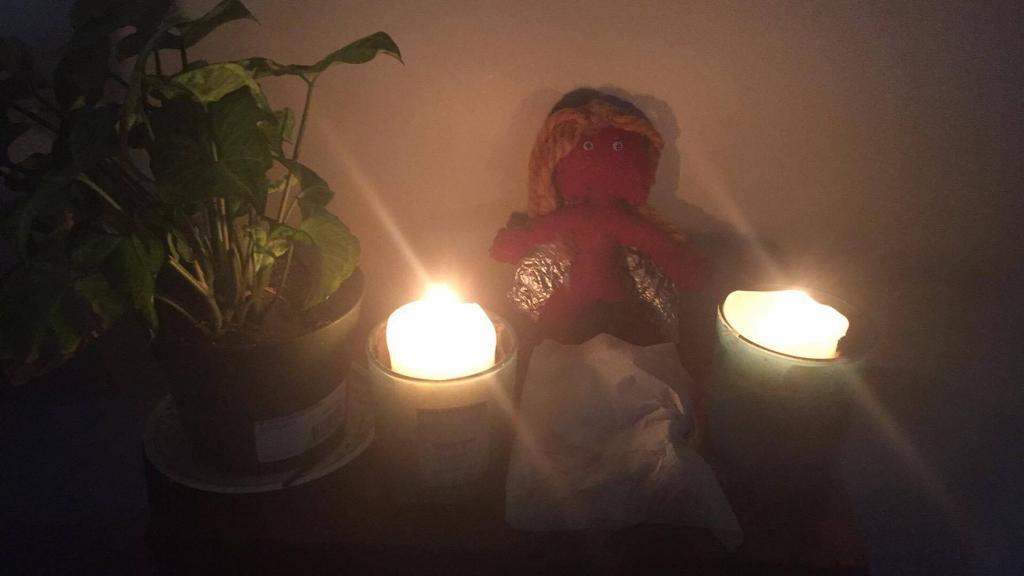
An Example: Savannah created a sigil ,and turned this into a servitor, which was placed inside of a vessel. Over the decades, this vessel has created a powerful, multipurpose magical tool that provides enough energy not just for herself, but now for others.
You will see her with this same servitor over the years, and while it looks quite harmless, this one simple sigil (and now quite a harmless-looking object) has a life force of its own.
How it is different from a spirit you did not make
A demon, an ancestor, a saint, a land thing: those arrive with history. You are entering a relationship that already has terms.
A servitor begins as your design. That is the attraction and the responsibility in the same breath. You choose the job. You choose the mouth it eats with. You choose whether it is a weekend tool or a standing piece in the house.
Plenty of people later bind a servitor to a spirit’s current, or retire the servitor and hand the same job to a being with an older name. That is a deeper road.
The basic machine does not require it.
A well-built servitor can work as a house tool the way a well-fed sigil works as a house mark.
What people build them for
The ones I hear about, and the ones worth making, are narrow.
A collector, whose job is I RECEIVE PAYMENT ON WHAT I AM ALREADY OWED, housed in a jar with a coin and the names of the debts, fed when money hits the account.
A caller, whose job is MARCUS CONTACTS ME FIRST, kept in a phone cloth or a small tin, fed when a message actually arrives so the current learns what success tastes like.
A watcher for the house, whose job is THIS DOOR HOLDS AND THEIR WORK STAYS OUTSIDE, bound to a nail, a stone, or the protection mark already living on the wall.
A closer, whose job is THE CONTRACT IS SIGNED THIS WEEK, carried in the bag that goes to the meeting, retired when the ink is dry.
A habit-cutter, whose job is I SLEEP THROUGH THE NIGHT WITHOUT THE BOTTLE, fed in the morning when the night was clean, starved when you do not want that mouth open.
Notice the petitions. They are the same kind of sentence a good sigil wants.
A servitor given I WANT MY LIFE TO BE BETTER has nothing to hunt.
A servitor given I BOOK TWO PAID CLIENTS BEFORE FRIDAY has a scent.
How to build one
Start with the job in one line, the way you would write a chaos petition. Then decide whether this is a one-season worker or a standing piece. A closer for a single contract does not need a shrine. A house watcher does.
Give it a name that is not the petition in English. The name is a handle. The sigil is the face. Reduce the job-sentence into a graphic mark, or into a short chant if you work better with the mouth, and let that mark be how you call it.
Give it a look you can actually hold in visualization. Not a committee of wings and biographies. One image clear enough that you can close your eyes and still have it: a black dog the size of a mail slot, a thin coin with legs, a moth that lives in the rim of a jar, a small clerk with one task. The picture is how the deep mind keeps the worker distinct from your ordinary chatter.
House it. Paper is enough for a first one. Better is an object that already belongs to the job: a coin for a collector, a key for a door, a candle for a short hot life, a pendant for a mark that needs to travel. Draw the sigil on the object, sit the paper with the object until you can see the shape in the thing when the paper is gone, and treat that object as the body.
Charge it the way you already know how to charge. Sex is the fastest heat a lot of people here have. Visualization is the quieter door, the image held until it is more present than the sentence. Blood is how this house claims a mark that has to last. Whirling and drumming will open the same gap. At the peak the current goes into the name, the face, and the object together. Afterward there is still that minute when the front office stays quiet so the worker can drop into the layer that does not speak English.
Then tell it how it eats. This is the part that makes a servitor different from a burned sigil. A launched mark can be forgotten. A worker that is meant to remain needs a feeding arrangement you will actually keep: a look when you mean it, a redraw when the lines tire, a drop of something that belongs to the job, a climax once a week, a coin added to the jar when payment lands. Feeding on success teaches it the result. Feeding from anxiety teaches it your itch.
What it feels like when it starts working
The aftermath is close to a sigil’s aftermath, only longer in the legs. The world gets slightly more willing in the dialect of the job. The owed money moves. The text arrives. The meeting tilts. You also start noticing the openings because the petition has retuned your eye, which is the honest psychology sitting under the craft. The magick claims the worker is also out there leaning on the week. The notebook is how you tell those two apart over time: date, job, how you fed it, what moved.
First-timers often wait for a personality. A knock, a voice, a dream-employee with opinions. Sometimes a servitor gets that vivid. Often it stays as a pressure, a habit of luck in one corridor, a sense that a particular object is not only an object. Either can be a working. Theatre is optional.
When nothing moves, the usual places are the same as with sigils. The job was a mood instead of a sentence. The charge never left English. The object was handled all day like a worry bead, which is lust of result wearing jewelry. Or the feeding stopped and the current went thin, which is what happens to any standing piece you starve.
How far it can go
A servitor can stay a paper tool for a month and then be retired when the contract is signed, the way a one-shot sigil is released. It can also take up residence.
Residence looks like this. The mark leaves the page and lives in the jar, the ring, the nail in the frame, the candle burned down to a stub you keep. You stop thinking of the working as a night and start thinking of it as a small engine in the house. Some people later split one successful worker into two jobs and find out why that muddies the water. Some people put the same sigil on the skin and discover they have given a petition a permanent body. Some people grow a servitor until it is doing the work of a familiar and then have to decide whether they built a tool or a roommate.
There is a further road where the servitor becomes a mask for a spirit, or a spirit is asked to wear the servitor as a work-coat. That is older magic wearing chaos clothes, and it is how a lot of left-hand path people actually operate whether they use the word servitor or not. The clean beginning is still the small one: one job, one face, one object, one way of feeding.
Where this sits next to a sigil from us
If you have a mark we charged, you already have a live instruction. A servitor is the optional next body for that instruction, or for a new job that needs legs. Plenty of customers never need one. They look, redraw, put sex or visualization through the paper, and that is the whole relationship. The people who want more are usually the people whose petition is ongoing: protection that has to hold, money that has to keep arriving, a door that has to stay shut.
Same mechanics either way. A desire leaves English. It takes a face. It gets planted in a state the everyday mind cannot easily edit. Then it is either released as a letter or housed as a worker. Psychology will explain the retuned attention and the change in what you do. The craft is the part where the mark starts behaving as if something is keeping the appointment.
Write the job in one line you would recognize if it walked in. Hide that line in a sigil. Give the sigil a name and a body. Charge it until the sentence falls off. Feed it when you mean to feed it. Let it work in the dialect of the petition rather than in a speech about whether it is real. That is a servitor. That is also how far a sigil can go once you are done treating the paper as the end of the road.