
 New Years Eve Ritual 2026/2027 with Savannah
Blog, Demonolatry, Luciferianism, Occultism
Challenges of Occultism
Apr
The Loneliness of the Path
If you have started walking this path and already felt a quiet distance open between you and almost everyone else, you are not the only one.
In this article you will:
• Understand why loneliness so often appears once you begin serious magical work
• See how this quiet distance is especially common for people already carrying modern isolation
• Recognise that most real practice happens alone, even inside a coven structure
• Learn the difference between outer magic and the deeper inner work of the path
• Find a clearer way to carry what cannot be openly shared without letting it distort the journey
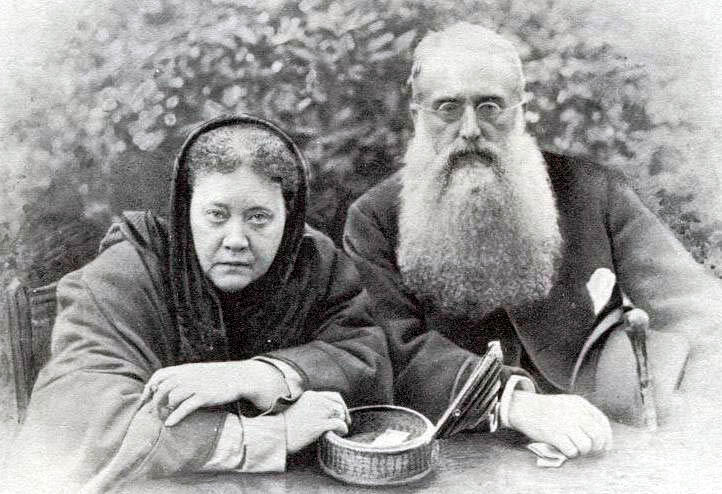
Helena Petrovna Blavatsky, published in the Theosophical journal Lucifer.
It should never be forgotten that Occultism is concerned with the inner man, who must be strengthened and freed from the dominion of the physical body and its surroundings, which must become his servants. Hence the first and chief necessity of Chelaship is a spirit of absolute unselfishness and devotion to Truth; then follow self-knowledge and self-mastery. These are all-important; while outward observance of fixed rules of life is a matter of secondary moment.
—Lucifer: IV, 348
Occultism is not magic, though magic is one of its tools.
Occultism is not the acquirement of powers, whether psychic or intellectual, though both are its servants. Neither is occultism the pursuit of happiness, as men understand the word; for the first step is sacrifice, the second, renunciation.
Occultism is the science of life, the art of living.
—Lucifer, Vol. I, p. 7.
An older distinction helps make sense of why the solitude runs so deep.
In the pages of the journal Lucifer, Blavatsky wrote that occultism is not magic, though magic is one of its tools. Occultism is not the acquirement of powers, whether psychic or intellectual, though both may serve it. Occultism, she said, is the science of life, the art of living. Elsewhere she added that it is concerned with the inner man — the one who must be strengthened and freed, who must come into self-knowledge and self-mastery. Outward rules and performances are secondary.
This distinction matters. A great deal of what people first reach for when they enter a magical path is the outer atmosphere of magic: the specialised language, the sense of entering a hidden world, the experiences that confirm something powerful is happening. Those things can open a door. They can awaken longing and attention. What keeps the door open is quieter and more demanding. It is the slow strengthening of the one who sees and chooses. That work does not happen in public. It is not performed for an audience. It is tended in the private hours, often without witnesses and without immediate reward.
When the outer atmosphere of magic is mistaken for the whole of the path, the solitude can feel like a failure or a lack. When the deeper work of the inner person is understood as the centre, the solitude begins to make a different kind of sense. It is not an accident. It belongs to the nature of what is being developed.
What It Feels Like
The Work That Cannot Be Done for You
Even inside Black Witch Coven this remains true. We may share a current, a language, and a framework, but the real development cannot be done for you and cannot be done in the way group ritual sometimes suggests.
This is Luciferianism, not witchcraft. The distinction is easy to blur and important to keep clear.
Witchcraft can involve shared circle. Power can be raised together. Work can be held in common for a night, a season, or a specific purpose. There is a real beauty and effectiveness in that. Many people come to magical practice hungry for exactly that experience of shared fire and mutual presence.
The deeper Luciferian work moves differently. The path of illumination, the steady strengthening of the inner person, the growth of clear seeing and deliberate choice under pressure & these cannot be performed by a group on your behalf.
No one else can look at your patterns for you.
No one else can stay present when the old reactions rise.
No one else can build the capacity that lets you remain steady when the outer supports fall away.
That work is ultimately solitary by nature. It happens inside the one who is becoming.
This is one of the things we have not spoken about enough.
People often arrive hoping the path will supply continuous atmosphere, shared intensity, and the feeling of finally being inside a complete magical world with others. What the path actually asks is quieter and more demanding. It asks you to develop the ability to keep tending the work when you are the only one in the room. That ability is not a side skill. It is central. Without it, everything else remains fragile. The insights do not stabilise. The relationship with spirits stays dependent on mood and reinforcement. The changes under pressure do not hold.
Building the strength to handle that solitude is itself part of the occult journey. It is a form of training that runs underneath the more visible practices.
- You learn to return to the work without an audience.
- You learn to stay with the discomfort of your own patterns without needing immediate reflection or validation from outside.
- You learn to maintain relationship with the Light-Bearer and with the intelligences that meet you in the ordinary hours when nothing dramatic is happening.
These are not glamorous capacities. They are the ones that determine whether the path becomes lived reality or remains a collection of ideas and peak moments.
Most of us inside the coven still live far from one another. Ritual happens in private rooms. The daily connection is spoken without an audience. The harder looking at one’s own patterns happens when no one else is watching. This is not a failure of community or a lack in the structure. It belongs to the nature of Luciferian development.
The coven can offer orientation, language, and the knowledge that others are walking related ground. It cannot do the inner work for you. And I definitely will not be doing the work for any of my Coven members. You either do the work or you don’t do the work …. there is no judgment …there is no pushing … it all has to come from your own motivation and desire, aka your own free will.
If you are already feeling the weight of that reality, you are meeting something true about the path rather than something broken in yourself.
The solitude is not a temporary inconvenience that disappears once you are deep enough. It is one of the conditions in which the real strengthening takes place. Learning to remain present and responsible inside it is part of what you are being asked to become.
The Difference Between the Atmosphere and the Work
There is a reason the solitude runs so deep.
A lot of what first draws people is the outer face of magic: the language, the sense of a hidden world, the hope of powerful experiences. Those things can open a door. They can wake something that has been sleeping. But the deeper current is quieter.
Occultism, in the older sense, is not the same as collecting powers or performing atmosphere. It is the slow strengthening of the inner person, the one who sees more clearly, who chooses more deliberately, who learns to stay present when the old patterns rise. That work does not happen in public. It is not performed. It is tended in the private hours, often without witnesses and without immediate reward.
So you find yourself in a strange position. You wanted to become more magical. Instead you are spending long stretches alone with your own mind, your own resistance, and a relationship with spirits that no one around you shares. The dramatic moments are rare. The ordinary solitary hours are not. They are where the capacity is actually built.

When the Quiet Starts to Shape You
If you never name the loneliness, it does not stay quietly in the background. It begins to shape how you walk the path.
One common response is to chase stronger experiences. The quiet starts to hurt, so you look for more intensity, more contact, more of the feeling that something powerful is happening. The relationship with spirits can then become mixed with the need to feel less alone. You are no longer meeting them only for the work itself. You are also asking the contact to fill a human gap it was never meant to fill.
Another response is to pull back. The gap between your inner life and your outer life becomes painful, so you slowly reduce the practice. You tell yourself you are too busy, or not in the right headspace, or that you will return to it later. What is often happening underneath is that the isolation has started to cost more than the work currently feels worth.
A third response is to turn the solitude into a story. You begin to tell yourself that walking alone means you are more serious, more advanced, or more special than people who need community. The story can feel protective in the moment. Over time it hardens the distance and makes it harder to recognise when the isolation is actually wearing you down.
None of these are moral failures. They are understandable ways of trying to manage a real difficulty when that difficulty has not been clearly seen. The reason for naming the loneliness early is not to make it vanish. It is to stop it from quietly deciding how you practise, how you relate to spirits, and whether you keep going at all. Once you can see the pattern, you have more choice about what you do with it.
How to Name Loneliness Early
Naming the loneliness does not mean dramatising it or turning it into a new identity. It means recognising it clearly enough that it stops operating only in the background.
Here is a practical way to do it.
1. Notice the specific feeling
Pay attention to the quiet ache or distance that appears in relation to the work. It might show up after practice, after a moment of real contact, or when you realise you cannot speak about what matters with the people closest to you. Name the feeling simply: “This is loneliness.” Not failure. Not proof that you are on the wrong path. Loneliness.
2. Locate where it is coming from
Ask yourself a few plain questions:
Is this the ordinary solitude of doing the work alone?
Is it the pain of not being able to share something important?
Is it the older loneliness that was already there before the path began, now made sharper?
You do not need perfect answers. You only need to stop treating every form of quiet as the same thing.
3. Say it without turning it into a story
There is a difference between “I am lonely in this” and “This means I am failing / special / too different / not cut out for it.” The first is recognition. The second is the loneliness starting to write a narrative. Keep the naming close to the facts of the experience.
4. Bring it into the work rather than letting it run the work
Once you have named it, you can decide what to do with it. You might simply acknowledge it before or after practice. You might notice when you are about to chase intensity or pull back because of it. You might choose to keep going anyway, with clearer eyes. The point is that the loneliness is now visible, so it has less power to steer from underneath.
5. Remember it is common
Part of naming it early is refusing the extra wound of thinking you are the only one. Many people on this path meet the same quiet. Knowing that does not remove the distance, but it keeps the experience in proportion.
Naming loneliness early is a form of clear seeing. It belongs to the same capacity the path is already training: the ability to stay present with what is true without immediately turning it into self-attack, inflation, or avoidance. Once it is seen, you regain choice.
There is a further distinction that helps once the loneliness has been named: the difference between loneliness and solitude.
The Psychology of Solitude
Solitude and loneliness are often treated as the same experience. Psychologically they are not.
Loneliness is the painful sense that one’s social needs are unmet. It is unwanted and distressing. It can occur even when other people are present.
Solitude is the state of being alone. It is defined by the absence of social interaction, not by the emotion that accompanies it. Solitude can feel neutral, restorative, or painful depending on context, motivation, and the person’s relationship to being alone.
The key variables are agency and attitude. Chosen or accepted solitude tends to support well-being. Unwanted or enforced aloneness tends to produce the same harms as loneliness.
When solitude is self-determined and not driven by fear of others, it is associated with several benefits:
- Emotional regulation and a “deactivation” effect: high-arousal states (anxiety, agitation, even excitement) often settle, while calmer positive states increase.
- Restoration of attention after social and cognitive demands.
- Space for self-reflection, identity work, and the sense of being able to be oneself without external pressure.
- Support for creativity and deep focus, especially when the person is not withdrawing out of social anxiety.
- A sense of autonomy and self-reliance.
Hence why I’m spending so much time in this article discussing the differences between the both, because you will go through times of feeling lonely & it is very important to take control of your decision so it doesn’t take control of you in a negative way.
Beliefs about being alone also matter. People who hold negative beliefs about solitude tend to feel lonelier after spending time alone. People who hold more positive or accepting beliefs often feel less lonely after the same amount of time alone. The mindset shapes the experience.
Some people have a stronger preference for being alone. This preference is not the same as healthy solitude capacity. Enjoying solitude is most beneficial when the person can also relate to others when they choose to.
Relevance to Inner and Magical Work
The psychology of solitude helps clarify why the quiet of a self-directed path can feel both necessary and difficult.
The deeper work of self-knowledge and self-mastery requires uninterrupted contact with one’s own experience. That contact is hard to sustain in continuous social presence. In that sense solitude is a structural requirement of the work, not an accidental inconvenience.
At the same time, the solitude of the path is often only partly chosen. The person may accept it as necessary while still feeling the pain of limited sharing and thin community. When the solitude is mixed with unmet needs for recognition and belonging, it easily tips into loneliness. The same hours that could restore and deepen the work then begin to erode mood and motivation.
The practical implication is that the capacity to be alone well is itself something that can be developed. It involves clearer motivation (entering solitude for the work rather than only fleeing social difficulty), more accurate naming of the emotional tone of the aloneness, and the ability to hold both the necessity of solitude and the reality of loneliness without collapsing one into the other.
Solitude is a tool and a condition. Like any tool, its effect depends on how it is used and on the state of the person using it.
What You Actually Have to Decide
If you are on this path, you will have to decide how you are going to carry a significant part of your life without the usual support of open conversation. This is not a short phase that ends once you are “deep enough.” For many people it remains a live question at every stage.
You will need to think about it the same way you think about the rest of the work.
- How will you hold a living practice and a changing sense of self when you cannot fully talk about it with the people closest to you?
- How will you tell the difference between the natural solitude of magical development and the kind of isolation that starts to wear you down?
These are not abstract questions. They are part of preparing for the journey.
Most of the real development happens when no one else is in the room. The skills grow in private. The patterns are faced in private.
The relationship with the Light-Bearer and with the intelligences that meet us deepens in the hours that remain unseen. That is not a sign that something is missing. It is the ordinary ground of the work.
Just know…and find comfort in this truth……You are not the only one sitting with this quiet. Knowing that does not remove the distance, but it can stop the extra wound of thinking you are the only one who feels it.
This is one of the subjects I care about deeply, and I am always open to genuine questions on it.
If something in this piece has raised a question for you, feel free to ask below.
ONE LAST THING…..
My Tip: Build Balance on Purpose
If you are drawn to occultism and find yourself disappearing down rabbit holes, the most important correction is balance.
This is easier said than done.
The work is absorbing.
The private study, the practice, the relationship with spirits, the inner examination …. all of it can pull you inward until one day you look up and realise you have built a small island with no easy way back to ordinary human contact.
That island may feel productive for a while. It is rarely healthy for long.
Treat balance as something you structure, not something you hope will happen naturally.
If that means mapping your week with the same deliberate attention someone with OCD might give to routine, then do it.
- Decide in advance how many hours belong to study and practice.
- Decide how many hours belong to other people, to ordinary activity, to the rest of your life.
- Put the social hours on the calendar the same way you would put a ritual or a study block.
- Protect them.
You need enough solitude for the real work. You also need enough contact with the shared world so that the solitude does not turn into isolation you no longer know how to leave. The path asks for the capacity to be alone well. It does not ask you to disappear.
Balance is not a soft extra. It is part of keeping the work sustainable and keeping yourself intact while you do it. xxx
