
 New Years Eve Ritual 2026/2027 with Savannah
Blog, Demonolatry, Demons, Occult Practices General, Working With Demons
When a Demon Stops Communicating: Triage and Repair
Mar
When a demon you’ve evoked, bound, or pacted with goes silent, treat it as a recoverable ritual failure and move immediately through three steps: secure the altar, check sigil integrity, and log everything before you attempt any re-evocation. Silence is diagnostic data, not abandonment. Practitioners working with entities like Lucifer, Clauneck, Andras, and Astaroth through Black Witch Coven know that most communication breakdowns trace to a handful of fixable causes, and the worst response is to repeat the same ritual hoping for a different result.
Your immediate checklist:
- Altar state: candles extinguished prematurely, offerings removed or spoiled, ritual space disturbed
- Sigil integrity: physical damage, fading, or improper storage of the entity’s seal
- Last offering: what was given, when, and whether the terms were honored
- Practitioner state: sleep deprivation, substance use, broken oaths, or scattered focus
- Timeline: note the exact date silence began; the 24–72 hour window determines your next move
Table of Contents
- What should you check in the first 24–72 hours?
- Why did your demon stop communicating?
- Step-by-step protocols to restore spirit communication
- How do you renegotiate a pact without escalating the situation?
- What are the red flags that mean you should stop and contain?
- Key Takeaways
- What 16 years of entity work actually teaches you
- When professional help is the right call
- Useful sources and further reading
- FAQ
What should you check in the first 24–72 hours?
The initial days form your triage window. Work through each item below before escalating to re-evocation.
Altar integrity comes first. Verify that the entity’s sigil is undamaged and properly placed, that any dedicated candles have not been moved or extinguished by accident, and that no uninvited person has handled the space. Even a well-meaning partner tidying the altar can break a working.
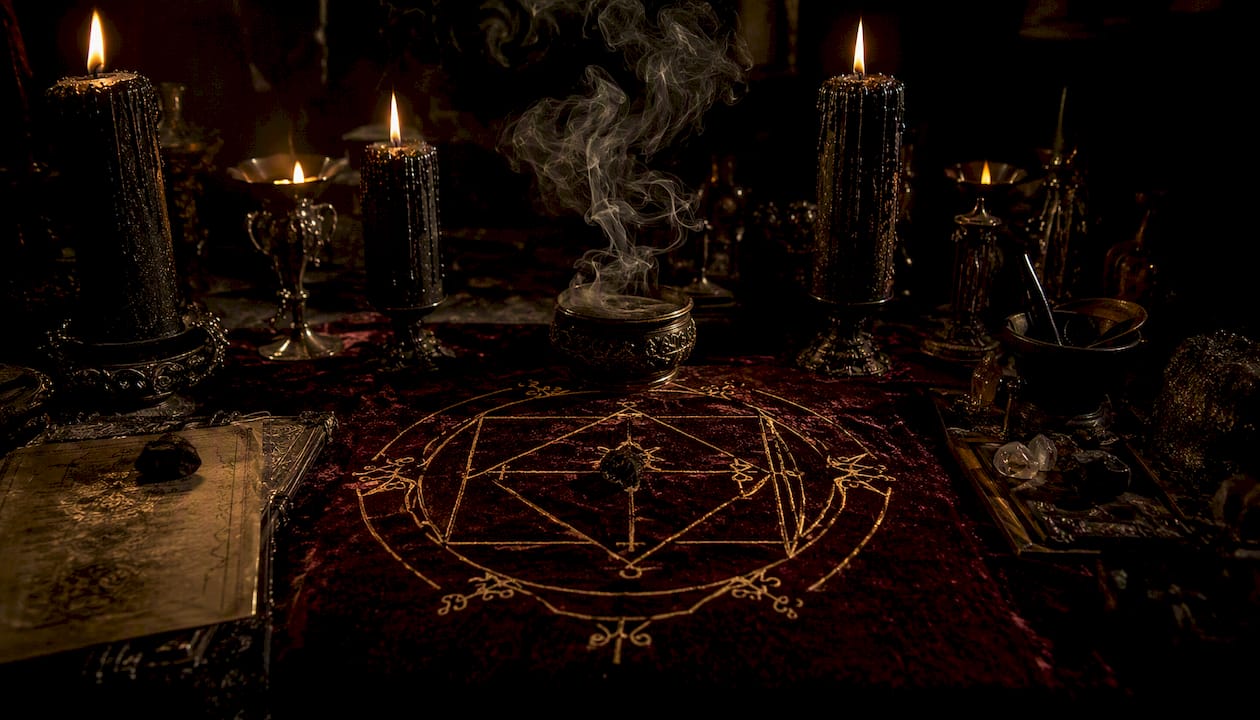
Offering status is the second check. Review your ritual log for the last accepted offering: date, material, and the entity’s response. Missed or spoiled offerings are among the most common, most repairable causes of silence. Damaged talismans and disrupted altar configurations materially affect a spirit’s willingness to cooperate.
Practitioner state deserves honest scrutiny. Fatigue, broken promises, or unresolved hostility in your own energy field creates interference. The Left-Hand Path demands accountability: you are working as a sovereign agent, not a supplicant, and that requires your own house to be in order.
Timeline decision:
- 0–24 hours: observe only; do not re-evoke
- 24–48 hours: perform a single low-intensity sign-check (see pro tip below)
- 48–72 hours: if no sign, proceed to the diagnostic framework
- Beyond 72 hours with no response: move to ritual repair protocol
Pro Tip: To test responsiveness without a full re-evocation, light a single candle dedicated to the entity, hold the sigil, and state the entity’s name once with a simple request for a sign within 24 hours. Watch for environmental signals: temperature shifts, candle behavior, dreams, or synchronicities. This preserves your ritual capital for the full repair if needed.
Why did your demon stop communicating?
Run through these diagnostic axes in order. Each answer points to a specific repair path.
Practitioner state: Have you kept every oath made during the original working? Broken promises are the single most common cause of silence in pact-bound relationships. If yes, proceed. If no, oath repair comes before anything else.
Binding integrity: Is the sigil physically intact? Has the charge been renewed on schedule? A spirit bound by oath or charge that has degraded needs reinforcement before communication can resume. As Crowley’s Magick in Theory and Practice notes, a recalcitrant spirit often signals a defect in the invocation itself, not refusal.
External interference: Has another practitioner or hostile group been working against you? Persistent cognitive disruption, sudden hostile signs, or a pattern of ritual failures across multiple workings all point here.
Timing and seasonal factors: Certain entities respond less readily during specific lunar phases, planetary hours, or seasonal transitions. Clauneck, for instance, responds strongly to Venus hours and Friday workings; Andras is traditionally approached during Mars hours. Check whether your timing has drifted.
Entity temperament: Some spirits test practitioners deliberately. Astaroth is known for periods of apparent withdrawal that precede deeper engagement. Lucifer, in Luciferian practice, often withdraws when a practitioner ceases doing the inner work the relationship demands.
| Diagnostic Outcome | Next Action |
|---|---|
| Broken oath | Oath repair ritual before any re-evocation |
| Damaged sigil/charge | Sigil reinforcement and re-consecration |
| External interference | Targeted cleansing, then hostile-force removal |
| Timing error | Reschedule to correct planetary hour/lunar phase |
| Entity temperament | Renegotiation or mediator approach |
Step-by-step protocols to restore spirit communication
Mitch Horowitz puts it plainly: when a working fails, the answer is not to repeat the same petition. Design a new method. These protocols move from least invasive to most forceful.
- Altar reset. Clear and cleanse the ritual space. Replace spent offerings with fresh materials appropriate to the entity. Re-draw or re-consecrate the sigil if it shows any wear.
- Re-offering. Present a deliberate, documented offering with a verbal acknowledgment of the silence: “I acknowledge the gap in our communication and present this offering as a renewal of my commitment to our agreement.”
- Sigil reinforcement. Redraw the entity’s seal on fresh parchment or paper. Consecrate it with appropriate incense (frankincense for Lucifer, cedar or myrrh for Clauneck, dragon’s blood for Andras). Charge it during the correct planetary hour. A detailed guide to invoking with summoning symbols covers the technical steps.
- Oath reinforcement. Restate your original terms aloud, clearly, and add any corrections needed. Record this verbatim in your ritual log.
- Staged re-evocation. Open the ritual space, call the entity by name and seal, state the purpose of the communication, and wait in silence for a minimum of 10 minutes before speaking again. Do not repeat the call more than three times in one session.
- Hostile-force removal. If interference is suspected, perform a targeted cleansing before re-evocation. Invoking auxiliary powers such as the Four Kings can create oversight and a clear pathway for a recalcitrant spirit.
Offering reference table:
| Offering | Entity | Timing | Symbolic Weight |
|---|---|---|---|
| Frankincense resin | Lucifer | Sunday/Venus hour | Sovereignty, illumination |
| Cedar or myrrh | Clauneck | Friday/Venus hour | Prosperity, contract renewal |
| Dragon’s blood resin | Andras | Tuesday/Mars hour | Force, binding reinforcement |
| Red wine or dark honey | Astaroth | Friday/Venus or Saturday | Depth, revelation |
Ritual log template:
Pro Tip: To avoid a double-bind error during re-evocation, never issue a command and a question in the same statement. “Come forth and tell me why you are silent” creates conflicting imperatives. Separate them: open the space, then ask one thing at a time.
How do you renegotiate a pact without escalating the situation?
Pacts and bindings are contracts. Silence sometimes means the terms have become unclear or the entity considers them fulfilled. Renegotiation is not weakness; it is precision.

Core principles: honor what was already given, state new terms with absolute clarity, and record everything. Ambiguous language in pact clauses is the primary source of post-agreement conflict.
Sample renegotiation framing: “The terms of our original agreement were [state terms]. I acknowledge [what has been fulfilled]. I propose the following amendment: [new terms, specific and time-bounded]. I offer [specific consideration] in exchange.”
Avoid open-ended bargains (“whatever you require”), vague timelines (“soon” or “when the time is right”), and promises contingent on outcomes you cannot control.
Pro Tip: Seal a renegotiation by burning a written copy of the new terms and stating: “These terms are witnessed, recorded, and sealed.” This closes the loop against third-party interference and creates a clear ritual timestamp.
What are the red flags that mean you should stop and contain?
Not every silence is a repair problem. Some are warnings.
Red flags requiring immediate containment:
- Sudden hostile signs: objects moving, persistent nightmares with threatening content, or physical illness with no medical cause appearing within 48 hours of a failed evocation
- Cognitive disruption: intrusive thoughts, inability to concentrate, or compulsive behavior that began after the silence
- Inconsistent oath language: discovering your original pact contained ambiguous terms that could be interpreted against you
- Third-party interference: evidence that another practitioner has placed a working on you or your ritual space
Containment steps:
- Cast a psychic shield immediately
- Perform a witness-offering to a protective entity, documented in your log
- Temporarily bind the entity’s sigil in a sealed container until the situation is assessed
- Do not attempt re-evocation until containment is stable
Red-flag escalation table:
| Indicator | Immediate Action | Escalation Threshold |
|---|---|---|
| Hostile environmental signs | Shielding ritual, seal containment | Persists beyond 72 hours |
| Cognitive disruption | Grounding, cleansing, rest | Affects daily function |
| Ambiguous pact language | Document, pause all workings | Any sign of adverse interpretation |
| Third-party interference | Identify source, targeted counter | Cannot identify or remove source |
| Physical symptoms | Medical check, spiritual cleansing | Symptoms worsen or multiply |
Key Takeaways
When a demon stops communicating, the correct response is triage first, diagnosis second, and a staged repair protocol third, never a blind repetition of the original ritual.
| Point | Details |
|---|---|
| Triage within 72 hours | Check altar, sigil, offerings, and practitioner state before any re-evocation attempt. |
| Diagnose before repairing | Map the silence to a cause: broken oath, damaged sigil, interference, timing, or entity temperament. |
| Repair in stages | Move from altar reset and re-offering to sigil reinforcement and staged re-evocation, not straight to force. |
| Renegotiate with precision | Use clear, time-bounded terms; record everything; seal with a mediator witness when needed. |
| Black Witch Coven | For failed repairs, high-stakes pacts, or red-flag situations, Black Witch Coven offers diagnostic ritual, renegotiation, and containment services backed by 16+ years of entity work. |
What 16 years of entity work actually teaches you
The most common practitioner error is not a ritual mistake. It is the assumption that silence means the relationship is over. In over 16 years of working with entities including Lucifer, Andras, Clauneck, and Astaroth, the pattern at Black Witch Coven is consistent: silence almost always precedes a shift, not an ending.
One recurring scenario involves a practitioner mid-pact with Clauneck for a prosperity working who stops receiving signs after three months of clear communication. The instinct is to escalate. The correct move is usually to audit the offering record first. Often, missed offerings, extinguished candles, or diminished practitioner focus cause silence. A simple altar reset and renewed offering often restore contact shortly thereafter.
The Left-Hand Path requires you to hold yourself accountable as a sovereign agent. That means your ritual log is not optional. It is the evidence base for every diagnostic decision. Practitioners who document consistently solve communication problems faster and avoid repeating the same errors across multiple workings.
Stop doing this: re-evoking the same way three nights in a row when there is no response. That is not persistence; it is noise. Change the method, the offering, or the framing before you try again.
When professional help is the right call
Three failed repair attempts, a red-flag containment situation, or a high-stakes pact with ambiguous original terms are the clearest signals that outside expertise is warranted. Trying to self-repair a deteriorating binding under those conditions risks compounding the problem.
Black Witch Coven offers a structured engagement for exactly these situations: a diagnostic ritual to identify the cause of silence, a targeted renegotiation or re-binding protocol, containment services for hostile-sign situations, and ongoing monitoring for active pacts. Every engagement is confidential, documented, and designed around your specific entity relationship and working history.
If you’ve already worked through the triage and repair steps in this guide without result, or if the situation involves Lucifer, Andras, Clauneck, Astaroth, or another entity with a complex pact history, a professional diagnostic is the faster path to resolution. You can also review how unknown variables affect spell outcomes before your consultation.
Reach out directly at blackwitchcoven.com to discuss your situation. All inquiries are handled with full discretion.
Useful sources and further reading
| Source | What it covers | How it helps |
|---|---|---|
| Lesser Key of Solomon (Goetia) | Seals, ranks, and attributes of 72 Goetic spirits | Original ritual language and entity-specific protocols |
| Magick in Theory and Practice, Ch. 16 | Binding spirits by oath; handling recalcitrant spirits | Theoretical grounding for binding integrity and repair |
| When Magick Fails — Mitch Horowitz | Redesigning ritual when standard methods fail | Methodological justification for non-repetitive repair |
| The Witch’s Pact — Daughters of Lilith | Pact structure, sigils, offerings, record-keeping | Practical pact documentation and renegotiation framing |
| The Left-Handed Witch Path | LHP principles, practitioner accountability | Framing for self-assessment and diagnostic responsibility |
| Wizard Forums — Planetary and Goetic summoning | Invoking auxiliary powers (Four Kings) for oversight | Practitioner-level options when a daemon refuses to appear |
FAQ
What does it mean when a demon suddenly stops responding?
Silence during an active working usually signals a broken oath, a damaged sigil, a missed offering, or external interference, not permanent withdrawal. Run the 24–72 hour triage checklist before drawing any conclusions.
How long should you wait before attempting re-evocation?
Wait at least 24 hours and perform a low-intensity sign-check first. If there is no response after 48–72 hours, move to the staged repair protocol rather than repeating the original evocation.
Can a pact be renegotiated after communication breaks down?
Yes. Treat the pact as a contract with unclear or expired terms. State new terms with precision, document them, and seal the renegotiation with a witness-offering. Ambiguous language is the most common cause of post-agreement silence.
When should you hire a professional practitioner instead of self-repairing?
After three failed repair attempts, when red-flag containment signs appear, or when the original pact contains ambiguous terms that could be interpreted adversely. Black Witch Coven offers diagnostic ritual and renegotiation services for exactly these situations.
Does entity silence always mean something went wrong?
Not always. Some entities, including Astaroth and Lucifer in Luciferian practice, withdraw deliberately as a test or during periods of internal work. The diagnostic framework distinguishes between a repairable failure and a deliberate withdrawal.
