
 New Years Eve Ritual 2026/2027 with Savannah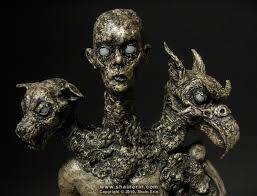
Feb
Great Duke of the Goetic Host
There are spirits whose names arrive with noise and warning. Bune is not one of them. His reputation, where it has been carefully kept, is quieter: a Duke who answers with measure, who moves both coin and the dead, and who has long been approached by those who prefer clear dealing to spectacle.
Bune holds the rank of Great Duke and commands thirty legions. The spirits under his authority are sometimes called the Bunis. He is the twenty-sixth spirit named in the Ars Goetia, counted among the day demons, and one of the more consistently reliable figures called for wealth, ordered speech, and truthful reply. The older catalogues note that he grants what is asked in a true manner. This small distinction has always set him apart. Where many entries carry caution about deceit or twisted outcomes, Bune is recorded as one who does not make a practice of such games. Operators who have kept long contact with him often remark on the same quality: the current tends to be steady, the answers direct, and the results proportionate to the clarity of the request.
He is also a spirit of the threshold between the living and the dead. The texts state that he moves the bodies of the dead from their tombs and burial places, and that he causes the spirits under his command to gather upon the sepulchres. Together with Biffrons and Murmur he is numbered among those who hold particular authority in this domain.
Murmur is said to deal with the souls themselves; Bune’s office is more concerned with place, movement, and the ordering of what lingers around the grave. It is not difficult to see why a spirit of wealth would also govern such matters. Inheritance, the proper disposition of what the dead leave behind, the quiet transfer of resources across the boundary these things sit naturally together. Those who work necromancy have long recognised the value of a presence that brings order rather than confusion when the dead are near.
On Possible Origins
A recurring thread in later commentary links Bune to the culture of ancient Egypt, suggesting that a power once honoured in an advanced pagan civilisation was later recast as a demon when the older gods were overwritten by new religious systems. Whether this preserves some genuine memory or is simply later speculation remains uncertain. What the grimoires themselves preserve is already complete: a Duke of wealth, eloquence, wisdom, and the grave, received fully formed into the Solomonic lists.
Description
Rank: Great Duke
Legions: Thirty (the earlier Livre des Esperitz gives thirty-five)
Zodiac: 5–9 degrees of Leo
Metal: Gold
Tarot: Five of Rods or Nine of Wands
Plant: Orange
Planet: Sun
Element: Fire
Colours: Orange, green, black
Incense: Sandalwood
Appearance
The classical form is that of a dragon bearing three heads. Accounts differ on the exact nature of those heads. The most familiar description gives them as dog, griffin, and man. Other versions speak of two dragon heads and one human, or of three dragon heads entirely.
One of the heads is said to speak with a high and comely voice a detail that has always stood out against the more monstrous aspects of the form.
The combination is worth lingering on. The dog carries instinct, tracking, and loyalty to what is pursued. The griffin joins the earthbound and the elevated, a creature of both territory and height. The human head brings speech, reason, and the capacity for deliberate address. Bound together in one spirit, these qualities suggest an intelligence that operates across instinct, elevated perception, and articulate mind at once. This may go some way toward explaining the range of his offices.
There are also accounts of a strongly built human form with glowing eyes, unclothed, who communicates by signs rather than spoken words. In either shape the office remains unchanged: the marshalling of spirits about the places of the dead, and the granting of wealth and eloquence to those who call him with proper regard.
The Seals
The Ars Goetia records two seals for Bune and remarks that either may be used, though one is preferred. This small detail is easy to overlook, yet it is one of the few places where the text itself offers a practical note on the characters.
Those who work with the seals regularly sometimes find they develop a clear preference for one over the other. Both are historically attested.
The Enns
- Wehlc melan avage Bune tasa Liftoach
- Pandemonium, et germinet Bune
- Veni, veni, o comitis Bune
Attributes
Bune grants wisdom, wealth, and skill in speech. He is called for advancement in work, for the steady growth of business, for the improvement of personal presence, and for the sharpening of judgment. Because of his authority over the dead he is also sought by those who require orderly contact with spirits of the grave or who work with questions of inheritance and residual presence.
His thirty legions are described as numerous and potent. The Duke himself is approached as one who answers truly when the work is conducted with respect and proportion.
When to Call Him
He may be invoked for necromancy, for wisdom, for eloquence, and for riches. Some hold that his current stands nearest between the 28th of July and the 1st of August.
Friday at sunrise, or the hour of Venus, is also favoured.
Others simply choose a time of personal clarity and proceed. Consistency of approach often outweighs perfect timing.
Items of the Working
- Sandalwood incense
- Orange, green, or black candles
- The sigil of Bune
- Objects of gold or gold-coloured metal
- Food offerings (fruits, cakes, good chocolate, honey, and the like)
- Red wine or rum
- Blood, if the operator chooses to include it as a personal seal
- A black mirror, when the work turns toward the dead
Precautions
Enter the work within a protected space. Call the elemental forces if that is your custom. Spirits of wealth have been known to stir appetite and greed when the relationship is kept unbalanced; maintain proportion in both request and offering. Above all, offer the respect due to a spirit of his rank. Courtesy is not decoration here. It improves the quality of the contact.
The Working
Settle the body and the breath until the mind is steady. Place the sigil where it may be clearly seen and set the lit candle before it. Present the offerings of food, drink, and incense so that the space is prepared and the gesture of regard is already made.
When ready, the following conjuration may be used:
I invoke and move thee, O thou Spirit Bune, and being exalted above ye in the power of the Most High, I say unto thee, Obey! in the name of Beralensis, Baldachiensis, Paumachia, and Apologiae Sedes, and of the powerful ones who govern the spirits, Liachidae and ministers of the House of Death. And by the Chief Prince of the seat of Apologia in the Ninth Legion, I do invoke thee and by conjuring thee, and being exalted above ye in the power of the Most High, I say unto thee, Obey! in the name of Him who spake and it was done, to whom all creatures and things obey. Moreover I, whom God made in the likeness of God, who is the creator according to His living breath, stir thee up in the name which is the voice of wonder of the mighty God, El, strong and unspeakable, O thou Spirit Bune.
Chant the enn three times. Watch the smoke of the incense and the candle. Some report a subtle change in the air, a sense of being regarded, or a quiet settling of presence. For necromantic work the black mirror may be used as a point of manifestation.
Speak your purpose plainly. When the communion feels complete, give thanks and dismiss him with the same measure of respect given at the opening. Leave the space ordered and clean.
Bune is one of the spirits who rewards clear dealing. Those who approach him with order, proportion, and proper regard tend to find that something steady enters the space and a measured presence, a current that does not waste itself on drama, and the quiet sense that the work has been heard.
Is it dangerous to work with Bune?
This is one of the most common questions people ask, and it deserves a straight answer.
From the standpoint of both classical ceremonial magic and modern relational methods, Bune is not considered one of the high-risk spirits of the Goetia.
The older texts do not single him out with the kinds of warnings attached to names known for deceit, violence, or severe backlash. He is described as granting what is asked in a true manner. That detail has held up across a great deal of modern practice as well.
This does not mean the work is free of consequence.
In ceremonial magic
When Bune is approached through full Solomonic structure (circle, triangle, divine names, proper constraint and dismissal), the primary dangers are the same ones that apply to most Goetic work: poor preparation, unclear intent, failure to close the operation cleanly, and the operator’s own lack of stability. Bune himself is not typically the source of chaos in these operations.
The risk lies more in the magician’s ability to maintain control of the space and to dismiss properly afterward. Operators who are careless with license to depart, or who work while mentally or emotionally disordered, can create problems for themselves regardless of which spirit is on the other side of the triangle.
In modern methods
Most people today work with Bune through simpler means: the enn, the sigil, candles, offerings, and direct speech.
In this approach the danger profile shifts. Because the relationship is often treated as ongoing rather than strictly operational, the risks become more subtle.
The most commonly reported issues are:
- Becoming overly focused on material results to the point of imbalance
- Neglecting to maintain basic energetic hygiene while keeping an open link
- Treating the spirit as a constant on-demand resource rather than a presence that requires regard and proportion
- Ignoring feedback when the current feels off or when results start arriving in distorted ways
Bune has a reputation for being relatively patient with beginners who show respect. He is less patient with entitlement, chaos, or repeated demands made without reciprocity. Several long-term practitioners have noted that the relationship stays clean when the operator remains clear, consistent, and proportionate. When those qualities are missing, the work can become muddy, draining, or simply unproductive.
My Final Thoughts
Bune is not a spirit who typically sets out to harm the operator. The greater risks come from the operator’s own lack of preparation, lack of follow-through, or lack of self-regulation. People who are already unstable, deeply desperate, or unwilling to maintain basic boundaries are more likely to experience difficulty with any spirit contact, Bune included.
Those who approach with a measure of order, clear requests, and ordinary respect generally report that the current remains steady and workable. Many maintain contact with him for years without describing the relationship as dangerous.
The honest answer is this: working with Bune carries the ordinary risks of spirit contact and the specific risks that come with any ongoing relationship involving power and material desire. It does not carry the heightened warnings attached to the more volatile names in the Goetia. Competence, clarity, and proportion remain the deciding factors.

Anthony
Anthony is a male practitioner with over 30 years of experience in black magic and demonolatry. A practicing Luciferian, he specializes in direct spirit work and provides clear, no-nonsense divination for clients of the Coven, helping them see the true energetic picture before deciding on next steps.