
 New Years Eve Ritual 2026/2027 with Savannah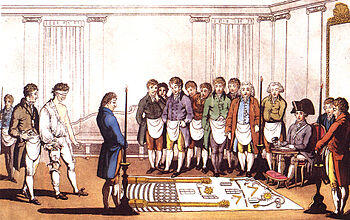
Oct
I have always had a soft spot for Freemasonry. It has a long memory, a serious ritual spine, and a rare modern thing: a room where men are allowed to be men among men, with structure around that instead of apology. For people who want organisational bones around rite, the lodge is one of the best surviving machines in the West. That is the ground I am standing on. The gossip is what happens after a man is raised a Master Mason and realises the building has more staircases than he was told about on the first night.
Over the years, Masons have sat in consultation here and talked the way men talk when they have already given an obligation somewhere else and still need a witch to name the aftertaste. They do not hand me their passwords. They hand me the pattern. They get to a certain level, they find out there is material above them they were not given, they join the next body to get it, and then they discover that “above” in Masonry does not mean what the internet sold them.
The first surprise: the third degree is the top, and it is also unfinished
Craft Masonry, the Blue Lodge, only has three degrees. Entered Apprentice, Fellowcraft, Master Mason. Officially that is the whole of being a Mason. A thirty-second-degree Scottish Rite man has no extra vote in his home lodge, and a thirty-third has no extra gavel there either. The apron of a Master Mason is still the one that counts on the floor.
The men who come here already know that line, and they still feel cheated by it, because the third degree leaves a hole on purpose. Hiram is murdered. A word is lost. A substitute is given. The temple drama stops in the dark. Then an older brother leans over after the festive board and says, if you want what was lost, you need the Chapter, or you need the Rite. That is the first juicy mechanism. The lodge makes you a Master and then lets you feel that mastery is incomplete. It is excellent ritual design. It is also how a man spends the next ten years collecting bodies.
What they actually walk into when they go “higher”
There is no single ladder. There are annexes.
The York Rite is the one that closes the Blue Lodge story. Mark Mason, virtual Past Master in some places, Most Excellent Master, then the Holy Royal Arch, where the lost word of the third degree is recovered in a vault under a ruined temple. English Masonry treats the Royal Arch as the companion of the craft so seriously that United Grand Lodge of England recognises it in a way it does not recognise the rest of the circus. Men who do this path often tell me the Arch felt like the ending the third degree owed them. They went looking for a secret government and found a completion of a myth they had already died inside once.
The Scottish Rite is the other staircase, fourth degree through thirty-second, with a thirty-third that sits on top like a closed door with a doorman. In the United States it is usually an appendant body: you must already be a Master Mason, then you petition, then you go to a reunion and take a stack of degrees in a weekend that looks more like a costume drama than a small lodge night. Lodge of Perfection, Princes of Jerusalem, Rose Croix, Consistory. Most valleys do not fully stage every number. They communicate a pile of titles and perform the ones they have the cast and the scenery for. The ones that keep getting named in conversation are the eighteenth, Knight Rose Croix, which hits men in the faith-and-doubt place with Christian furniture even when the Rite insists it is not a church, and the thirtieth, Knight Kadosh, which brings Templar blood, black and white, and the martyrdom of Jacques de Molay into the room. The thirty-second is Master of the Royal Secret, the official end of the curriculum, a degree about the fight between appetite and duty dressed as a royal mystery.
That is what they are “learning” at those levels, in the public language the Rite itself uses: longer philosophy, heavier pageant, more history, more comparative religion, more chivalry, more talk of justice and the inner temple. What they are hoping to learn, if they came in through YouTube, is who runs the world. What they get is a graduate school of the third degree with better lighting.
The thirty-third, which is the degree everyone wants explained
This is the consultation line I have heard in one costume or another for years. A man will say he is thirty-second, then drop his voice as if the next sentence might be illegal, and ask how one gets the thirty-third, or what they are shown when they get there.
In the ordinary American Scottish Rite system you cannot petition for it. If you ask, that can be enough to keep it off you. It is conferred by the Supreme Council for service, not for having sat through enough reunions. In the Southern Jurisdiction the headquarters is the House of the Temple in Washington, which looks exactly as ominous as the internet needs it to look. The degree has ceremony and recognition of its own. What it is not, in lodge law, is a rank that outranks a Master Mason in his mother lodge, and it is not a licence that gets handed to every man who was patient.
The gossip from the chair is rarely “I saw the true map of the nations.” The gossip is embarrassment mixed with hunger. He waited for the inner circle and found an honour. He wanted a key and received a jewel and a different conversation with the same brothers. Some men are satisfied by that, because they wanted recognition from other men. Some men are not, and those are the ones who end up talking to a witch about why the ladder kept producing more ladder.
What the consultations actually sound like
I am supportive of the Craft, so I am not going to pretend every Mason who sits down here is a dupe. Plenty of them love the work. They wanted a structured rite, a male room, a moral geometry they could measure a life against, and they got it. That is not nothing in this century.
The recurring aftertaste is the sense of a ceiling that moves when you stand up. They are raised. They are told that is the summit. Then the Royal Arch says the word can be found. Then the Scottish Rite says there are twenty-nine more lessons. Then the Shrine is a fez and a parade if they want spectacle and hospitals. Then research lodges, invitational orders, the body that only takes the men who already did the other bodies. There is always a door with a brother beside it saying, you would get more out of this if you came through here. That is not automatically sinister. Fraternities grow annexes. It becomes spicy when a man has organised his self-respect around the idea that the next degree will finally make him inner, and then the next degree teaches tolerance, duty, and another tracing board.
The other recurring line is theatrical shock. Blue Lodge is close work: a small room, officers, a candidate being conducted, the heat of being seen. Scottish Rite reunion can be a hall, costumes, a script, degrees taken in a block until the numbers blur. Men will tell me they remember the eighteenth when they do not remember the eleventh, because Rose Croix went after the soul instead of another Old Testament building site. They will tell me the Kadosh imagery stayed in the body. They will also tell me, if they are being honest, that half the weekend was titles conferred by name so the class could be called thirty-second before Sunday dinner.
Then there is the occult itch the lodge is not built to scratch. Masonry asks for a belief in a Supreme Being and then refuses to be your church. A certain kind of man goes through Rose Croix or starts reading Pike and feels the current move, and he has no language in lodge for “I think I just brushed a mystery school.” That is when he finds a coven site. He is not leaving the Craft. He is looking for someone who will not laugh when he says the eighteenth did something the charity calendar cannot explain.
The part I will say in their defence
Freemasonry gave the modern West a durable way to put men in a room, give them tools, put them under obligation, and make them repeat a rite until the tools mean something. Witches recognise that machine because we use versions of it. Opening and closing, a tyler at the door, a tracing image, a word that is supposed to stay expensive, a drama that kills you and stands you up: that is serious technology. I like that it still exists. I like that it is for men on purpose. A culture that cannot let men have a closed working among themselves should not be shocked when the ones who still want that look for an apron.
The internet flattened all of this into a single villain with a thirty-third-degree ring. The men who have sat here after the ring, or while waiting for it, describe something more human and, if you care about ritual, more interesting. They learned that the third degree is complete and incomplete at once. They learned that “higher” mostly means longer pageant and older annexes. They learned that the lost word has a home in the Royal Arch if they go looking. They learned that the Royal Secret of the thirty-second is a curriculum ending, not a throne. They learned that the thirty-third is an invitation you spoil by demanding. And a few of them learned, sitting in a witch’s consultation, that what they wanted from the next degree was gnosis, and the lodge was never going to use that word.
That is the gossip I am willing to put on this site. I will not print their grips. I will not pretend a reading gave me the minutes of the Supreme Council. I will say that Freemasonry has a great history and a structure worth respecting, that the men who stay in it are often staying for the room and the rite, and that the spicy part for our audience is the moving ceiling: every time they arrive, someone they trust can still say there is more above them, and sometimes that is a genuine continuation of the myth, and sometimes it is just the next door in a house that learned, a long time ago, how to keep a man walking.
Historic Facts About the Freemasons
They started above a pub, not in a marble temple
Modern speculative Freemasonry, the gentlemen’s version rather than the stonemasons’ trade, dates itself to 1717, when four London lodges met at the Goose and Gridiron alehouse and formed a Grand Lodge.
The origin myth likes columns and Solomon’s Temple. The paperwork starts in a tavern. A lot of early lodge life kept that smell: men upstairs from the drink, a tyler at the door to keep cowans and eavesdroppers from listening in, and a rite that had to compete with the noise from downstairs. If you have ever tried to hold a serious working over a bar, you already understand the first Masonic problem.
The most famous American political ritual used a lodge Bible
When George Washington took the oath of office in 1789, the Bible came from St. John’s Lodge No. 1 in New York because nobody had thought to bring one. That is not proof that the republic was a Masonic spell. It is proof that the lodge was already close enough to the room where power was being sworn that, when the moment went awkward, someone sent downstairs for the lodge’s book. Occultists love a coincidence that looks like a consecration. Historians call it an emergency prop. Both readings have been in circulation ever since.
A vanished printer helped invent American third-party politics
In 1826 William Morgan, a man in upstate New York who said he was going to publish the degrees, disappeared. A body washed up. Masons were accused. Whether Morgan was murdered for the exposure, skipped town, or drowned by ordinary bad luck is still argued, which is how you know the story is good. What is not argued is the hangover: the Anti-Masonic Party, the first real third party in the United States, ran on the idea that a secret brotherhood had gotten too comfortable inside courts and churches. So the juiciest early American Mason story is not a handshake. It is a missing man and a political movement built on the rumor of what was done to him.
The book everyone treats as the stolen grimoire was a lecture volume
Albert Pike’s Morals and Dogma gets waved around online as if it were the minutes of a shadow church. It was a dense Scottish Rite commentary issued to members, full of comparative religion, symbolism, and Pike talking at length. It was not the Blue Lodge ritual, and it was not a confession. The gossip value is how badly people want one book to be the key. Give the internet a thick Victorian occult-sounding text and it will anoint it as the vault, then quote the juiciest paragraphs as if the whole craft had signed them.
The Lucifer lodge that still haunts occult Twitter was a prank
In the 1890s Leo Taxil fed Catholics a spectacular story about Palladian Masonry, Luciferian rites, and a high priestess named Diana Vaughan. People wanted it to be true. Then Taxil stood up and said he had invented it. The confession did not kill the meal. You can still find the Palladian temple served as research, which is why left-hand path readers ought to know the name Taxil the way they know the name of a bad oil that keeps getting relabeled. If your gossip about Masonry depends on a Satanic inner order with a lady spy at the center, you are eating a hoax that was already confessed before your great-grandmother was grown.
The “lost word” has been for sale longer than your family has been in the country
The third degree turns on Hiram Abiff, the murdered master builder, and on a word that is lost and replaced. People have been selling that word, guessing that word, and printing that word since the exposures of the nineteenth century. The gossip is not the syllable. The gossip is that a rite can make a missing word feel like treasure even after the treasure has been typeset a thousand times. Witches should recognize the move. A name that is treated as expensive stays expensive in the room, and becomes cheap the minute it is only content.
Joseph Smith became a Mason, and the argument has never cooled
In 1842, in Nauvoo, Joseph Smith was made a Mason. Mormon temple ceremony and Masonic ritual share enough furniture that neither side has ever been able to let the comparison die: signs, tokens, penalties in the older forms, a drama of loss and restoration, sacred clothing, an inside and an outside. Masons say Smith borrowed. Latter-day Saints say God and a restoration can rhyme with an older rite. The gossip is that two American mystery systems collided in Illinois and have been side-eyeing each other ever since.
Women have been knocking from next door the whole time
Regular Anglo-American Masonry of the sort United Grand Lodge of England recognizes is a men’s society and is prickly about saying so. Women have still been doing Masonry for a long time in Co-Masonry and in bodies the regulars call irregular, and Theosophists such as Annie Besant did not treat that as a footnote. Prince Hall Masonry, begun when Prince Hall and other Black men were initiated in a British military lodge in Boston in 1775, carried its own dignity and spent generations being treated as a problem of “recognition.” When someone says “the Masons” as if that were one club with one door, they are flattening a family feud into a logo.
Mozart put the lodge on the opera stage
Mozart was a Mason. The Magic Flute is so full of trials, night and day, and temple talk that people still write papers about which number maps to which degree. That is the charming gossip. The sharper gossip is that a “secret” society was already theatrical enough in the 1790s to survive being sung in public, which tells you how much of Masonry has always been pageant as well as lock.
Crowley wanted the pedigree, and Masons still argue about the paperwork
Aleister Crowley collected initiations the way some people collect passports, including Masonic ones whose regularity other Masons will dispute in a tone usually reserved for wills. The Golden Dawn’s founders were Masons, and they built a magical order that looks like a lodge that learned how to summon: officers in the quarters, passwords between grades, tools that teach geometry and presence at once. That is the bit that actually touches this house. A lot of what witches now call ceremonial structure walked through a Masonic door before it walked through a coven door.
The eye on the dollar is the rumor that will not sit down
Masons do use an all-seeing eye. The Great Seal of the United States was not designed as a lodge emblem, and the unfinished pyramid on the bill has a separate pedigree that conspiracy culture glued to the apron because the glue held. The interesting part is not “gotcha, it is Masonic.” The interesting part is how hungry people are for a public object to be a private mark. Give a nation a pyramid and an eye and someone will decide a brotherhood charged it on purpose. Sometimes a symbol is just successful. Sometimes it has been fed. Distinguishing those two is the whole occult craft, and the dollar bill is where civilians try to do it without training.
What the leaks actually changed
You can watch degrees now. You can buy the monitors. You can hear the passwords from a stranger who has never sat in lodge. What the camera still does not give you is the obligation landing in a body, the tracing board after it has been stared at for years, and the dull heat of a room that has used the same marks on purpose. That is not a sermon. It is the same gossip we tell about covens. Print travels. Current does not travel as well.
So the juicy parts are not a world throne under an apron. They are a tavern origin, a borrowed inaugural Bible, a missing printer, a lecture book mistaken for a grimoire, a confessed Lucifer hoax that people still share, a lost word that has been for sale for two centuries, a Mormon collision in Nauvoo, women and Prince Hall knocking on doors that were told they did not exist, Mozart putting the temple on stage, Crowley arguing about regularity, and an eye on money that everyone wants to be a sigil. If you came for a hidden government, the internet already sold you that. If you came to know the lodge the way occultists actually bump into it, those are the pieces that stay interesting after the thumbnail has gone stale.
