
 New Years Eve Ritual 2026/2027 with Savannah
Ask Black Witch Coven
What Happens During the Spell Casting Process
Oct
The spell casting process is a focused ritual that pairs a clear intention with symbolic action and directed attention, moving through preparation, working, and closure.
Your first move, before anything else, is to write down one specific intention and spend sixty seconds grounding your body and breath. Skip that step and everything downstream gets shakier.
One more thing before you start: never aim a working at controlling someone else’s will or choices.
What Happens During the Spell Casting Process, and Why It Works
A spell is a structured ritual: an intention paired with symbolic action, performed with enough focus to matter. That is not mysticism dressed up in fancy language. It is a description of what your brain and body are actually doing during the working.
Researchers studying ritual behavior describe it as a blend of top-down intention (what you mean to accomplish) and bottom-up sensorimotor sequences (the physical steps you repeat). That combination produces measurable shifts in attention, anxiety, and confidence. Athletes tap this constantly, tying shoelaces the same way or bouncing a ball a fixed number of times before a free throw. Spellcraft borrows the same mechanism and points it at a chosen outcome.
Rituals reduce anxiety and sharpen focus. Reporting on ritual studies has found that structured, repeated behaviors ease grief and improve performance under pressure, even among people who do not consider themselves believers in anything mystical. That is the mechanism a spell is built on: repetition and symbolic action calming the nervous system enough for intention to actually land.
What Are the Core Components of Every Spell?
Every effective working, regardless of tradition, rests on four pieces. Miss one and the ritual tends to feel hollow, even when the words sound right.
- Intention. State it in one sentence, present tense, specific and measurable. “I attract a job offer with a salary above a specific amount within a set timeframe” beats “I want more money.”
- Focus or energy. This is the attention you build through breath work, movement, or visualization before you act.
- Correspondences. Candles, herbs, colors, or crystals that symbolically match your goal. A green candle for prosperity, red for passion, black for banishing.
- Action and release. The physical act (lighting, burning, burying, speaking) followed by consciously letting the intention go.
Academic work on ritual structure backs the idea that scripted, patterned sequences produce more consistent psychological effects than improvised ones. That is a real argument for writing your intention down before you light anything, instead of trusting yourself to phrase it correctly in the moment.
Pro Tip: Write your intention as if a stranger will read it in six months. If it is vague to them, it is vague to the universe too.
How Do You Cast a Spell Step by Step?
This is the sequence practical guides converge on again and again, adapted into checkpoints you can actually follow without second-guessing yourself mid-ritual.
Before you begin:
- Ground for 30 to 60 seconds. Feet flat, three slow breaths, notice your body in the chair or on the floor.
- Cleanse your space with smoke, sound, or simply tidying the area and opening a window.
- Gather materials: candle, correspondence items, your written intention, a lighter, and your journal.
- Check timing loosely against the moon phase if the working allows for planning (covered below), but do not delay urgent work for a calendar.
- Open your journal and note the date, time, and your emotional state before you start.
During the working:
- Open the space verbally or mentally: state that you are beginning ritual work.
- Read your intention aloud, once, clearly.
- Raise focus through breath, chant, or movement until you feel a shift in attention.
- Direct that focus toward your correspondence item (candle flame, written paper, jar).
- Anchor the intention with a physical action: light, seal, bury, or burn.
- Release it. Say or think a closing phrase that lets the outcome go rather than gripping it.
- Close the space: extinguish the candle deliberately, thank whatever forces you called on, and end with a breath.
After the working:
- Ground again. Eat something, drink water, or step outside for a few minutes.
- Write down what happened: how you felt, any distractions, anything unusual.
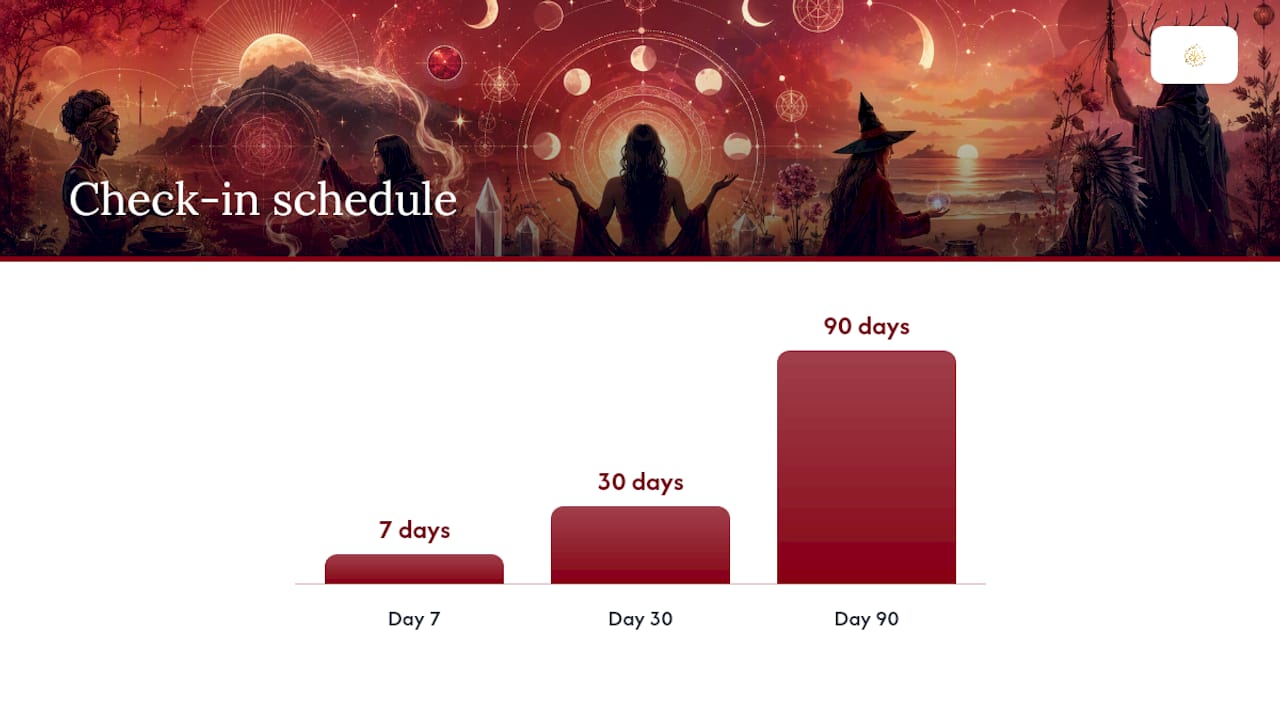
- Set a realistic observation window. Most practical guides suggest checking in at 7, 30, and 90 days rather than expecting immediate change.
| Checkpoint | What to verify | Why it matters |
|---|---|---|
| Pre-spell | Intention written in one sentence | Vague wording produces vague results |
| During | Sequence followed without skipping steps | Scripted rituals produce more consistent effects |
| Post-spell | Journal entry completed same day | Memory fades fast; details matter for pattern-spotting |
| Day 7 | Any small shifts noted | Early movement often precedes bigger change |
| Day 30-90 | Outcome compared to original intention | Separates real results from wishful thinking |
What Tools and Materials Do You Actually Need?
You do not need a fully stocked altar to start. A short, honest list beats an expensive one you never use.
- A candle in a color matching your intention (white works as a universal substitute for almost anything)
- Paper and pen for writing intentions
- One herb or object tied to your goal (bay leaf for success, salt for protection)
- A lighter or matches
- A notebook dedicated to ritual work only
Choose correspondences conservatively at first. One herb, one candle color, one symbol per working is plenty. Check local fire codes and any restrictions on open flame before working indoors, especially in apartments or shared housing. If a specific herb or crystal is not on hand, a household substitute rooted in the same symbolic idea (a coin for wealth, a key for opportunity) works, since resonance matters more than brand-name ingredients.
Do Moon Phases Actually Matter for Spell Timing?
Timing helps more with planned workings than urgent ones. If you have flexibility, moon phase gives you a simple framework to build around.
- Waxing moon (growing toward full): favors attraction work like love, growth, prosperity.
- Full moon: peak energy for manifestation, confirmation, and charging tools.
- Waning moon (shrinking toward new): favors release work like banishing, breaking habits, or ending situations.
- New moon: fresh starts and setting new intentions.
If your situation is urgent, a job interview tomorrow, a court date next week, do not delay a working to match lunar timing. Cast when you need to, then use timing as a planning tool for future, less time-sensitive goals.
What Causes Spells to Backfire, and How Do You Fix It?
Most so-called backfires trace back to one problem: an intention that was vague, contradictory, or emotionally conflicted at the moment of casting. Wanting a relationship to improve while secretly resenting the other person sends mixed signals into a ritual built to focus, not blur, your attention.
Signs people often label a backfire include feeling worse after the working, unrelated chaos in the following days, or the opposite outcome showing up. Before assuming something malicious happened, work through this instead:
- Ground physically. Eat, drink water, get outside.
- Cleanse your space and tools with smoke, salt water, or sound.
- Rewrite the intention with tighter boundaries and a measurable outcome.
- Wait 48 to 72 hours while taking practical, real-world action toward the same goal.
Pro Tip: If a working feels off while you are still mid-ritual, stop and close the space early. A paused spell causes far less confusion than one pushed through on shaky focus. For deeper reading on this exact pattern, Black Witch Coven’s page on spells that seem to backfire walks through more remediation scenarios.
Should You Keep a Spell Journal?
Yes, and treat it like a lab notebook, not a diary. Beginner guides consistently recommend logging enough detail to spot real patterns over months rather than guessing.
- Record the date, moon phase, exact wording, materials used, and your emotional state before and after.
- Change one variable at a time (wording, timing, or tool) and track your own real-world actions alongside the ritual, since spellwork rarely replaces effort.
- Wait for a full 30 or 90 day window before deciding a method works or fails. Early results are noisy and easy to misread.
What Are the Ethical Rules for Casting Safely?
A few boundaries keep practice both effective and responsible.
- Never cast to override another person’s free will or force a specific decision from them. Influence and control are not the same thing, and workings built on the second tend to curdle.
- Do not cast while intoxicated, exhausted, or in the grip of acute anger or panic. Ground and wait until your state settles.
- Keep flame sources attended at all times and check your local fire ordinances, especially in rentals or shared buildings.
- Know that some jurisdictions have specific rules around occult business practices; general spiritual practice at home is broadly unregulated in the United States, but always use common sense with candles, incense, and any ritual tools involving heat or smoke.
What Do Experienced Practitioners Wish Beginners Knew?
Practitioners who have worked hundreds of sessions tend to notice the same small errors over and over: rushed wording, skipped grounding, and impatience with results.
Two habits separate steady practitioners from frustrated beginners. First, phrase intentions with a measurable endpoint, a number, a date, a name, so the working has something concrete to aim at. Second, run a 30-second grounding routine immediately before and after every casting, even a simple one, so your emotional static doesn’t bleed into the ritual.
Most of what looks like advanced skill is really just consistency applied to simple steps. When a working feels genuinely stuck after repeated attempts and careful journaling, that is usually the point where outside guidance, rather than more solo trial and error, starts to make sense.
— Black Witch Coven
What Should You Realistically Expect in Your First 3 Months?
Expect small, inconsistent signals for the first few weeks, not dramatic overnight shifts. Most beginners who journal honestly notice their second or third month is where patterns start to clarify, mostly because their wording and focus improve with repetition, not because the magic itself changed.
Discipline in tracking matters more than talent early on. A messy journal produces a messy read on what actually worked. Keep practicing, keep records, and adjust one variable at a time rather than overhauling your whole approach after a single quiet result.
When Does It Make Sense to Get Professional Help With a Working?
DIY spellcraft covers most everyday goals, but customization and discretion have limits at home. A practitioner with years of ritual experience brings pattern recognition you simply cannot get from your own first dozen workings, especially around wording that consistently produces conflicted results or timing that never seems to land right.
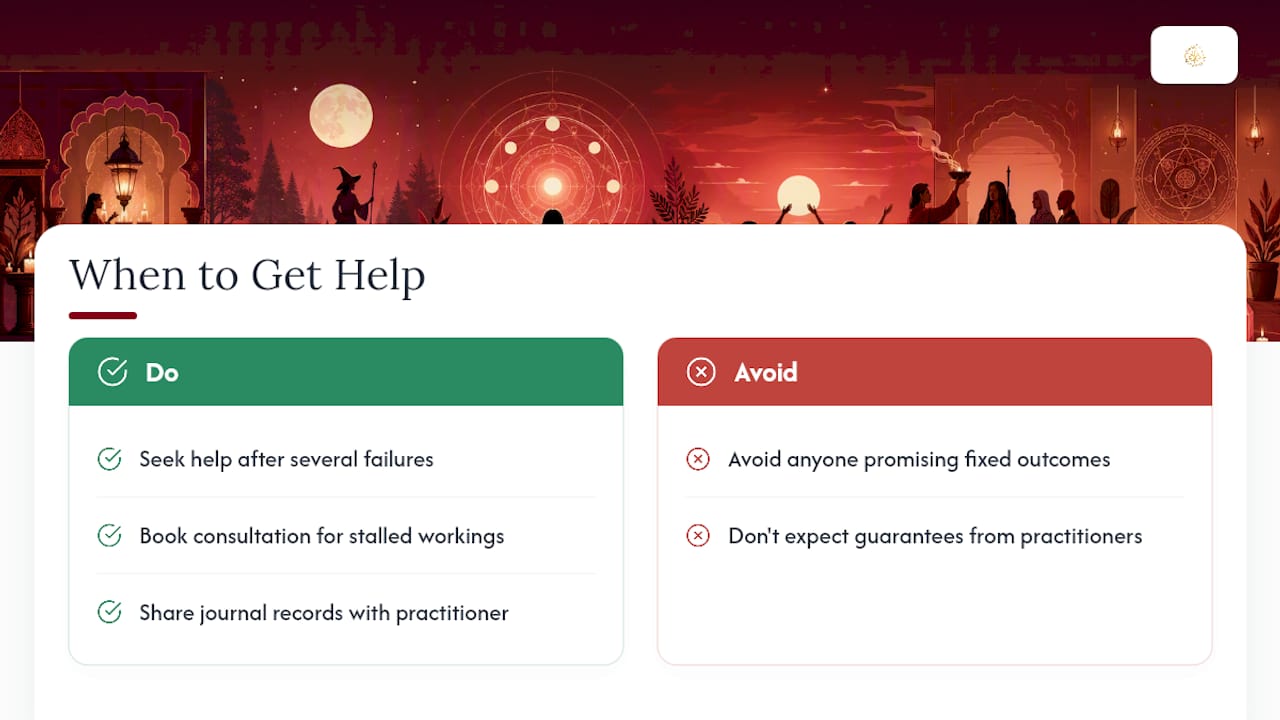
Consultation and remediation services are available for situations where a DIY approach has stalled or produced confusing results, including a detailed look at the unpredictable variables that shape a working’s outcome. Professional ritual work does not come with guarantees. No legitimate practitioner promises a fixed outcome. What it offers instead is experience diagnosing where a working went sideways and a more customized, discreet approach than a solo beginner can build alone. If your own journal shows the same problem recurring after several honest attempts, a consultation is a reasonable next step to explore.
Sources
Ritual psychology research from PMC explains the cognitive mechanisms behind scripted ritual behavior. Scientific American’s reporting on ritual covers real experiments on grief and performance. Practical spellcasting structure comes from Lunary’s grimoire guide, and beginner journaling advice draws on Witchcraft for Beginners.
- Ritual and performance research (PMC5452956)
- Why rituals work | Scientific American
- Spellcasting fundamentals – Lunary
FAQ
Does Spell Casting Actually Work?
Ritual psychology research shows structured rituals measurably affect attention, anxiety, and confidence, which supports why focused ritual practice can shift outcomes when paired with real-world action.
How Do I Calculate My Spellcasting Ability?
There is no standardized formula for this; ability in practice tends to track with how specific your intentions are, how consistently you follow a full sequence, and how honestly you journal results over 30 to 90 day windows.
How Do I Cast a Spell as a Beginner?
Start with one clear intention written in a single sentence, ground for a minute, follow a simple open, raise, direct, release, close sequence, and log the result the same day.
What Is the Act of Casting a Spell Called?
The act itself is usually called “spellcasting” or a “working,” and the full sequence from preparation through closure is often referred to as the ritual or casting process.

Very useful information on contractual agreements with practitioners. I would like to add that I have thoroughly enjoyed all your classes. Thanks so very much!
You are welcome Micheal. I will be contacting you with in a few days to ask you a few questions, and prepare a Certificate for Course Completion.