
 New Years Eve Ritual 2026/2027 with Savannah
Blog, Demonolatry, Demons, Luciferianism, Occultism
Pride in Left Hand Path Practice: A Practitioner’s Guide

Jan
Pride is the disciplined engine of self-deification and sovereign will in Left-Hand Path practice. Before your next ritual, state your intent aloud as a declaration of personal authority, not a request, and hold that posture through the entire working.
The role of pride in Left Hand Path practice is not what critics assume. It is not arrogance dressed in ritual robes. Aleister Crowley’s Thelemic framework, the Vāmācāra tantric tradition, and the modern Luciferian current all treat pride as a technical instrument: the internal force that aligns will, identity, and action into a single sovereign vector. Black Witch Coven has worked with this principle across 16 years of Goetic pacts, Luciferian rites, and demonic workings. The pattern is consistent. Practitioners who cultivate disciplined pride get results. Those who confuse it with ego inflation stall out or self-destruct.
Key Takeaways
Pride in Left-Hand Path practice is a trainable technical skill: cultivated self-sovereignty that fuels will, stabilizes identity, and makes ritual declarations credible to both the practitioner and the entities they work with.
| Point | Details |
|---|---|
| Pride as technical skill | Treat pride as a trained posture, not a feeling; rewrite declarations in sovereign, present-tense language. |
| Historical grounding | The LHP lineage from Vāmācāra through Crowley and Grant frames pride as a deliberate soteriological aim, not moral failure. |
| Psychological function | Functional pride amplifies will, converts shame into agency, and produces measurable ritual follow-through. |
| Hubris red flags | Stop tracking outcomes, cut off honest feedback, or shift pact language to demand: these are the warning signs. |
| Integration discipline | Monthly rites, a written oath, and an accountability partner keep pride effective over the long term. |
Table of Contents
- How pride is defined in Left-Hand Path practice
- Historical roots: from Vāmācāra to modern LHP currents
- How pride operates psychologically for Left-Hand Path practitioners
- How pride is applied and ritualized
- Concrete exercises for cultivating constructive pride
- When pride becomes destructive: red flags and safeguards
- Integrating cultivated pride into long-term LHP practice
- The verdict: two steps to take this week
- Black Witch Coven’s perspective on pride as a technical skill
- Sources
- FAQ
How pride is defined in Left-Hand Path practice
Pride in LHP terms is not the reactive puffery of someone who needs external validation. It is cultivated self-sovereignty: a deliberate, trained claim to personal divinity that the practitioner exercises as a ritual posture, a philosophical stance, and a daily discipline.
Scholarly frameworks characterize LHP religiosity through three interlocking features: individualism, self-deification, and antinomian technique. Pride sits at the intersection of all three. It is the felt, embodied expression of the claim “I am the axis of my own cosmos.”
The distinction between pride and ego matters practically:
- Instrumental pride fuels a pact declaration, anchors a sigil, and holds composure when a working takes longer than expected.
- Reactive ego collapses under pressure, seeks approval from other practitioners, and inflates claims to mask insecurity.
- Hubris is pride that has lost its tether to accountability: the practitioner who stops tracking outcomes, dismisses feedback, and mistakes grandiosity for power.
| Attribute | Constructive Pride | Reactive Ego |
|---|---|---|
| Source | Deliberate cultivation | Defensive response |
| Ritual function | Fuels will and authority | Disrupts focus |
| Accountability | Welcomes measurable outcomes | Avoids scrutiny |
| Relationship to failure | Adjusts and continues | Rationalizes or blames |
Baphomet imagery in modern occult writing captures this well: the figure integrates contradictions, reclaims what has been labeled monstrous, and embodies sovereign difference rather than performing superiority over others.

Historical roots: from Vāmācāra to modern LHP currents
The LHP/RHP distinction traces to Indian Tantra, specifically the vāmācāra (left-hand) and dakṣiṇācāra (right-hand) paths. Vāmācāra practitioners deliberately broke caste and purity taboos, using transgression as a technique for dissolving conditioned identity and accessing raw śakti. Pride, in that context, was the practitioner’s refusal to accept externally imposed limits on their spiritual capacity.
Helena Petrovna Blavatsky imported the left/right terminology into Western occultism in the 19th century, initially framing the LHP negatively as a path of selfishness and black magic. That framing stuck in popular imagination for decades. Crowley’s Thelema reframed it: “Do what thou wilt shall be the whole of the Law” positioned the discovery and execution of True Will as the highest spiritual act, with pride as its natural psychological correlate. Kenneth Grant extended this into the Typhonian current, pushing antinomian technique further into transgressive territory.
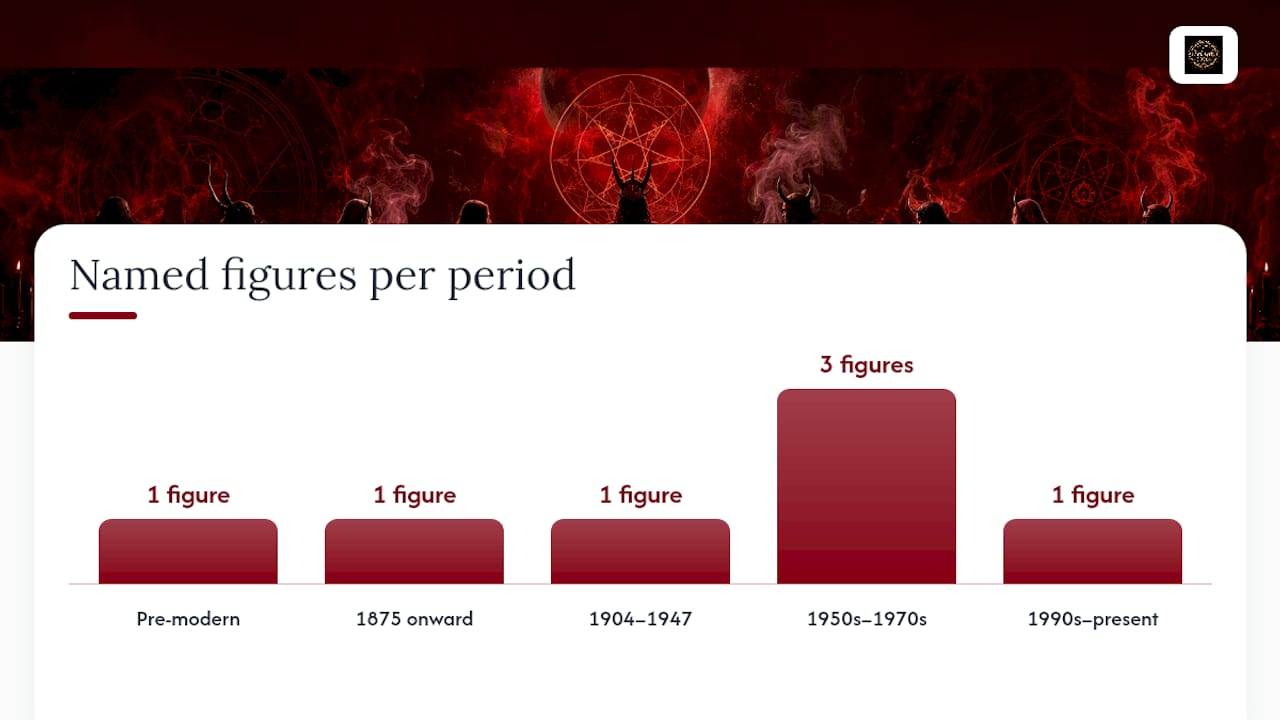
| Period | Figure / Movement | Key Contribution |
|---|---|---|
| Pre-modern | Vāmācāra Tantra | Transgression as technique; pride as refusal of imposed limits |
| 1875 onward | H.P. Blavatsky | Introduced LHP/RHP to Western esotericism; initial negative framing |
| 1904–1947 | Aleister Crowley / Thelema | True Will as disciplined self-sovereignty; pride reframed as purpose |
| 1950s–1970s | Kenneth Grant, Anton LaVey, Michael Aquino | LHP reclaimed as positive label; self-deification as legitimate aim |
| 1990s–present | Modern Luciferian / Demonolatry currents | Systematic ritual techniques; pride as trainable occult skill |
The 1960s–1970s reclamation by Anton LaVey’s Church of Satan and Michael Aquino’s Temple of Set was decisive. They stripped the pejorative framing and positioned individual sovereignty and apotheosis as the explicit goals of practice, not embarrassing side effects.
How pride operates psychologically for Left-Hand Path practitioners
Cultivated pride does three things internally that matter for ritual work. It amplifies will by giving the practitioner a stable identity to act from rather than a fragile self-image to protect. It stabilizes identity during antinomian work, when the practitioner is deliberately breaking their own conditioning and needs a firm center to avoid dissociation. And it converts shame into sovereign agency, which is particularly relevant for practitioners who came to the LHP after years in suppressive religious environments.
Antinomian practice functions as a mirror to the Shadow. The practitioner who engages it with disciplined pride integrates what they find there. The one who engages it with reactive ego gets consumed by it.
An anonymized example: a practitioner working a Goetic pact with Clauneck for business expansion kept abandoning the working mid-cycle whenever results were slow. The pattern was not magical failure. It was a pride deficit. Once they rebuilt their ritual posture around a declared, non-negotiable claim to the outcome, the working held and the results followed within the agreed timeframe.
Psychological signs that pride is functioning correctly:
- Ritual declarations feel authoritative, not performative
- You track outcomes without defensiveness
- You adjust technique without interpreting failure as identity collapse
- Composure holds under pressure from skeptics or unsupportive community members
- You follow through on the full working, including the parts that feel uncomfortable
Pro Tip: Test whether your pride is functional by asking one question after each working: “Did I hold my declared intent without seeking external validation?” If the answer is yes, the pride is doing its job.
How pride is applied and ritualized
Pride functions in ritual as the authority that makes a declaration credible to the entities you are working with and to your own deep mind. A pact spoken from a posture of supplication is a different working than one spoken from sovereign claim. The LHP emphasizes the strength and will of the practitioner as the primary engine of power, which means the internal state you bring to the altar shapes the outcome.
A compact ritual template for embodying pride in a working:
- Setup: Clear and consecrate the space. Place offerings appropriate to the entity (for Lucifer, consider light, incense, and a written declaration of intent). Light the altar.
- Declaration: Stand upright, feet planted, spine straight. State your name, your intent, and your claim in first person, present tense: “I am [name]. I claim [specific outcome] by my sovereign will and by the authority of my pact with [entity].”
- Posture: Maintain physical uprightness throughout. Prostration or supplication is incompatible with LHP pride-work. The body signals the internal state.
- Offering and sealing: Present the offering as an exchange between equals, not a bribe. State the terms of the pact clearly. Seal with a sigil drawn in the moment or prepared in advance. For sigil-based invocations, charge the sigil with your declared intent before closing.
- Close: Thank the entity by name, extinguish the flame, and record the working in your ritual journal within 24 hours.
| Constructive Ritual Pride | Hubristic Ritual Behavior |
|---|---|
| Declares intent from a stable, grounded center | Demands outcomes without offering exchange |
| Holds posture through discomfort | Abandons working when results are slow |
| Tracks outcomes and adjusts | Interprets any result as confirmation of greatness |
| Maintains ethical terms in pact language | Ignores agreed terms when inconvenient |
Pro Tip: Align major pride-building rites with lunar phases. Full moon workings amplify declaration energy; new moon workings are better for initiating new pacts. A phase-by-phase ritual practice gives you a natural scheduling framework.
Concrete exercises for cultivating constructive pride
Disciplined practice turns pride into a reliable tool rather than a liability. These three templates differ by scale and can be worked in sequence over several weeks.
Exercise 1: Daily Declaration (5 minutes) Each morning, stand before your altar or a mirror. State three sovereign claims in first person, present tense: one about your identity, one about your current working, one about your long-term aim. Write them in your journal afterward. Track whether the language becomes more specific and less hedged over time.
Exercise 2: Initiation-Style Rite (one session) Design a single ritual that marks a threshold: the moment you formally claim the LHP practitioner identity. Use a Luciferian framework or a Goetic structure. The rite should include a written oath, a physical act of commitment (burning the old self-concept, sealing a pact), and a declaration witnessed by the entity you work with.
Exercise 3: Pact-Preparation Exercise (one week) Before entering any significant pact, spend seven days writing the pact terms as if you are already the person who deserves the outcome. Each day, revise the language to remove hedging, apology, and conditional framing. By day seven, the declaration should read as a statement of fact, not a wish.
Journal prompts for tracking progress:
- “What did I claim today that I would have asked for six months ago?”
- “Where did I defer when I should have declared?”
- “What outcome from last month’s working can I point to as evidence?”
Accountability checklist:
- Review ritual journal weekly
- Identify one working that stalled and name the internal state that preceded the stall
- Check in with a trusted peer or mentor monthly
When pride becomes destructive: red flags and safeguards
The warning is simple: pride without accountability is hubris, and hubris produces ritual failure, social isolation, and sometimes legal or psychological harm. Practitioner writing is consistent on this point: antinomian practice requires disciplined ethical self-governance, not the absence of ethics.
Red-flag checklist:
- You have stopped tracking ritual outcomes
- You interpret every result, positive or negative, as confirmation of your power
- You have cut off practitioners who offered honest feedback
- Your pact language has shifted from exchange to demand
- You are pursuing workings that could harm non-consenting parties
Psychological and social consequences of unchecked pride include ritual stagnation (the working stops producing results because the practitioner’s internal state has become incoherent), loss of community, and in extreme cases, legal exposure from workings aimed at coercion or harm.
Pride that cannot be questioned is not sovereignty. It is a cage with a better paint job.
Safeguards and de-escalation steps:
- Designate an accountability partner who has permission to tell you when your working is off
- Build a cooling ritual into your practice: a structured period of silence, grounding, and review after any major working
- If psychological symptoms appear (paranoia, grandiosity, dissociation), pause all active workings and seek professional support
- For workings that have gone sideways, a spell-reversal protocol can de-escalate unwanted effects before they compound
Pro Tip: The most reliable test for hubris is simple: can you name three workings that did not produce the intended result, and explain why without blaming external forces? If you cannot, your pride has stopped being a tool.
Integrating cultivated pride into long-term LHP practice
The main rule is this: pride stays disciplined through ritual structure, oath-bound commitments, and regular accountability. Without those containers, it drifts toward grandiosity regardless of how sophisticated the practitioner’s theoretical framework is.
Practical integration steps:
- Schedule recurring rites (monthly at minimum) that reaffirm your declared aims and review outcomes against them
- Maintain a written oath that specifies your ethical limits and the terms under which you will pause or reverse a working
- Seek mentorship from practitioners with longer track records and documented results, not just impressive aesthetics
- Engage community accountability: a small group of serious practitioners who share feedback without flattery
Daily and weekly practices that maintain sovereign pride:
- Morning declaration (see Exercise 1 above)
- Weekly journal review: one page, outcomes only
- Monthly working review with accountability partner
- Quarterly re-reading of your foundational oath
For practitioners working with Lucifer specifically, daily Luciferian practice offers a structured model for embodying sovereignty without letting it calcify into arrogance. The discipline is in the consistency, not the intensity.
Pro Tip: When choosing a mentor, ask for documented outcomes, not credentials. A practitioner who can point to specific results across multiple workings is worth more than one with an impressive title and no verifiable track record.
The verdict: two steps to take this week
Pride is the deliberate, trained claim to personal divinity that makes LHP practice effective. Without it, workings are requests. With it, they are declarations.
- This week’s ritual action: Rewrite the declaration language in your current working. Remove every conditional, every hedge, every “I hope” or “I ask.” Replace with first-person, present-tense sovereign claims. Perform the working with that language and record the difference in your journal.
- This week’s accountability action: Name one person in your practice community who has permission to tell you when your pride has tipped into hubris. Tell them explicitly that you want honest feedback, not support.
Black Witch Coven’s perspective on pride as a technical skill
Over 16 years of working Goetic pacts, Luciferian rites, and demonic workings with clients across the United States and beyond, the pattern that stands out is not dramatic. It is quiet and consistent. The practitioners who get results treat pride as a skill they train, not a feeling they wait for.
One working that illustrates this: a client came to Black Witch Coven after two failed attempts at a wealth pact with Clauneck. Both previous workings had been structurally sound. The problem was posture. The client was approaching the entity as a petitioner, not a sovereign. The third working used the same ritual structure with one change: the declaration was rewritten as a statement of fact rather than a request. The pact held.
Three lessons from that pattern:
- Pride is not confidence in the outcome. It is confidence in your authority to pursue the outcome.
- The entity responds to the internal state, not just the external form of the ritual.
- Cultivated pride is the difference between a working that holds and one that dissolves under the first sign of delay.
Sources
- Left-Hand Path Religiosity: Self-Deification, Antinomianism, and Modern Occultism Beyond Christian Categories – Horapollo Religious Study and Research Center
- Left-hand path – Wikipedia
- Pride and the Left Hand Path – by Dani de Lyons
FAQ
What does pride mean in Left-Hand Path practice?
In LHP practice, pride means cultivated self-sovereignty: a deliberate, trained claim to personal divinity that functions as ritual authority, not emotional arrogance. It is the internal posture that makes a pact declaration credible.
How is LHP pride different from ordinary ego?
Instrumental LHP pride is accountable, outcome-focused, and stable under pressure. Reactive ego is defensive, approval-seeking, and collapses when results are slow. The difference shows up most clearly in how a practitioner responds to a working that does not produce the intended result.
Can pride in ritual practice cause psychological harm?
Yes. Pride without accountability tips into hubris, which produces ritual stagnation, social isolation, and in some cases psychological symptoms including grandiosity and paranoia. The safeguard is a regular accountability structure: a written oath, a trusted peer, and a willingness to pause workings when warning signs appear.
Which historical figures shaped the LHP view of pride?
Aleister Crowley’s Thelema, Kenneth Grant’s Typhonian current, and the 1960s–1970s reclamation by Anton LaVey and Michael Aquino all contributed to framing pride and self-deification as legitimate spiritual aims rather than moral failures.
How do I know if my pride is working or becoming hubris?
Ask whether you can name three workings that did not produce the intended result and explain why without blaming external forces. Functional pride tolerates honest review. Hubris cannot.
