
 New Years Eve Ritual 2026/2027 with Savannah
Blog, Chaos Magic
Another Way to Charge a Chaos Sigil: Visualization

Nov
If you have been around chaos magick for more than five minutes, you already know a sigil has to be charged or it is only a drawing with a wish still stuck in it.
What the method actually is
From Spare through Carroll the practical kit is stable:
- A statement of intent in ordinary language
- Reduction into a sigil or mantra
- Gnosis: inhibitory (stillness, trance, the edge of sleep) or excitatory (sex, dance, whirl, pain, exhaustion). Phil Hine later added a third flavor, indifferent vacuity, the shrug that lets a working slip through while you are not trying.
- Banishing or forgetting so lust of result does not haul the petition back into speech
- Paradigm shift: wear a god, a demon, a cartoon, a quantum metaphor, if it moves the needle, then take it off
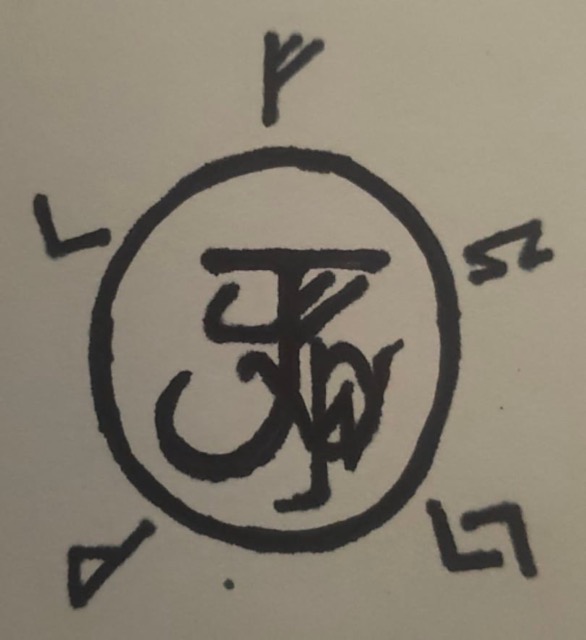
Most of the talk on this site goes to the hot methods, sex and sweat and the body forcing a gap in the talking mind.
This page is the quieter door: visualization, which is how you give the mark to the part of you that works in pictures, and how you send a petition without needing the room to shake.
Most people who come through this house learn the hot door first. You write a petition, hide it in a mark, and drive current through that mark with sex, with whirling, with drumming, with the body spent until the commentator cannot keep a speech going. That family of methods works because it forces a gap. The desire leaves English for a few seconds and the symbol has somewhere to land.
There is another way to open that same gap, and it is quieter, which is why it gets treated as optional decoration when it is actually one of the engines of the whole system.
The deep mind does not take instruction as a paragraph. It takes pictures. A chaos sigil is already a picture of a sentence you have made unreadable on purpose. Visualization is how you give that picture to the part of you that can use it, without needing the room to shake.
If you have never charged a mark this way, this is the buildup. You still start with a real petition. You still hide it. You still need the talking mind to thin out. What changes is the instrument. Instead of climax or exhaustion doing the thinning for you, you train the image itself until it can hold the current.
What Visualization Is Doing in This Work
Phillip Cooper is blunt about it in Basic Sigil Magic. Thinking, feeling, and imagining are the three ways you reach the layer that actually moves a sigil, and imagination is the one you cannot skip. You have to see, inwardly, what you are sending, or you are only rehearsing a wish in the front of the head.
That is not mood-board magic. The sigil is the picture. At the high point, whether that high point is quiet or hot, you hold the mark in the mind’s eye until it is more present than the original sentence. The symbol becomes the only object in the room inside you. Then you let it go.
People already do a sloppy version of this without naming it. They glance at the paper, think the petition again, and call it charging. That keeps the work in English. Visualization, done as a method, is the opposite. You look until the mark is an image you can close your eyes on and still have. You hold that image while the commentator is down. You do not narrate
I HAVE FIVE THOUSAND DOLLARS THIS MONTH while you do it.
The sentence built the mark. The mark is what you send.
How to Build the Image Until It Will Hold
Start with a petition you would recognize if it happened.
I RECEIVE EIGHT HUNDRED DOLLARS THIS WEEK. MARCUS TEXTS ME FIRST. THE MEETING ON TUESDAY GOES MY WAY.
Reduce it into a graphic sigil, or use the mark you bought from us.
Put the drawing where you can see it in ordinary light.
Look at it the way you look at a face you intend to remember.
Color, line, the way the letters lock.
Then close your eyes and ask for that same shape back. When it slips, open, look again, close.
Cooper’s training version is simple and a little stubborn: stay with one object until you can hold it for a couple of minutes without it dissolving every other breath. You do not need two minutes on the first night. You need enough that the sigil is no longer a blur you invent while you think about money.
Strain makes this worse. Forced visualization is how people decide they “cannot see anything” and go back to rereading the petition. Relax the body first. Let the picture be simple. You are not painting a Renaissance ceiling. You are keeping one charged shape available.
When you can hold the mark with the eyes shut, practice holding it with the eyes open, as if it were sitting in the air in front of the paper. That is the working skill. At the send, you may be looking at the physical drawing, or you may be looking at the inner one. Either is fine if the image is stable enough to receive current.
How to Charge With the Image
Prepare the way you would for any other working. One mark. One job. If it is a keeper, know where it lives afterward. If it is a one-shot, know what you are doing with the paper when you are done.
Sit or stand where you will not be interviewed by the house. Look at the sigil until it is clear. Let the original sentence fall off. If it tries to come back, return to line and shape. Breathe until there is more picture than commentary.
Then deepen. Some people get there by staring until the edges of the room go soft. Some get there by the inner-temple version Cooper describes, where the mark is pressed onto a dark pool and the pool answers. Some use a little movement or a little sound first, then switch to the image at the top, which is often the strongest hybrid: heat to open the gap, visualization to do the actual sending.
At the peak, however you reached it, the only object is the sigil. Hold it. Give it the force you have. Do not add a speech. Do not add a second wish. Do not check whether the picture is “good enough.” Hold the mark as if it were the whole instruction, because that is what you built it to be.
The Minute After the Picture
The send is not finished when you have had a vivid image. It is finished when you stop handling the image like a test.
After the hold, let the picture fade. Empty the front of the mind for a minute or three. You have just acted as the architect. The drawing now belongs to the part of you that works in symbols. The thought that wrecks that handoff is the same one that wrecks a sexual charge: did it take, was that sharp enough, I should do it again right now. That thought is a second petition. Let the truck go past. Do not get on it.
If the paper is a one-shot, destroy it after the quiet, not in the middle of the review. If it is a keeper, or a piece you bought from us, put it back in its place after the quiet. Looking tomorrow to feed it is a different act from picking it up thirty seconds later to see whether the visualization “worked.”
If You Bought the Sigil From Us
You already have a charged mark. Visualization is one of the ways you keep giving it power without needing a full sexual rite every time. Redraw it if the lines have gone tired. Look until you can close your eyes and still have the shape. Hold that shape. Send. Then leave it alone.
You can also pair this with the free-belief work. If you cannot stop living in the original sentence, make the smaller petition, hide that in a new drawing, and use visualization on the new mark so the first one can drop out of speech.
What This Method Is For
Hot charging spends the body until there is a gap. Visualization builds a picture stable enough to carry the petition through that gap, and it can, with practice, open a quieter gap of its own. That is why it belongs on this site as another method rather than as a footnote about “remember to imagine.”
Write a sentence that can happen. Hide it in a mark. Learn that mark with the eyes until it will stand in the dark of the head. Hold it when the commentator is thin. Give it the current. Let the picture go. Stay quiet long enough that you do not unsay the send.
That is the other door. Sex and sweat will still be there when you want them. This one is for the nights when the instrument is the image itself.
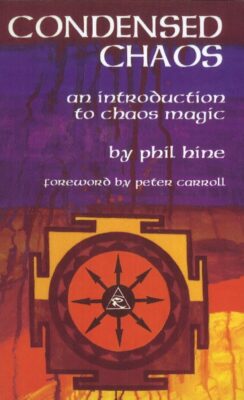
Recommended book:
Condensed Chaos: An Introduction to Chaos Magic
Condensed Chaos provides a practical introduction to Chaos Magic, one of the fastest growing areas of Western Occultism. Through it you can change your circumstances, live according to a developing sense of personal responsibility, effect change around you, and stop living as a helpless cog in some clockwork universe. All acts of personal/collective liberation are magical acts. Magic leads us into exhilaration and ecstasy; into insight and understanding; into changing ourselves and the world in which we participate. Through magic we may come to explore the possibilities of freedom.
