
 New Years Eve Ritual 2026/2027 with Savannah
“As above, so below”
This page provides an introductory overview of Hermeticism and its relationship to magic. It is intended to help readers understand the tradition before exploring more specialized forms of Hermetic practice.
Why Is Hermeticism Included in the Belief Systems Section?
Hermeticism is included in the Belief Systems section because it is a broad spiritual and philosophical tradition, rather than merely a collection of magical techniques.
Beginning with Hermeticism allows students to understand the ideas behind many forms of Western occultism before moving into more specialized practices. Its teachings can provide context for later studies in:
- Ceremonial magic
- Planetary magic
- Alchemy
- Hermetic Qabalah
- Talismans
- Ritual symbolism
- Theurgy
- Astrological magic
You do not have to follow it as a formal religion.
Hermeticism can be approached in several ways:
- As a philosophy: studying ideas such as correspondence, unity, the nature of mind, and spiritual transformation.
- As a magical tradition: practicing meditation, visualization, elemental work, astrology, ritual, talismans, or ceremonial magic.
- As a spiritual or religious path: incorporating prayer, devotion, theurgy, sacred texts, and beliefs about the Divine.
- As an influence on other traditions: exploring its relationship to alchemy, Renaissance magic, the Golden Dawn, Hermetic Qabalah, or Thelema.
Many students begin with the areas that interest them most. For example, one person may focus on Hermetic philosophy and meditation, while another studies planetary magic, alchemy, or ritual symbolism. You can also study Hermeticism academically without practicing it spiritually or magically.
However, it helps to learn the basic philosophy and historical context before combining selected practices. This gives the different subjects a coherent foundation and helps you understand how they relate to one another. You do not need to accept every Hermetic idea, join an organization, or adopt a religious identity to benefit from studying the tradition.
Interesting Facts About Hermeticism
Hermeticism has had a major influence on Western occultism, even when modern practitioners do not immediately recognize it. Ideas associated with Hermeticism can be found in or have influenced:
- Renaissance magic
- Alchemy
- Astrology
- The magical traditions of the Golden Dawn
- Hermetic Qabalah
- Thelema
- Ceremonial magic
- Occult tarot
- Modern witchcraft and esoteric spirituality
The phrase “As above, so below” is commonly associated with Hermeticism. It expresses the idea that different levels of reality—spiritual, celestial, natural, and human—may reflect or correspond with one another.
Another fascinating feature of Hermeticism is that it has been interpreted in several different ways. Some people approach it as a religious or mystical tradition. Others see it as a philosophical system, a source of magical techniques, or a method of personal transformation.
Because of this, there is no single modern way of practicing Hermeticism.
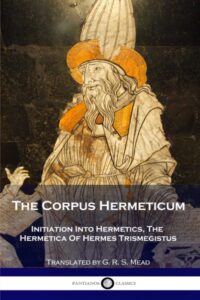
Hermeticism and Hermetic Magick
Hermeticism is a philosophical, spiritual, and religious tradition based on teachings attributed to Hermes Trismegistus, a legendary figure associated with the Greek god Hermes and the Egyptian god Thoth. The tradition developed through the blending of Greek philosophy, Egyptian religious ideas, and other spiritual and philosophical influences of the ancient world.
Hermeticism explores the nature of the Divine, the structure of the universe, the human soul, and humanity’s relationship with the spiritual world. Its teachings encourage the pursuit of wisdom, self-knowledge, spiritual understanding, and personal transformation.
Although Hermeticism has influenced many forms of occultism and ceremonial magic, it is not simply a system of spells or rituals. It is a broader way of understanding reality and the connection between the spiritual and material worlds.
What Does Hermeticism Teach?
Hermetic teachings often focus on the idea that the universe is ordered, interconnected, and infused with intelligence or divine mind. Human beings are viewed as having the potential to develop greater awareness of themselves, the universe, and the Divine.
Common themes within Hermeticism include:
- The nature of God or the Divine Mind
- The relationship between spirit and matter
- The structure and order of the universe
- The nature and purpose of the human soul
- The pursuit of wisdom and spiritual knowledge
- The connection between the visible and invisible worlds
- Personal purification and transformation
- The relationship between the individual and the cosmos
A central goal of Hermetic study is often described as gnosis, meaning direct spiritual knowledge or understanding. This knowledge is not limited to intellectual learning. It may also involve contemplation, self-examination, meditation, prayer, and personal spiritual experience.
The Hermetic Texts
Hermetic ideas are primarily associated with a collection of writings known as the Hermetica. These texts are attributed to Hermes Trismegistus and include philosophical, theological, and spiritual discussions.
Some of the best-known Hermetic works include:
These writings discuss subjects such as the nature of God, creation, the human soul, the cosmos, spiritual rebirth, and the pursuit of divine wisdom.
What Is Hermetic Magick?
Hermetic magick is the practical use of magical, spiritual, and symbolic methods influenced by Hermetic philosophy. It applies Hermetic ideas to personal development, spiritual exploration, ritual, and the pursuit of knowledge.
Hermetic magick may include:
- Meditation and contemplation
- Prayer and invocation
- Ritual purification
- Astrology and planetary symbolism
- Alchemy
- Sacred names and divine symbolism
- The study of magical correspondences
- Talismans and planetary magic
- Ceremonial rituals
- Work with the elements
- Visualization and spiritual exercises
Hermetic magick is based on the belief that the universe is interconnected. Planets, elements, numbers, colors, symbols, divine names, and other aspects of creation may be understood as reflections of a larger spiritual order.
Hermeticism and Hermetic Magick: What Is the Difference?
Hermeticism and Hermetic magick are closely related, but they are not exactly the same.
- Hermeticism is the broader philosophical and spiritual tradition.
- Hermetic magick is the practical application of Hermetic ideas through ritual, symbolism, meditation, prayer, and related methods.
A person may study Hermetic philosophy without practicing magic. Likewise, someone may practice magical techniques influenced by Hermeticism without following every aspect of its philosophical or religious worldview.
For this reason, Hermeticism should not be treated as identical to ceremonial magic. Hermetic philosophy has influenced ceremonial magic, but it is broader than any single magical system.
Hermeticism and Ceremonial Magic
Hermeticism has had a major influence on Western ceremonial magic. Many later magical traditions drew upon Hermetic ideas, including:
- Planetary magic
- Talismanic magic
- Alchemy
- Hermetic Qabalah
- Renaissance magic
- The magical systems of the Golden Dawn
- Modern ceremonial and ritual magic
However, these subjects should be distinguished from Hermeticism itself.
Hermeticism provides a philosophical and spiritual foundation. Ceremonial magic is a category of practical ritual work that may incorporate Hermetic ideas along with astrology, Qabalah, Christian mysticism, Neoplatonism, and other influences.
Studying Hermeticism
A beginner may approach Hermeticism through several complementary paths:
- Study its history and the development of the Hermetic tradition.
- Read introductory material on the Hermetica and Hermes Trismegistus.
- Examine its central ideas, including divine mind, correspondence, spiritual knowledge, and personal transformation.
- Practice reflection and meditation rather than treating the subject as purely intellectual.
- Learn the symbolic language of planets, elements, numbers, and traditional correspondences.
- Explore practical magic gradually, after developing a solid understanding of the underlying philosophy.
Quick Questions About Studying Hermeticism
What could I gain from studying Hermeticism?
Studying Hermeticism can give you a framework for understanding the relationship between the individual, nature, the cosmos, and the Divine. You may develop a deeper knowledge of symbolism, correspondences, meditation, ritual, astrology, alchemy, and spiritual transformation.
Will I be able to cast spells?
Yes. Hermetic study can provide the foundation for practical magical work, including elemental rituals, planetary magic, talismans, invocations, protective work, and other forms of ceremonial spellcraft. The emphasis is on understanding the principles behind a working rather than simply following a set of instructions.
Will I be able to work with spirits?
Hermeticism includes traditions of communication and cooperation with spiritual beings, including angels, planetary intelligences, elemental beings, and other spirits. Students generally begin by learning the relevant correspondences, sacred names, ritual structure, and methods of preparation before attempting more advanced spirit work.
Will I be able to work with demons?
Demonology and spirit work appear in some branches of Western ceremonial magic, but they are not required for studying Hermeticism. Hermetic practice may instead focus on the elements, planets, divine names, angels, theurgy, meditation, or alchemical transformation.
How long does it take to learn Hermetic magic?
Intermediate and advanced work can require years of continued study and practice.
When can I begin performing rituals?
You can begin with simple practices as soon as you understand their purpose. Introductory exercises may include meditation, elemental contemplation, planetary observation, prayer, visualization, and creating a dedicated ritual space. More complex ceremonies should follow a period of study and preparation.
How will I know that I am progressing?
Progress is shown through greater concentration, a clearer understanding of correspondences, stronger ritual discipline, improved symbolic interpretation, and a deeper awareness of the relationship between the inner and outer worlds. In Hermeticism, advancement is measured not only by the rituals one can perform, but by the wisdom and understanding gained through them.