
 New Years Eve Ritual 2026/2027 with Savannah
Black Magic, Blog, Luciferianism, Rituals
Lucifer Pathworking: A Practitioner’s Guide to Direct Contact
May
Lucifer pathworking is a guided inner-journey ritual that puts you in direct, structured contact with Lucifer for illumination, shadow transmutation, and hard counsel. It is not evocation, and it is not a parlor trick. It works for practitioners who have some grounding in ritual discipline and want a genuine exchange rather than a performance. Done right, you walk away with clarity on a stuck situation, a felt shift in your nervous system, and material to work with for weeks.
The bare-bones flow looks like this:
- Set a single, specific intention before you light anything.
- Prepare a quiet, undisturbed space and a simple altar.
- Draw, place, or activate the Sigil of Lucifer as your focal point.
- Enter through breathwork and visualization until the meeting feels present, not imagined.
- State your petition plainly, listen for the response, and offer something real in exchange.
- Close deliberately: banish, ground, and write down everything before it fades.
Safety Callout: If you’re in active psychiatric crisis, recently destabilized on medication, or working through acute trauma without professional support, wait. Pathworking amplifies whatever is already loud in your mind. Do this when you’re steady, not when you’re desperate.
Key Takeaways
Lucifer pathworking succeeds when preparation, honest intention, and disciplined closing all get equal weight, not when the visualization is dramatic.
| Point | Details |
|---|---|
| Readiness comes first | Confirm emotional stability and rule out active psychosis, fresh trauma, or medication instability before starting. |
| Preparation shapes the outcome | Set up sigil, incense, and a quiet space, and budget close to 90 minutes for a full first session. |
| The script has a fixed shape | Follow opening, entry, meeting, petition, and closing in order, and never skip the grounding steps. |
| Integration is not optional | Journal within hours and follow through on any offering made during the working within 72 hours. |
| Reciprocity beats command | Treat the relationship as an exchange, not a demand, and avoid the master-servant mindset entirely. |
| Guided work exists for complex cases | Black Witch Coven offers bespoke Luciferian petitions and guided sessions for situations solo pathworking can’t safely cover. |
Table of Contents
- What Is Lucifer Pathworking, and How Does It Differ From Evocation?
- Are You Ready for This, or Should You Wait?
- How Do You Prepare for a Lucifer Pathworking Session?
- What Does the Full Ritual Script Look Like?
- How Do You Know Contact Was Real, and What Do You Do Afterward?
- How Do You Build a Long-Term Working With Lucifer?
- What Goes Wrong, and How Do You Fix It Mid-Session?
- What Should You Read and Study Next?
- What Does Black Witch Coven See in Advanced Practitioner Work?
- When Should You Hire a Professional Instead of Working Solo?
- Sources
- FAQ
What Is Lucifer Pathworking, and How Does It Differ From Evocation?
Pathworking is an inner voyage. You build the meeting through visualization, breath, and symbol, and you meet Lucifer on a threshold your own consciousness constructs and holds open. Evocation is different in kind: it aims to draw a spirit into manifestation outside the practitioner, often into a triangle, mirror, or scrying medium, with a much heavier ritual apparatus and a sharper command structure.
Luciferian practice treats Lucifer as a teacher of illumination and self-sovereignty rather than a cartoon devil to be feared or worshipped blindly. That framing runs through most serious modern writing on the subject, including work on Lucifer in occult practice that draws a hard line between Luciferianism and simplistic devil worship. The relationship is closer to mentorship laced with rebellion than to servitude.
Classical grounding matters here. The Grimorium Verum situates Lucifer within a hierarchy of infernal rulers with defined offices and courtiers. The Book of Enoch, especially its Watchers material, gives the older mythic scaffolding that later Christian and occult writers repurposed into the Lucifer/Satan conflation. Neither text hands you a pathworking script, but both give you the mythic weight that makes the archetype worth approaching seriously rather than casually.
Modern manuals fill the practical gap those older texts leave open. Daemons of High Magick by Michael Ford treats pathworking as a distinct discipline built around activated sigils and respectful petition rather than command. Lucifer and the Hidden Demons by Theodore Rose circulates widely in forum discussion as a reference point for practitioners comparing notes on their own contact experiences.
| Aspect | Pathworking | Evocation |
|---|---|---|
| Location of contact | Inner, visualized meeting space | External, physical or scried manifestation |
| Ritual apparatus | Sigil, breath, visualization | Triangle, mirror, incense, sometimes blood pacts |
| Control dynamic | Reciprocal dialogue | Command and constraint |
| Typical outcome | Insight, counsel, shadow work | Manifestation, bargained results, pacts |
| Skill entry point | Accessible to intermediate practitioners | Usually requires more ceremonial experience |
The Sigil of Lucifer itself functions as a threshold key in pathworking. It anchors attention, marks the boundary between ordinary consciousness and the working space, and gives you something concrete to return your focus to when the visualization wavers. The Morning Star imagery behind it, light-bringer, rebel, the one who refuses a fixed hierarchy, is the entire reason Luciferian pathworking reads differently than a generic “demon summoning.”
Are You Ready for This, or Should You Wait?
Readiness is not about how badly you want an answer. It’s about whether your nervous system and your intentions can hold what shows up. If you’ve done any lucid meditation, trance work, or prior pathworking, you already know what it feels like to sustain a visualization past the point where your rational mind wants to bail. That capacity matters more than any amount of reading.
A blunt self-check: have you ever sat with real silence and not panicked? Have you finished a ritual you started, even when it got uncomfortable? If either answer is no, start smaller before you attempt a full Lucifer working.
Certain conditions are firm stop signs, not soft suggestions:
- Active psychosis or a recent psychotic episode.
- Major trauma still raw and unprocessed, particularly anything involving loss of control or violation.
- Recent medication changes for mood or anxiety disorders that haven’t stabilized.
- Active addiction that compromises judgment or impulse control.
If any of these apply, talk to a mental health professional before you touch the ritual. This is not a moral judgment. It’s a mechanical one: altered states amplify whatever is already unstable.
Ethics here is not about permission slips. It’s about honesty. Before you do this, ask yourself plainly why you want contact with Lucifer and what you intend to change about your life afterward. If your honest answer is “I want power over someone else with none of the accountability,” you’re not ready for a reciprocal relationship. You’re looking for a vending machine, and that’s not what this is.
Pro Tip: The single most common beginner mistake is approaching Lucifer with a master-servant mindset, either demanding obedience or groveling for favor. Neither works. Approach from curiosity and willingness to be changed by what you learn, not from desperation. Desperation reads as weakness to any entity worth working with, and it invites testing.
How Do You Prepare for a Lucifer Pathworking Session?
Preparation is where most first attempts fail, not the ritual itself. A rushed setup produces a rushed, shallow contact.
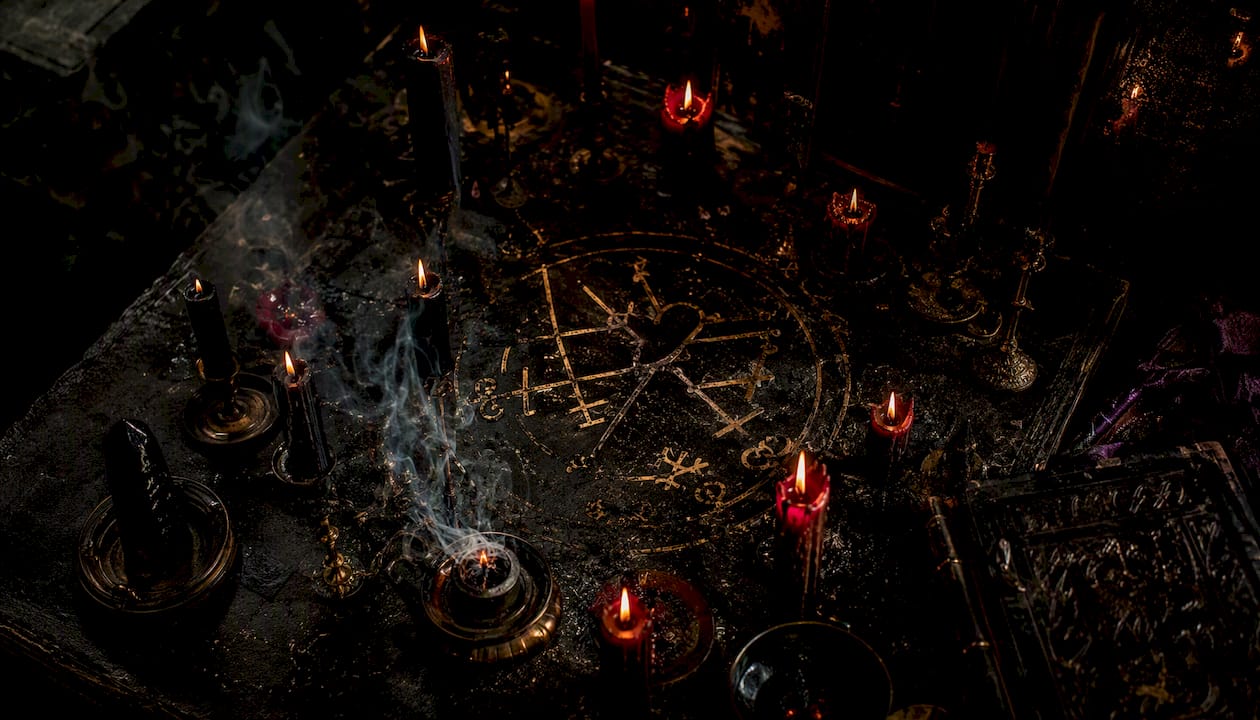
Your physical kit doesn’t need to be elaborate, but it needs to be intentional. A black or red candle anchors the working visually. Frankincense, dragon’s blood, or copal resin gives you an olfactory trigger that your brain will eventually associate with the state you’re trying to reach. The Sigil of Lucifer, whether hand-drawn on parchment, printed, or carved into the candle wax itself, serves as your visual anchor point. A dedicated journal, kept only for this work, captures what happens before memory smooths it over.
| Element | Correspondence | Alternative if unavailable |
|---|---|---|
| Candle color | Red (passion, will) or black (mystery, threshold) | Any single-color unscented candle |
| Element | Air (clarity, insight) | Incense smoke as a stand-in for airflow |
| Incense/resin | Frankincense, copal, dragon’s blood | Any resin you associate with clarity |
| Crystal | Sulphur, smoky quartz, citrine | Any stone that feels aligned to you |
| Sigil medium | Drawn on parchment or printed | Carved into candle wax or visualized only |
| Journal | Dedicated notebook | Voice memo transcribed after |
Lucifer’s correspondence to Air shows up repeatedly in practical entity profiles, and it’s not decorative. Air governs clarity, cutting through illusion, and mental sharpness, which is exactly the register you want for this kind of contact. That’s why breathwork carries so much weight in the ritual itself rather than being an afterthought.
On sigil placement: some practitioners draw it fresh each session as an act of devotion. Others charge one sigil permanently and keep it on the altar, treating repeated use as a way to deepen the channel over time. Either works. What doesn’t work is treating the sigil as decoration you glance at once and forget.
Timing matters less than consistency, but if you want a framework, a typical session runs like this:
- Preparation and space setup: 15 to 20 minutes.
- Grounding and breathwork before opening: 5 to 10 minutes.
- The working itself, from opening to closing: 20 to 40 minutes.
- Aftercare and journaling: 15 to 30 minutes, sometimes longer if the contact was intense.
Budget close to ninety minutes total the first few times. You’ll compress this as you gain fluency.
What Does the Full Ritual Script Look Like?
This is the working itself, broken into the phases that matter. Adapt the wording to your own voice. What you’re saying matters less than whether you mean it.
-
Consecrate the space. Cleanse with smoke or sound, then draw a boundary, spoken or visualized, that marks the room as separate from ordinary time. A simple line works: “This space stands apart. Nothing enters here without my will.”
-
Ground through breath. Slow, deep breathing for several minutes, ideally something like a spinal breathing pattern that draws energy up the spine on the inhale and settles it on the exhale. Practitioner accounts of daily Lucifer contact emphasize this kind of breathwork as the mechanism that shifts the nervous system from ordinary alertness into a receptive stillness.
-
State your intention aloud. One sentence, no hedging. “I come seeking clarity on [specific situation], and I offer [specific exchange] in return.”
-
Activate the sigil. Stare at it until the lines blur or pulse, or trace it with your finger while visualizing it igniting in gold or violet light. This is your doorway.
-
Enter the visualization. See a threshold, a gate, a doorway of flame, whatever image arises naturally for you. Walk through it. If you’re not a strong visualizer, use sensory anchors instead: the temperature shift, a sound like distant wind, the weight of the space changing around you. Auditory practitioners can build the journey through an internal spoken narration instead of imagery; kinesthetic practitioners can focus on the sensation of movement and pressure rather than sight.
-
Meet Lucifer. Greet the presence directly and without groveling. “I come with respect and clear intent.” Ask your question or state your petition plainly. If you meet silence, don’t panic and don’t fill it with nervous chatter. Silence is often a test of composure, not a rejection. If the presence feels testing or confrontational, hold your ground calmly rather than either submitting or fighting.
-
Offer something real. This might be a promise of changed behavior, a creative work dedicated to the working, or a commitment to act on the counsel you receive. Vague offerings get vague results. “I will confront the situation I’ve been avoiding within seven days” carries weight. “I’ll try to be better” does not.
-
Listen fully before you leave. Give the response time to land, even if it comes as a feeling rather than words. Don’t rush this stage.
-
Close deliberately. Thank the presence, state clearly that the working is closed, and visualize the threshold sealing. Follow with a brief banishing, a spoken line or a gesture that reasserts your boundaries: “This working ends. I return to myself, whole and sealed.”
-
Ground physically. Eat something, drink water, put your bare feet on the floor, or simply sit in silence for a few minutes before doing anything else.
Pro Tip: Don’t rush the meeting phase. Beginners often cut the dialogue short because prolonged silence feels awkward. Sit with it for at least sixty full seconds before assuming nothing is coming through. Insight during pathworking often arrives late in the encounter, not at the opening.
A full session, done unhurried, runs 20 to 40 minutes for the working itself. Rushing past ten minutes usually means you left before anything substantial surfaced.
How Do You Know Contact Was Real, and What Do You Do Afterward?
Genuine contact tends to leave traces that outlast the ritual itself. Practitioners commonly report vivid dreams in the days following a session, unexpected synchronicities tied to the topic of the petition, a felt increase in personal courage or willingness to act on something they’d been avoiding, and recurring symbol motifs, flame, serpent, the morning star, showing up unbidden afterward.
Journal immediately, before the details soften. Useful prompts:
- What did the space around you feel like physically, temperature, weight, sound?
- What emotion arrived first, and did it shift during the encounter?
- What image, phrase, or symbol stuck with you most vividly?
- What did you offer, and do you actually intend to follow through?
- What one action will you take in the next 72 hours based on what came through?
Integration in the first 24 to 72 hours matters more than people expect. Revisit your journal entry the next day with a clearer head. Follow through on whatever offering or commitment you made, even in small form, immediately. Medium-term integration means weaving the experience into ongoing dreamwork, making a small recurring offering if the contact felt significant enough to warrant continuity, and doing targeted shadow work on whatever the encounter surfaced.
Watch for warning signs that call for a pause rather than a repeat session: persistent dread that doesn’t lift within a few days, intrusive thoughts that feel disconnected from your normal thinking patterns, or a compulsive urge to repeat the ritual immediately, as though you’re chasing rather than integrating. Any of these warrants stepping back, and possibly talking to someone experienced or a mental health professional, before you go further.
How Do You Build a Long-Term Working With Lucifer?
A single session gives you a data point. A sustained relationship gives you a working partnership, and that requires the same things any real relationship does: consistency, honesty, and clear terms.
Cadence depends on your goals. Daily micro-practices, five minutes of breathwork and sigil focus, keep the channel warm without demanding a full ritual every time. Weekly meditative check-ins work well for ongoing guidance on a specific life area. Monthly formal workings suit practitioners using the relationship for larger petitions or deep shadow integration.

| Cadence | Intended outcome | Commitment level | Example offering |
|---|---|---|---|
| Daily micro-practice | Maintain connection, build fluency | Low, 5 to 10 minutes | Brief acknowledgment, incense lit |
| Weekly meditation | Ongoing guidance on a specific goal | Moderate, 20 to 30 minutes | Journaling as devotion, small candle offering |
| Monthly formal working | Major petitions, deep shadow work | High, full ritual | Creative work, wine, a kept promise |
Offerings should mean something. Poetry or art created specifically for the relationship signals genuine investment. Wine or spirits poured in dedication are traditional and simple. Incense burned regularly builds a sensory association over time. But the most valuable offering, and the one wealth-focused daemon work with entities like Clauneck tends to emphasize, is action: following through on a promised behavior change is worth more than any object you could place on an altar.
Set explicit terms for any long-term arrangement, the same way you would with a serious human working relationship. What are you asking for repeatedly? What are you offering in return, and is it sustainable long-term? Renegotiate if your circumstances shift, rather than letting an old agreement quietly lapse into resentment on either side. A relationship with a spirit that has no boundaries is not devotion. It’s a blank check, and blank checks get cashed in ways you didn’t intend.
What Goes Wrong, and How Do You Fix It Mid-Session?
The most common failure mode is desperation dressed up as devotion: coming to the working needing an outcome so badly that you can’t hold steady presence during the ritual itself. Close behind it: poor preparation, skipping grounding because you’re in a hurry, and asking for too much in a single petition instead of one clear, specific request.
If a session starts feeling wrong mid-way, hostile presence, overwhelming dread, a sense of being tested past your comfort, you have real options besides panicking and bolting.
- Perform a brief banishing on the spot: state clearly and firmly that the working ends now, visualize the space clearing, and step back physically from the altar.
- Use smoke cleansing immediately afterward to clear residual charge from the room.
- Recite a short cutting phrase, something as direct as “I sever this cord, I reclaim my will,” while visualizing a cut line between yourself and the working.
- Ground hard afterward: cold water on your face, feet flat on bare floor, food in your stomach.
If a series of sessions leaves you consistently unsettled rather than occasionally challenged, pause the practice and consult someone experienced, or a mental health professional if the disturbance feels psychological rather than spiritual. There’s no prize for pushing through genuine distress alone.
Pro Tip: A hostile or testing response from Lucifer is often diagnostic, not punitive. Instead of treating it as failure, ask what it revealed about your own fear, control issues, or unresolved shame. Testing behavior in pathworking usually points directly at the shadow material you came to work on in the first place.
What Should You Read and Study Next?
Building real competence here means moving past a single article into sustained study. Start with primary framing, then move into modern practical manuals, then supplement with community reports you can cross-check against each other.
| Resource | Type | Best use |
|---|---|---|
| Book of Enoch | Classical/mythic text | Historical context on Watcher mythology and the roots of the Lucifer archetype |
| Grimorium Verum | Classical grimoire | Hierarchical context and symbolic grounding for demonic magic broadly |
| Lucifer and the Hidden Demons (Theodore Rose) | Modern pathworking text | Practitioner-oriented framing referenced widely in forum discussion |
| Daemons of High Magick (Michael Ford) | Modern pathworking manual | Sigil-based pathworking methods for Lucifer and nine other daemons |
| Guided meditation recordings | Audio | Vet for grounding instructions and clear closing sequences; avoid anything with no banishing step |
| Practitioner forums and threads | Community reports | Cross-check multiple accounts rather than trusting a single dramatic post |
Community reporting deserves a specific word of caution. Message boards and discussion platforms carry the bulk of first-person pathworking accounts online, and that concentration on discourse-style platforms means reliability varies wildly from thread to thread. Weigh any single dramatic account against several other independent reports before you build your expectations around it, and treat consistent, low-key accounts as more trustworthy than sensational one-off posts.
A sound study progression runs basic theory, understanding the archetype and the classical sources, then supervised or guided practice using a vetted manual or recording, then long-term devotion once you’ve had at least a few consistent, coherent contacts you trust.
What Does Black Witch Coven See in Advanced Practitioner Work?
Years of Left-Hand Path client work surface patterns that rarely show up in beginner guides. Advanced practitioners often deepen the sigil activation stage by combining it with sustained spinal breathing, drawing energy up through the body while holding visual focus on the sigil until the two sensations merge into one continuous state rather than two separate steps. That fusion is one of the clearest markers separating a shallow, imagined contact from one that produces lasting change.
Signs of authentic connection tend to be understated rather than dramatic. A subtle but persistent shift in confidence around the exact issue you petitioned about. A specific symbol recurring in dreams for days, not once and forgotten. A felt sense of being observed without dread attached to it. Loud, theatrical experiences are far less reliable indicators than quiet, precise ones.
Black Witch Coven’s intake process for clients seeking guided or custom Luciferian work follows firm operational rules: a readiness conversation before any working begins, full confidentiality on every case regardless of the outcome sought, and honest framing about what a working can and cannot deliver. No outcome is promised as guaranteed, because anyone claiming otherwise isn’t practicing honestly.
Clients who come to us after a DIY working went sideways almost always share one pattern: they skipped the readiness check on themselves, not the ritual mechanics. The ritual steps were fine. The timing, the emotional state, the clarity of intention, those were not.
A professional working differs from solo pathworking in a few concrete ways: a practitioner reads the situation and adjusts the ritual structure in real time. Aftercare guidance is tailored to what actually happened rather than a generic checklist. Complex petitions, business entanglements, protection needs layered with a request for insight, legal matters tied to a personal working get handled with structure most solo practitioners haven’t built yet. Hiring out makes sense when your situation is layered, when a prior solo attempt left you unsettled, or when you simply want someone experienced holding the framework while you focus on the contact itself.
An Author’s Note on Approaching Lucifer With Sovereignty
Every working starts with the same question in my mind: what am I actually willing to change about myself to earn this insight? Intention without reciprocity is just asking a stranger for favors, and Lucifer is not a stranger you can bluff. Risk gets managed by preparation and honesty, not by hedging your petition into vagueness so nothing can go wrong. Vague petitions just produce vague, useless results.
What I’ve observed holds consistently across serious practitioner accounts, my own reasoning, and the classical framing running through the Grimorium Verum and later occult writing: the practitioners who get real results are the ones who treat this as a relationship with genuine stakes on both sides, not a wish machine. The ethical standard I insist on is simple. State exactly what you want, offer exactly what you mean to give, and follow through even when the ritual glow has worn off and Tuesday morning makes the whole thing feel a little embarrassing. That follow-through is the entire practice. Everything else is theater.
No New Age gloss here, no promise that this is safe for everyone, no pretending fear isn’t a rational response to genuine contact. It is. Walk in anyway, prepared.
When Should You Hire a Professional Instead of Working Solo?
Solo pathworking builds real skill, but certain situations call for a guided hand instead. Black Witch Coven offers bespoke Luciferian petitions and guided pathworking sessions built around your specific circumstances, not a generic script, with full confidentiality and a results-oriented approach rather than vague reassurance.
Consider hiring out if you have no prior ritual experience and want your first contact guided rather than solo, if your goal is layered enough that a single petition won’t cover it, if a previous solo attempt left you shaken or uncertain what happened, or if you specifically want structured safeguards around the working rather than building them yourself under pressure. A guided session includes pre-working consultation, a custom petition built for your exact situation, and aftercare guidance tailored to what actually surfaced rather than a one-size-fits-all checklist.
If your working touches on demonic pacts or the Grimorium Verum tradition specifically, it’s worth reading through Black Witch Coven’s guide to Grimorium Verum practices before deciding whether to go solo or guided. When you’re ready to move forward with a custom Luciferian working, reach out to Black Witch Coven directly to discuss your situation and what a guided session would involve.
Sources
- Working with Lucifer in the occult | Roots And Rituals (Medium)
- Lucifer: High-Ranking Demonic Entity — Magical Experiments
- WORKING WITH LUCIFER — Church of Lucifer (practitioner post)
- How to Summon Clauneck for Wealth: Full Evocation Guide – The Occultist
- Daemons of High Magick: Pathworking and Rituals for Lucifer, Bune and Eight Other Daemons — Amazon listing
FAQ
What Is Luciferian Energy?
Luciferian energy refers to the quality of illumination, clarity, and willful self-sovereignty associated with Lucifer as the Morning Star archetype, distinct from generic “dark energy” framing found in casual occult writing.
What Is Lucifer’s True Form?
Lucifer has no single fixed form in occult tradition; practitioners report the presence appearing as radiant light, a winged figure, or simply a felt sense of clarity and presence rather than a visual form at all.
Who Is Lucifer’s First Demon?
There’s no single canonical answer across grimoires, but Clauneck appears in modern practice and grimoire-derived sources as closely associated with Lucifer, often described as favored by him and effective for wealth-focused petitions.
Can Lucifer Shapeshift?
Practitioner reports describe Lucifer’s presence shifting in perceived form between sessions, appearing as light, a humanoid figure, or pure sensation, which lines up with his broader association with fluid, non-fixed illumination rather than one rigid shape.
How Long Does a Lucifer Pathworking Session Take?
A full session runs roughly 90 minutes including setup and aftercare, with the working itself typically lasting 20 to 40 minutes once you’re experienced enough not to rush it.
