
 New Years Eve Ritual 2026/2027 with Savannah
Savannah’s Position on Pacts
My personal thoughts on pacts are simple and not particularly comforting.
A lot of modern people treat them like an online shopping order. They assume they can place the request, get what they want, and then cancel the arrangement when it no longer suits them. That is not how this works.
If you do not want a pact that can last for the rest of your life, do not make one. We can give suggestions on how a pact might be closed or removed, but there is no guarantee the demon will listen to any human request. Once a spirit has been bound into your energy or has decided it likes the connection, it may not want to leave. It may also not feel particularly obedient. A pact is not a genie in a bottle. Even with a formal agreement in place, the spirit is still an independent intelligence. It may deliver, partially deliver, delay, or refuse. That reality does not disappear because you wrote terms down.
I do not believe a pact can be made to function like a normal human contract with a clean expiry date. You are welcome to try structuring one that way. My own view is that once the link is real, the relationship is no longer something you fully control with paperwork and timelines.
This is why I treat pacts as serious, long-term commitments rather than convenient magical tools. If the work can be done through clear alliance, offerings, and ongoing relationship without a formal pact, that is usually the cleaner path. A pact should only be considered when you are genuinely prepared for the possibility that the connection will outlast your original plans.
A PACT WITH SATAN
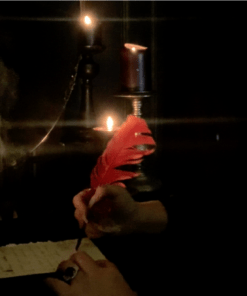
- For the setup, light the red and black candle, and calling the demons enn. The candles are lit first to allow the air to consist of the smoldering smoke which rids of any contaminates prior to adding any energies. This is so nothing will hurt the ritual
- The Sigil of Summoning (the demons sigil) is drawn in ink/ blood on the pact page, and are placed to the side. Anywhere on the page is fine
- Place the altar knife to the left of the workspace, your instructions to the right (it’s not important)
- I then say an invocation to Satan/ Lucifer to evoke the demonic energy on the ritual grounds. This demonic energy allows me to lift the doorway between the spiritual and the physical realm to communicate with Satan.
- Once this invocation is said, I then begin to cleanse the air over again. I do this by waving one of the candle’s around the altar.
- Then, using Satan’s sigil of summoning I call on his unique, demonic energy. I meditate on this for about forty minutes.
- Then I communicate the terms of the pact.
- I write this in blood as a contract.
- For the second part of the ritual, once the terms have been set, I give the offerings to Satan for his help. I rip a page from the Bible and sign a blood oath of the pact. (As the officiator of the pact ritual I cut my arm and use it to sign the contract). This indicates that I am signing your name on the clients behalf , but you may not need to do this step.
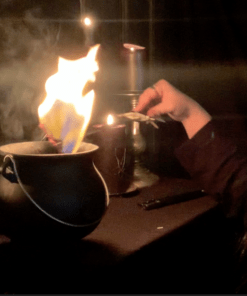
- I then burn both pages over the candle flames to fully seal the pact.
- Once I feel everything is done and received, I close the grounds. The candles are then blown out to signify the end of the pact ritual.
- For pacts with SATAN, you are to study Satansim in your spare time and learn to become a true follower. You are also to hold a small prayer session thanking him for the acceptance of the pact.



Historical Pact Rituals
Older European traditions treated the making of a pact as a formal, high-stakes operation rather than a casual agreement. Two main streams appear in the record: the detailed ceremonial methods of the grimoires, and the simpler (often alleged) folk and trial accounts.
Grimoire Methods
The most explicit instructions come from texts such as the Grand Grimoire and the Grimorium Verum.
In the Grand Grimoire the operator first prepares over several days. This includes cutting a hazel rod at sunrise with a new knife, acquiring a bloodstone (ematille), and often sacrificing a kid goat whose skin will be used for the circle. A protective circle is constructed, candles of virgin wax are placed, and a fire is lit. The spirit (commonly Lucifuge Rofocale in this text) is conjured through repeated appellations that escalate in force. Once the spirit appears, the operator presents a written pact, usually on virgin parchment and signed in the operator’s own blood. The classic formula promises the spirit payment at a future date (often after a set number of years) in exchange for treasure, power, or services. The spirit is expected to sign or mark the document as well.
The Grimorium Verum follows a related but distinct pattern. It emphasises preparation of parchment with the operator’s blood, the use of specific characters and the intermediary spirit Scirlin, and a more hierarchical approach to calling spirits. Pacts are treated as formal exchanges in which the operator offers something of personal value and the spirit agrees to perform certain services.
In both cases the written, blood-signed contract is central. The blood is understood to bind the operator’s life force and identity into the agreement. The circle and names of power are used to keep the operator from being overwhelmed during the negotiation.
Folk and Trial Accounts
Outside the grimoires, historical records (especially witchcraft trial documents) describe simpler forms. A person might kneel at a crossroads or in a solitary place, call the Devil or a demon, and offer a written or spoken pact. Blood is again frequently mentioned — three drops placed in an acorn shell, a signature in blood, or a mark made on the body. Some accounts claim the Devil or spirit then places a physical mark on the person as a seal of ownership.
Famous examples include the written pact produced at the trial of Urbain Grandier (1634), which was said to bear reversed signatures of several demons, and the numerous folk legends of individuals who signed away their soul for a fixed period of years (the Faust pattern being the most literary version of this idea).
These folk versions are less ceremonially elaborate than the grimoire methods but rest on the same core ideas: a deliberate offer, a personal concern (usually blood), a stated exchange, and a lasting mark or document that makes the agreement real.
Shared Elements
Across both streams certain features repeat:
- Isolation and preparation before the attempt
- A clear spoken or written statement of terms
- The use of the operator’s blood as a binding agent
- The expectation that the spirit will acknowledge the agreement
- The understanding that the pact creates a lasting obligation, often extending to the end of life or beyond
Historical pact work was never framed as easily reversible. The entire structure assumed that once the link was made and sealed, the operator was committed.
Pact Binding Mechanics
A pact becomes binding through a combination of clear agreement, intentional sealing, and the establishment of an energetic or spiritual link that both parties recognise. The outer form can vary. The underlying mechanics are more consistent than most people realise.
1. Mutual Recognition and Consent
The first requirement is that both sides actually accept the terms. A one-sided declaration is not a pact. The practitioner states what is requested and what is offered. The spirit indicates acceptance — through direct communication, a clear omen, a shift in presence, or sustained willingness to engage under those conditions. Without that mutual recognition, there is no contract to bind.
2. Clarity of Terms
Vague agreements produce weak or unstable pacts. The stronger the specificity (what is given, what is received, any time limits or conditions), the cleaner the link that forms. Ambiguity leaves room for misunderstanding or later dispute. This is why precise wording, whether spoken or written, has always been emphasised.
3. The Sealing Act
Something must mark the moment the agreement becomes active. Common traditional and modern methods include:
- Spoken oath made in the presence of the spirit
- Written statement signed by the practitioner (sometimes in blood)
- Exchange of a personal concern, offering, or drop of blood
- Sustained act of will in which both parties invest attention into the agreement at the same time
- Formal ritual gesture that both recognise as the sealing point
Blood is not magically required, but it is a strong personal concern and has long been used because it carries life force and identity. A sincere, focused act of will combined with a tangible marker is usually enough to set the link.
4. The Energetic Link
Once sealed, a channel or current forms between practitioner and spirit. This is the actual binding mechanism. It is not a physical chain. It is a sustained energetic relationship that carries obligation and access in both directions. The more consistently the terms are honoured, the stronger and more stable the link becomes. Neglect or broken terms weaken or distort it.
In older grimoire traditions the link was often reinforced by hierarchical authority, names of power, or the threat of penalty. In most modern theistic and freestyle work the link is maintained through reciprocity, attention, and the keeping of one’s word rather than through coercion.
5. Reinforcement Through Action
A newly formed pact is still relatively fragile. Repeated fulfilment of the agreed terms (offerings, service, recognition, or whatever was promised) deepens the current and makes the agreement more durable. Likewise, consistent delivery on the spirit’s side confirms and strengthens the bond. Pacts that are sealed and then ignored tend to fade or become problematic.
6. Closing or Dissolving a Pact
Because a real link has been formed, ending a pact requires deliberate action. Simply deciding you are finished is rarely enough. Formal release, return of any charged materials, clear verbal dissolution, and sometimes a final offering are used to sever or retire the current cleanly. Attempting to walk away without closing can leave residual obligation or friction.
Practical Summary
A pact binds when three things are present at once:
- Clear, mutual agreement on terms
- A deliberate sealing act that both sides recognise
- The formation of an ongoing energetic link that carries the obligation
Everything else — parchment, blood, specific wording, ceremonial structure — is support for those three elements. The strength of the pact depends less on how dramatic the sealing looks and more on how precisely the terms were set and how consistently they are upheld afterward.
Pact Dissolution Methods
Ending a pact is as important as making one. Because a real energetic link has been formed, simply deciding you are finished is rarely enough. The connection needs to be deliberately closed so that residual obligation, attention, or current does not linger.
Core Principles of Dissolution
A clean ending usually requires three things:
- Clear declaration that the agreement is over
- Release of any remaining obligation on both sides
- Severing or retiring the energetic link that was created when the pact was sealed
The more formal and serious the original pact, the more deliberate the dissolution should be.
Practical Methods
1. Formal Verbal Release In the presence of the spirit (or at least in a focused working space), state clearly that the pact is concluded. Example structure:
“I acknowledge the work that has been done under our agreement. I now declare this pact complete and ended. All obligations on both sides are released. The link between us is closed. Go your way as I go mine. It is finished.”
Speak with finality. Do not leave loopholes.
2. Return or Destruction of Charged Materials If the pact involved a written contract, sigil, personal concern, or dedicated object, that item should be handled as part of the closing. Common approaches include burning the written agreement, burying it, or otherwise releasing it with the explicit intention that the pact ends with its destruction. Any remaining offerings or tools that were specifically tied to the agreement are best retired or disposed of cleanly.
3. Final Offering as Closure Some practitioners give a last offering at the moment of dissolution, framing it as payment in full or a gesture of clean parting. This can help prevent a sense of unpaid debt on either side.
4. Energetic Severing After the verbal release, actively cut the link. This may be done through visualisation (seeing a cord or channel being cut or dissolving), a banishing gesture, the use of a blade or other tool as a symbolic cutter, or any method you already trust to break connections. The goal is to feel the specific current of that pact go quiet.
5. Banishing and Re-centring Follow the dissolution with a solid banishing and grounding. Re-establish the boundary of your own sphere so that no residual presence or obligation remains attached. Some people repeat a short banishing for several days afterward if the original link was particularly strong.
When the Spirit Does Not Agree
Most functional pacts can be ended by clear, respectful declaration and release, especially if the terms have been reasonably upheld. If a spirit resists dissolution or the link feels sticky, stronger measures may be required: repeated formal release, assistance from a more experienced operator, or in difficult cases a full banishing and cutting of all related current. Persistent refusal to leave or ongoing interference after a proper closing is a sign that the original pact was poorly structured or that the relationship has become unhealthy.
Preventive Note
The easiest pacts to dissolve cleanly are the ones that were made with clear terms and reasonable time limits or review points from the beginning. Open-ended or vaguely worded agreements are harder to retire later. This is one reason specificity at the time of binding matters.
Dissolution is not an admission of failure. It is responsible management of a real magical link. A pact that has served its purpose should be closed with the same seriousness with which it was opened.
Pact Renewal Options
A pact does not have to end when its original terms are fulfilled or when a set period expires. Many practitioners choose to renew, extend, or renegotiate rather than dissolve the link. Renewal keeps the existing current alive while updating the agreement to match current needs.
When Renewal Makes Sense
Renewal is useful when:
- The original pact worked well and the relationship remains productive
- The initial goals have been met but further work with the same spirit is desired
- Circumstances have changed and the old terms no longer fit
- Both sides still show willingness to continue
It is generally smoother than dissolving a solid pact and then creating an entirely new one later.
Common Renewal Approaches
1. Simple Extension The original terms are kept essentially the same, and the time frame or ongoing nature of the agreement is extended. This is the most straightforward option. The practitioner formally acknowledges the previous work, states that the pact continues under the same conditions, and both sides reconfirm.
2. Renegotiation and Update The core relationship is maintained, but specific terms are adjusted. Requests may change, offerings may be modified, frequency of contact may be altered, or new limits may be added. This is useful when life circumstances or magical goals have shifted. The old agreement is acknowledged as complete in its original form, and the updated version is sealed as the new working arrangement.
3. Escalation or Deepening Some renewals increase the scope or intensity of the relationship. What began as limited assistance may become a broader alliance, or a temporary arrangement may become longer-term. This should only be done when the practitioner is certain they can meet any increased obligations.
4. Periodic Review Model Instead of one long open-ended pact, some practitioners build in regular review points from the beginning (for example, yearly or at specific intervals). At each review the pact is either renewed, adjusted, or closed. This prevents the agreement from drifting into vague or outdated territory.
How Renewal Is Done
The mechanics are similar to the original sealing, though usually less elaborate if the relationship is already established:
- Contact is made and the previous pact is acknowledged
- The desire to continue or update the agreement is stated clearly
- New or continuing terms are laid out
- Both sides indicate acceptance
- The renewal is sealed (spoken confirmation, written update, offering, or other marker both recognise)
- The link is consciously reaffirmed
Because a current already exists, renewal often feels smoother and faster than the initial binding. The existing energetic link is simply refreshed and redirected rather than created from nothing.
Practical Considerations
Renewal should still be deliberate. Treating an old pact as automatically permanent without periodic confirmation can lead to stale or unbalanced arrangements. Clear re-statement of terms protects both sides.
If the spirit shows reluctance or the old current feels strained, it is better to dissolve cleanly than to force a renewal. A willing continuation is far more stable than an obligatory one.
Renewal is a practical tool for long-term work. It allows a successful relationship to evolve without the disruption of full closure and the effort of starting over.
2 thoughts on “Pacts”
Leave a Reply
You must be logged in to post a comment.
Im using my pact kit to speak with “clauneck” Do i go about it the same way, just in his favor?? Am I able to work with clauneck and satan/lucifier at the same time?? Any limits??
Yes- naturally you would use his sigil. And look under the other suggestions under Clauneck too. Yes you can work with as many as you like. As long as you can hold the power and the energy you are fine. Naturally if this is your very first time there is going to be a bunch of other challenges, hence why you will need dedication and the ability to perform the rituals time and time again.