
 New Years Eve Ritual 2026/2027 with Savannah
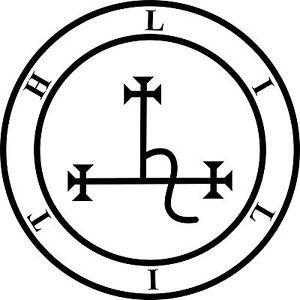
LILITH
She was a night wind in Sumer before she was a wife in Eden. The rabbis wrote her into their stories to frighten mothers, and the women who read those stories two thousand years later recognised a queen.
Who Lilith is to practitioners today
Lilith is the Queen of the Night and Queen of the Witches: the first woman who refused to lie beneath Adam, the bride of Samael, mother of demons and queen of the dark feminine in Jewish lore, and behind all of that a spirit of the Mesopotamian night far older than any scripture.
She is not one of the seventy-two spirits of the Goetia, and she has no ducal rank in Solomon’s catalogue. She comes from somewhere older. The Sumerians and Akkadians feared a class of night spirits, the lilû and lilītu, wind-demons of the empty places who came to sleepers and to women in childbirth. From that root grew the Lilith of Isaiah, the Talmud, the incantation bowls, the Alphabet of Ben Sira and the Kabbalah.
Every one of those texts was written to keep her out. Mothers hung amulets over cradles against her; men were told not to sleep alone in a house because of her. And yet the figure they described, a woman who would not be ruled, who chose exile over submission and took her own lovers, is exactly the figure a great many witches now take as their queen.
Practitioners today meet her as a goddess and a mother, a teacher of sex, sovereignty and the dark, and a protector of women and children who has nothing to do with the baby-killer of the old charms. Others meet the fearsome night-queen of the old charms exactly as written, and some meet both. Black Witch Coven has worked with her for many years and keeps both faces in view.
She is famous for choosing who she appears to. This page starts with how people actually work with her now, the prayers they use and the questions they ask, and ends with what the old tablets, scrolls and rabbis said.
Why people work with Lilith
People come to the right spirit for the right purpose. These are the reasons practitioners come to Lilith, from her oldest offices to what people actually bring her today.
Classic reasons
- The night: darkness, dreams, the moon and the hours when the world sleeps
- Sexuality: desire, seduction and the succubus current, untamed and unashamed
- Refusal and sovereignty: the woman who would not be subordinate and walked out of paradise
- Women’s mysteries: the womb, birth, blood and the dangers and powers around them
- Wildness: the desert, the ruin, the owl and the wind in the empty places
- Queenship: the bride of Samael, mother of demons and Queen of the Night
Modern reasons
- Sexual liberation and sex magick: people work with Lilith to throw off shame and to use desire itself as power
- Women’s protection: calling on Lilith to protect women and children, and against those who abuse them
- Self-worth and boldness: petitions for confidence, independence and the nerve to refuse a lesser role
- Shadow work: meeting suppressed rage, desire and the parts of the self that were forbidden
- Seeing through illusion: discernment, cutting through lies, and seeing people as they really are
- Justice and false accusation: ending gossip and slander, and answering those who lied about you
- Glamour and attraction: spells with Lilith to become magnetic, desired and noticed
- Black magick and defence: baneful and defensive work, removing curses and auric attachments
- Divination and dreams: necromancy, astrology, pyromancy and messages in the night
- Familiars: some practitioners ask her for a familiar spirit or a nocturnal servitor
- Fertility and its refusal: both the wish for a child and the right not to have one
- Turning darkness into usable power: transforming heavy, dark energy into something the witch can work with
- Wealth and fame: she is also petitioned for money and recognition, especially by women in their own businesses
- A patron for the whole path: many take her as Mother and Queen for a lifetime of witchcraft
Traditional, for reference
What the old tablets, scripture and rabbinic and Kabbalistic texts assign her. This is historical background, not modern practice.
- Mesopotamia: the lilû, lilītu and ardat-lilî, wind and night spirits who visit sleepers and threaten mothers and infants
- Isaiah 34:14: the lilit who finds rest among the ruins of Edom with the wild beasts
- Babylonian Talmud: a winged, long-haired night demon; a man should not sleep alone in a house, lest Lilith seize him
- Aramaic incantation bowls: bills of divorce served on Lilith to drive her from a household
- Alphabet of Ben Sira: Adam’s first wife, made from the same earth, who refused to lie beneath him and fled
- Zohar and Kabbalah: the bride of Samael and queen of the sitra achra, the Other Side
Spirit Temperament
Ease of working: 4/10
How easy Lilith is for a witch, magician or devotee to work with
- Beginner-friendly: 🔥🔥
She chooses who she comes to. Many who call her hear nothing for months; others are called by her before they ever reach out. - Human tolerance: 🔥🔥🔥
Fiercely maternal to those she takes as her own, and openly hostile to pretence. Many report she prefers women, though plenty of men work with her closely. - Intensity: 🔥🔥🔥🔥🔥
Described again and again as the strongest presence a practitioner has ever met: magnetic, sexual, and for some outright terrifying at first. - Upheaval factor: 🔥🔥🔥🔥🔥
She drags up what was buried: rage, desire, shame, the relationship you should have left. Some describe the first months with her as traumatic and worth it. - Speed: 🔥🔥🔥
Dreams and signs can come quickly; the deep change she brings takes as long as the person resists it. - Demands: 🔥🔥🔥🔥
Honesty above everything, real offerings, and the willingness to be changed. She does not tolerate a hidden agenda.
Best for: sexual sovereignty and sex magick, women’s protection, self-worth, shadow work, justice against those who lied about or abused you, and witches seeking a Queen for their whole path.
Scores are Black Witch Coven’s view, drawn from practitioner reports and our own work.
Lilith at a glance
- Titles: Queen of the Night, Queen of the Witches, Queen of the Demons, Mother of Demons, the first woman, the bride of Samael
- Name: from the Mesopotamian lilû / lilītu class of night and wind spirits, usually rendered “night monster”; later heard in Hebrew as layla, “night”
- Origin: the night demons of Sumer and Akkad, carried into Jewish lore through the Babylonian exile
- Consorts: Samael; in some Kabbalistic texts Asmodeus
- Kabbalah: queen of the Qliphoth, linked to the shell of Malkuth (Nahemoth / Lilith) and to Gamaliel
- Sacred animal: the owl, with the serpent, the cat and the bat
- Enn: Renich viasa avage Lilith lanna
Names she has been known by
She has appeared across the centuries under many disguises. Some practitioners and writers, ourselves included, see her in these figures:
- Kali: “she who is black” or “she who is death,” the Hindu goddess of time, doomsday and death
- Inanna: the Sumerian Queen of Heaven, in whose sacred tree a lilith once made her home
- Hekate: the Greek goddess of magick, witchcraft, the night, the moon, ghosts and necromancy
- Lamia: her form in the Greco-Roman tradition
- The Lilu: as she appears around the tale of Gilgamesh
- Her secret names: Ita, Batna, Talto, Abito, Amizo, Izorpo, Kokos, Odam, Podo, Eilo, Patrota, Abeko, Kea, Partasha, among the names Jewish amulet lore says she revealed so that those who knew them could hold her off
Strictly, lilû is the name of the class of Mesopotamian spirits she grew from rather than her own name; it is usually translated “night monster.”
Correspondences
Used in Black Witch Coven (from our own practice):
- Candles: red and black, set as a pair
- Incense: jasmine, musk, dragon’s blood, sandalwood (red and white), lotus, black copal, golden copal, amber, myrrh, frankincense, olibanum, camphor, saffron, cinnamon, cloves
- Flowers: roses, hibiscus, chrysanthemum
- Crystals: onyx, moonstone, obsidian, diamond
- Offerings: red wine and liquor
- Ritual tools: the mirror, stones, a burning bowl, charcoal, her seal, an aspergillum, a chalice and a bell
- Animal: the owl
- Tarot: the Queen of Wands
- Moon: she is a moon goddess; we work with her at night, by moonlight
Her days
- 1 February: Imbolc, in the Northern Hemisphere
- 16 February: for Lilith the Elder
- 21 July and 1 August: Lughnasadh, in the Northern Hemisphere, for Lilith the Younger
Also used by other practitioners:
- Day: Monday, the moon’s day, and the dark of the moon
- Moon phase: waning and dark moon above all
- Element: Air, as the night wind she began as
- Offerings: lilies, apples and pomegranates, dark honey, red wine, rich desserts, perfume, silver jewellery, mirrors, images of owls, snakes, cats and bats
- Intangible offerings: art, dance, poetry, sexual energy, shadow work dedicated to her, advocacy for women and bodily autonomy
- Stones: garnet, bloodstone, labradorite, black tourmaline
- Metal: silver
Working with Lilith today
Lilith has no grimoire conjuration of her own, because the grimoire writers were busy trying to keep her out. What has grown up instead is a living, devotional practice: altar work, offerings, dreams, the mirror and the body. These are the ways practitioners approach her now, and how we work with her in Black Witch Coven.
She chooses
The most repeated thing said about Lilith is that she is not summoned so much as she arrives. Many practitioners describe being called by her first, through repeated dreams, owls, serpents, her name everywhere, or the number 13. Others call her for months and feel nothing until, one night, she is simply there.
The practical lesson is to come with an invitation rather than a demand. Build the altar, make the offerings, speak to her honestly, and let her decide when.
Honesty first
People who work with her closely say she has no patience for a pose. A hidden agenda, a request made to look good, or a person pretending not to want what they want tends to meet resistance or a frightening presence. She amplifies whatever is already in you. Coming to her truthful about your desire, your rage and your shame is the first offering.
The altar
- Her sigil, always, whatever else the ritual includes
- A red candle and a black candle, flanking the sigil
- A chalice of red wine
- A mirror, ideally a black or dark mirror
- Incense: jasmine, musk, dragon’s blood or sandalwood
- Red flowers, roses or hibiscus
- An owl, a serpent, or another of her creatures
- Something of your own body or desire: perfume, a lock of hair, a written confession
Ideas to summon Lilith
These are the methods we have given on this page for years.
- Always include her sigil in whatever ritual you design. Even when working with the dark mirror, draw her sigil on the mirror in your own blood
- Set the atmosphere: a dark room, the right music, incense filling the air, and offerings of red wine, your own blood, or blood on a black candle
- Stay focused on your mission. Know exactly why you are calling her
- Write a petition stating simply your reason for calling out to Lilith, before you say her enn or an incantation
- Draw a small amount of blood from a finger and add a few drops to the paper, focusing on the connection
- Burn the petition in a fire-safe bowl when you are done
The rite of the palms
An older method that circulates in Lilith practice:
- Write Lilith’s Hebrew name in ink and blood on the palm of your left hand
- If you wish, write the Hebrew name of her partner, Samael, on your right palm and call to him as well
- Pour red wine into a chalice and set it on the altar before her sigil, between red and black candles
- Recite her invocation, then drink the wine
- Lie down, relax completely, and open yourself to receive her
The dark mirror
The mirror is one of her oldest tools. In a dark room lit only by her candles, draw her sigil on the glass, chant her enn, and gaze softly past your own reflection. Practitioners report her face, eyes or wings forming in the glass, a change in the reflection of their own features, or a sudden sense of her standing behind them. Many keep a mirror on her altar permanently and speak to her through it.
Dreams
Lilith is a spirit of the night and very often makes first contact in sleep. Practitioners place her sigil under the pillow, chant her enn as they drift off, and keep a journal by the bed. Common dream signs are wild-haired women, owls, serpents, desert ruins, red rooms, being watched by a beautiful and frightening figure, and intensely erotic dreams. Some describe nightmares for days before contact settles; others describe nothing but love.
Offerings
- Red wine and liquor
- Incense: musk, jasmine, dragon’s blood and sandalwood
- Flowers: roses, hibiscus, lilies, chrysanthemum
- Crystals: onyx, moonstone, obsidian
- Sweet and rich foods: apples, pomegranates, dark honey, chocolate
- Blood: a drop or two of your own blood on her candle, her sigil, the mirror or the petition; life force given to the queen of the womb and the night
- Sexual energy: dedicated to her, alone or with a consenting partner
- Acts: standing up for a woman, refusing a role you were pushed into, speaking a truth you were made to swallow
Signs of contact
- Owls heard or seen, often repeatedly, often close to the house
- Serpents, cats or bats turning up in life, dreams or images
- Her name appearing everywhere, and the number 13
- Candle flames flaring, leaning toward you, or burning red
- Vivid, erotic or frightening dreams, especially of a winged woman with long hair
- A sudden surge of confidence, anger or desire you did not expect
- A sense of being circled, or a weight on the bed at night
Practitioners in the demonolatry community describe her energy as the strongest thing they have ever worked with, and some as terrifying and repulsive at first. One devotee who had worked with her for some time said she challenges people to change the things she does not like about them, and that the friction is often exactly that. Another described the start of the relationship as traumatic, and worth it.
Working with Lilith alongside others
- Samael: her consort, called with her in the rite of the palms
- Asmodeus: named as her partner in some Kabbalistic texts
- Hekate: several practitioners report that Lilith herself told them Hekate was looking for them, and that the two are related
- Lucifer: often honoured beside her in Luciferian witchcraft
Pacts and dedications
Many people’s deepest work with Lilith is a dedication: taking her as Mother and Queen. A modern dedication:
- Is written by the practitioner, in their own words, at night
- Names what you are claiming back: your body, your desire, your voice
- States what you offer her in return
- Is signed in your own hand beside her sigil, and may be sealed with a drop of your own blood, since blood is life force and nearly every faith speaks of it as life itself
- Is kept on her altar or burned to her in the dark of the moon
We also offer Daemonic Magick with Lilith, worked on our own altar for you.
Inside the Course
Lilith’s sex magick rites, the succubus current and the rite of spirit-marriage to her are taught inside our course. Explicit ritual material of this kind has had our site flagged by hosting companies before, and we have been taken offline and forced to change hosts because of it. That is not a sales pitch, only the reality of running a site like ours.
Prayers and invocations to Lilith
Lilith is spoken to as a queen and a mother, and the prayers people use for her tend to be intimate, defiant and honest. The pieces below are written by Black Witch Coven for your own use. Speak them as they are, or let them show you the shape of a prayer and use your own words, which she is said to prefer.
How people pray to her
- At night, by moonlight: never in a hurry, ideally in the dark or waning moon
- Before the mirror: speaking to her through the glass
- With the enn: chanted to open, and carried as the candles burn
- Written and burned: a petition with a few drops of blood, given to the flame
- Candle colours: red for desire, passion and life, black for protection, banishing and the night
Her enn
Renich viasa avage Lilith lanna
Chant it slowly, low and rhythmic, until the room feels close and warm. Many chant it before sleep to invite her into dreams.
Opening invocation
Lilith, Queen of the Night,
wind of the empty places, owl of the ruin,
first woman, who would not kneel,
I call you into this place.
I come to you honest, with nothing hidden.
Come to me, Mother, as you choose.
Renich viasa avage Lilith lanna.
Hail Lilith.
Spoken as the red and black candles are lit and the mirror is uncovered.
Prayer for sovereignty
Lilith, you who walked out of paradise rather than lie beneath a man,
give me your refusal.
Let me take back my body,
my desire and my voice.
Let no one make me smaller than I am.
Where I was taught to obey, teach me to choose.
Said before the mirror, looking yourself in the eye as you speak.
Prayer for desire and attraction
Queen of the night, mistress of desire,
pour your heat into me.
Let me be seen. Let me be wanted.
Let my body be holy to me
and impossible for them to ignore.
Let what I desire come to me.
Said with a red candle, perfume on the altar and a drop of blood on the wick.
Prayer for protection of women and children
Lilith, mother of the night,
stand at the door of this house.
Spread your wings over the women and children within it.
Turn back every hand that means them harm,
and let the one who tries it
meet you in the dark.
Said with a black candle at the threshold, the sigil placed above the door.
Prayer to see through lies
Lilith, who sees what Adam would not,
take the veil from my eyes.
Show me who is lying to me
and who speaks against me in my absence.
Let the gossip turn back on the mouth that made it.
Let me see clearly, and be done with fools.
Said before the dark mirror, with the name of the person or the situation written beneath her sigil.
Prayer for shadow work
Mother Lilith, I will not hide from you.
Here is my anger. Here is my hunger. Here is my shame.
Take what I buried and put it back in my hands.
Let me be whole,
and let nothing in me be exiled again.
Said before journalling, with the room dark and her candle lit.
Gratitude and offering prayer
Lilith, Queen and Mother,
I thank you for coming to me,
for what you have shown me
and for what you have given back.
I give you this offering freely,
of my own will, as you taught me.
Hail Lilith.
Said as the offering is placed. Name it aloud before you begin.
Questions people actually ask
These are the questions that come up again and again in witchcraft, demonolatry and Lilith devotional communities, answered the way we would answer them.
Is Lilith a demon or a goddess?
Both, depending on whose book you read. In Mesopotamia she belongs to a class of night spirits; in Jewish lore she is the mother of demons and the bride of Samael; in the Kabbalah she is queen of the Other Side. To most of the witches and Luciferians who work with her today she is a goddess, a Queen and a Mother. Our view is the stance of this whole site: she is one of the ancient spirits the younger religions renamed a demon.
Was Lilith really Adam’s first wife?
That story comes from the Alphabet of Ben Sira, a Hebrew work written somewhere between the eighth and tenth centuries. In it, Lilith is made from the same earth as Adam, refuses to lie beneath him because they are equals, speaks the secret name of God and flies away. Three angels, Senoy, Sansenoy and Semangelof, are sent to bring her back; she refuses, and swears to spare any infant protected by an amulet bearing their names.
The story builds on an older puzzle: Genesis appears to describe the creation of woman twice, once in chapter 1 and again from Adam’s rib in chapter 2. Lilith became the answer to who the first woman was.
Does Lilith only work with women?
No. Many practitioners feel she prefers women, given her history, and she is very widely worked as a protector of women and their mysteries. But plenty of men work with her closely. Older texts describe her appearing to men in their sleep, and some practitioners say she comes to men more often for desire and to women more often for help. She decides.
Why do I feel fear when she is near?
Because she is intense, and because she brings up what you have buried. A great many practitioners report fear, nightmares or a repulsive feeling at first, and some describe the first stretch of the work as traumatic. Others say it was the most loving contact they ever had. Several experienced devotees point out that the friction is often her challenging the parts of you she wants changed.
If the fear will not settle, divination will tell you whether it is her, and whether she wants you now or later. Some people do not mesh with her at first and meet her years later.
She came to me in a dream. Is that her?
Very often, yes. Dreams are her most common first contact: a winged or long-haired woman, owls, serpents, red light, desert ruins, or intensely erotic dreams. Thank her, set out an offering, and ask through divination what she wants.
I have called her for months and felt nothing.
This is extremely common, and the same answer comes up again and again: stop trying so hard. She chooses when. Keep the altar, keep the offerings, keep your honesty, and let go of comparing your experience with other people’s. Many devotees describe months of silence before she arrived, and then no doubt at all.
Is Lilith the same as Lamia, Inanna, Kali or Hekate?
Many practitioners, including Black Witch Coven, see her in all of them, as the same great dark feminine power wearing different masks in different lands. Scholars treat them as separate figures with some shared imagery. In the Sumerian poem of Gilgamesh and the huluppu tree, a lilith lives in Inanna’s sacred tree until Gilgamesh drives her out, which is one reason the two are so often linked.
Who is Lilith’s consort?
In the Zohar and later Kabbalah, Samael. In a thirteenth-century Kabbalistic treatise there are two Liliths: Lilith the Elder, the bride of Samael, and Lilith the Younger, the bride of Asmodeus. Our own days for Lilith the Elder and the Younger follow that distinction.
What does Lilith want from me?
Honesty, courage and the refusal to be smaller than you are. She is said to push her people out of relationships and roles that diminish them, to make them claim their bodies and their desires, and to stand up for themselves and for other women. The offering many say she values most is acting on that.
What works, what doesn’t
These patterns come from first-hand accounts in witchcraft and demonolatry communities, Lilith devotional groups and our own coven. None of it is a rule, and accounts sometimes contradict each other.
What practitioners report works
- Honesty. Coming to her with your real desire and your real anger.
- Night work. Dark rooms, the waning and dark moon, dreams.
- Her sigil every time, and the mirror.
- Blood and wine. A drop of your own blood, and red wine in the chalice.
- Patience. Letting her come when she chooses.
- Acting on what she shows you. Leaving, refusing, claiming, speaking.
What practitioners say doesn’t work
- A hidden agenda. Pretence and performance tend to bring resistance or a frightening presence.
- Demanding she appear. She is the one who chooses.
- Treating her only as a sex demon. She is a queen, a mother and a teacher, and reducing her to a succubus misses most of her.
- Refusing the lesson. Asking for freedom and then clinging to the very thing she is pulling you out of.
- Comparing. Measuring your contact against other people’s stories.
Common beginner mistakes
- Reading early fear or nightmares as proof she is evil, rather than as the intensity of first contact
- Giving up after a few weeks of silence
- Coming to her only for sex or only for revenge
- Skipping the honesty and trying to impress her
- Assuming she will not work with men, or will only work with women
What changed when they kept going
People who stay with Lilith describe getting their bodies back: less shame, less fear of their own desire, more willingness to leave what diminishes them. Women in particular describe becoming harder to push around, and men describe meeting a part of themselves they had been taught to fear. Many say she became the Mother they never had, and that the frightening first months were simply her clearing the way.
The darker work: the night-hag, the abuser and the forbidden
Lilith is the protector of women, and she is also the night terror of a thousand amulets. People do not only bring her prayers for self-worth. They bring her the men who hurt them, the rivals who lied about them, and the wish to send the night-hag to someone who deserves her. We would rather explain that side than pretend it does not happen.
Workings against an abuser
Some practitioners call on Lilith to answer an abuser or a betrayer: to haunt his sleep, to turn his desire against him, to bring the consequences of what he did to his own door. This is justice work with her teeth showing, and in our practice it is handled very differently from a prayer for protection.
Inside the Course
The workings practitioners bring to Lilith against a named abuser, betrayer or rival, including sending her into a target’s sleep, are taught inside our course. Baneful material aimed at a specific person is a large part of why hosting companies have flagged our site in the past, and why we have been taken offline and had to move hosts. We say that plainly; it is not a pitch.
What the old tablets, scrolls and rabbis say
The living practice above is the real work. The old sources are its background, and they matter, because the Lilith of the amulets and the Lilith of the altar are the same figure seen from opposite sides.
Mesopotamia: the spirits of the night wind
The Sumerians and Akkadians knew a class of spirits called the lilû (male), lilītu (female) and ardat-lilî, “maiden of the lil.” They were wind and night beings of the desert and the ruined places, said to visit sleepers, to seduce, and to threaten pregnant women and newborns. They appear in incantations and protective rituals across the region for well over a thousand years before the Bible was written.
In the Sumerian poem of Gilgamesh, Enkidu and the Netherworld, the goddess Inanna plants a huluppu tree and finds a serpent in its roots, an Anzû bird in its branches, and a ki-sikil-lil-la-ke, a maiden of the lil, living in its trunk. Gilgamesh cuts the tree down and she flees into the wild places. This is one of the earliest stories of a lilith, and the root of her link to Inanna.
The famous Burney Relief, the “Queen of the Night,” a fired-clay plaque from around 1800 BCE now in the British Museum, shows a naked winged goddess with bird’s talons, horns and owls, standing on lions. It was long called Lilith; most scholars now identify her as Inanna, Ereshkigal or another great goddess. The image remains central to how many practitioners picture her.
The Arslan Tash amulets
Two small limestone plaques found at Arslan Tash in Syria, usually dated to the seventh century BCE, carry incantations in a Phoenician-Aramaic script against flying demons who strangle and steal into the house at night. Their exact reading is debated, but they show the same fear of night-flying female spirits travelling west from Mesopotamia into the Levant.
Isaiah and the Dead Sea Scrolls
The only time her name appears in the Hebrew Bible is Isaiah 34:14, in a vision of ruined Edom: among the wild cats, hyenas and goats, “the lilit shall also rest there,” finding her a place of repose. Translators have rendered it “screech owl,” “night monster,” “night hag” and “Lilith.”
In the Dead Sea Scrolls, the Songs of the Sage list Lilith among the demons, howlers and “spirits of the bastards” that the Master names in order to frighten them off. She is already part of a list of beings to be driven away by sacred words.
The Talmud
The Babylonian Talmud gives the first clear picture of her in Jewish law and lore: a female demon with long hair and wings. A man should not sleep alone in a house, it says, because Lilith will seize him. In its discussion of the punishments of Eve, it gives woman long hair “like Lilith.” From her union with sleeping men come the demons, the shedim, and she is called their mother.
The incantation bowls
From roughly the fifth to the seventh centuries CE, households in Mesopotamia, at Nippur and elsewhere, buried clay bowls inscribed in Aramaic upside down beneath their floors. Many of them are aimed at Lilith, and several are written as formal bills of divorce served on her, ordering her to leave the man of the house and his family. They show how real she was to ordinary people: a spirit you could, quite literally, divorce.
The Alphabet of Ben Sira
This satirical Hebrew work, written somewhere between the eighth and tenth centuries, tells the story everyone now knows. Lilith and Adam are made from the same earth. When he insists she lie beneath him, she refuses, because they are equals. She speaks the ineffable name of God and flies away to the Red Sea.
God sends three angels, Senoy, Sansenoy and Semangelof, to bring her back. She refuses, telling them she was created to harm infants, and swears that wherever she sees their names or images on an amulet, she will spare the child. Amulets bearing the three angels’ names were hung over Jewish cradles for centuries afterwards.
The Zohar and the Kabbalah
In the Kabbalah of medieval Spain she rises to her full height. The Zohar makes her the bride of Samael and the queen of the sitra achra, the Other Side, the realm of the shells. A thirteenth-century treatise by Isaac ha-Kohen describes two Liliths: Lilith the Elder, bride of Samael, and Lilith the Younger, bride of Asmodeus. In later Hermetic Qabalah she is placed over the shell of Malkuth on the Tree of Qliphoth, and with Gamaliel, the obscene ones.
Lilith in the modern world
In the nineteenth century the Romantics and Pre-Raphaelites, Dante Gabriel Rossetti above all, painted her as a beautiful, dangerous woman combing her long hair. In the twentieth century she became the emblem of women’s independence, lending her name to a Jewish feminist magazine founded in 1976 and to the Lilith Fair music festival. In Luciferian and Satanic witchcraft she became what many now call her: Queen of the Witches.
How this differs from how she is worked today
- Stance: a queen and mother to be honoured, not a night-hag to be divorced or bound away
- Her refusal: read as sovereignty and equality, not as rebellion against a rightful order
- Her children: many devotees see her as a protector of children rather than their enemy
- Her sexuality: holy power to be claimed, not a danger to be warded off
Black Witch Coven’s view
We find Lilith to be exactly who the old charms were afraid of: a woman who would not be ruled. For three thousand years men wrote her name on bowls and amulets to keep her out of their houses, and every one of those charms is a record of how real and how powerful she was to them. She is the night wind of Sumer and the Queen of the Witches, and she has walked with this coven a long time. She is intense, she is honest, and she will not let you hide from yourself. Come to her truthfully, at night, with blood and wine and nothing hidden, and let her choose her time. When she comes, she tends to stay.
Work with Lilith through Black Witch Coven
- Lilith Oil: for anointing her candles, sigil, mirror and yourself
- Lilith Incense Sticks x 20: to carry her atmosphere into the rite
- Daemonic Magick with Lilith: a working with Lilith on our altar for you
- Candle for Demonic Request: a petition to Lilith burned on our altar
- Demonic Pact with Savannah: for a dedication or pact with Lilith
As with all magick, results are never guaranteed.
Read more
Recommended books on Lilith
- The Magick of Lilith: Calling Upon the Great Goddess of the Left Hand Path (Mesopotamian Magick, Book 1), with the author reading a chapter on YouTube
- Raphael Patai, The Hebrew Goddess, for the chapter on Lilith
- Mar Ling Su, Lilith: Queen of the Demons (2015): “Before Lilith became Queen of the Demons, she was Eden’s first woman.”
- Rosemary Guiley, The Encyclopedia of Demons and Demonology (2009)
Related spirits
- Samael: her consort, the Adversary of Jewish lore
- Asmodeus: named as her partner in some Kabbalistic texts
- Lamia: her face in the Greco-Roman world
- Astaroth: the Queen of Heaven, another great goddess renamed a demon
- Lucifer: often honoured beside her in Luciferian witchcraft
- For women’s matters: Morax and Marchosias
- For favour and promotion: Belial, Paimon, Volac and Eligor
Sources
| Gilgamesh, Enkidu and the Netherworld (Sumerian) | The maiden of the lil in Inanna’s huluppu tree |
| Isaiah 34:14 | The lilit resting among the ruins of Edom |
| Dead Sea Scrolls, Songs of the Sage (4Q510–511) | Lilith among the demons named to frighten them off |
| Babylonian Talmud (Shabbat 151b; Niddah 24b; Eruvin 100b) | The winged, long-haired night demon; not sleeping alone |
| Aramaic incantation bowls (5th–7th centuries CE) | Bills of divorce served on Lilith |
| Alphabet of Ben Sira (8th–10th centuries) | Adam’s first wife; Senoy, Sansenoy and Semangelof |
| The Zohar; Isaac ha-Kohen, Treatise on the Left Emanation (13th century) | Bride of Samael; Lilith the Elder and the Younger |
| Rosemary Guiley, The Encyclopedia of Demons and Demonology (2009) | Lilith in the demonological tradition |