
 New Years Eve Ritual 2026/2027 with Savannah

ASTAROTH
Astoreth, whom the Phoenicians call’d / Astarte, Queen of Heav’n, with crescent Horns.
– John Milton, Paradise Lost, Book I
Who Astaroth is to practitioners today
Astaroth is the twenty-ninth spirit of the Goetia, a Mighty and Strong Duke, one of the three superior spirits of the Grimorium Verum beside Lucifer and Beelzebub, and behind the Duke one of the oldest goddesses in the world, Astarte, Queen of Heaven.
Astarte was the great goddess. Through Savannah’s own research, Black Witch Coven sees her in culture after culture under different names, and connected to spirits across the world.
The Solomonic tradition demonized her as Astaroth. In an age when a being had to be male to count as significant, the goddess was turned into a male Duke.
Almost everyone at Black Witch Coven who works with Astaroth meets her as she was: a female power, teacher, counsellor, protector and Queen.
She has been with this coven from the start. In 2017 her sigil was layered into the Black Witch Coven sigil itself.
People come to her for knowledge, true answers about past, present and future, counsel on hard choices, favour with the powerful, legal matters, love, and strength through grief.
This page starts with how people work with her now, the prayers they use and the questions they ask, and ends with what the old books say.
Why people work with Astaroth
People search for the right spirit for the right purpose. These are the reasons practitioners come to Astaroth, from the oldest and best-known to what people ask her for today.
Classic reasons
- True answers: of things past, present and to come
- Secrets: the discovery of all secrets
- The fall of the spirits: she declares how and why they fell, willingly
- The liberal sciences: making people “wonderfully knowing” in them
- Treasure: leading to hidden treasure, in later writers
- Serpents: power over serpents
- Invisibility, mathematics and handicrafts: credited to her by later demonologists
Modern reasons
- Knowledge and study: insight into complex subjects, exams, research
- Divination: prophetic dreams, visions, clearer readings
- Counsel and decisions: clarity on hard choices and inner conflicts
- Favour of the powerful: persuasion, negotiation, luxury and ease
- Legal matters: insight into a case and influence over the people deciding it
- Love and sex: as heir to the goddess of both
- Protection: a guardian over the practitioner and their home
- Grief and heartbreak: emotional strength when it is needed most
- Money: as Treasurer of Hell
- Unblocking and cleansing: clearing what stands in the way of the work
- Discord on an enemy: confusion, strife and the exposure of their weak points
Traditional, for reference
What the old texts and demonologies assign her. This is historical background, not modern practice.
- Bronze Age Levant: Astarte, goddess of love, sex, fertility, war and the heavens
- Hebrew Bible: Ashtoreth, and Ashtaroth for her many statues
- Book of Abramelin (c. 1458): the first appearance of the male demon Astaroth
- Weyer, Pseudomonarchia Daemonum (1577): the foul angel on the infernal dragon with the viper
- Ars Goetia: twenty-ninth spirit, a Duke of forty legions
- Grimorium Verum: one of the three superior spirits, ruling America
- Sebastien Michaelis: First Hierarchy, seducing through laziness and self-doubt
- Francis Barrett, The Magus (1801): “the prince of accusers and inquisitors”
Spirit Temperament
Ease of working: 7/10
How easy Astaroth is for a witch, magician or devotee to work with
- Beginner-friendly: 🔥🔥🔥🔥
One of the spirits our members and students most often meet first. She teaches, and she meets newcomers who come with a clear request. - Human tolerance: 🔥🔥🔥🔥
Patient as a teacher and protective as a mother goddess, but she does not suffer fools. - Intensity: 🔥🔥🔥
Heat, vibration and a deep calm are the usual reports. Strong, but steady rather than overwhelming. - Upheaval factor: 🔥🔥
Her work tends to clarify rather than shake things apart. Counsel, insight and protection come first. - Speed: 🔥🔥🔥
Answers and insight often come quickly; worldly results such as legal or financial matters take their own time. - Demands: 🔥🔥🔥
A clear request, the offering promised, and public honour. She values respect over ceremony.
Best for: knowledge and divination, counsel on hard choices, legal and financial matters, protection and grief, and anyone looking for a long-term teacher among the spirits.
Scores are Black Witch Coven’s view, drawn from practitioner reports and our own work.
Astaroth at a glance
- Number: 29th of the 72 spirits of Solomon
- Rank: Duke (Grand Duke of the Western regions of Hell); in the Grimorium Verum one of the three superior spirits with Lucifer and Beelzebub, ruling America
- Legions: 40
- Appearance: a hurtful angel riding an infernal dragon-like beast, a viper in the right hand
- Other spellings: Ashtaroth, Astarot, Asteroth; the goddess as Astarte, Ashtoreth, Ishtar, Inanna
- Titles in our coven: Treasurer of Hell; guidance counsellor to demons and humans alike
- Enn: Tasa Alora Foren Astaroth (see our demonic enns page)
- Inferiors (in later grimoires): Sargatanas and Nebiros, with Lepaca, Apolhun, Amon, Pruslas and Barbatos named in other lists
Correspondences
Used by many modern magicians (these come from later systems, not from the Goetia itself):
- Zodiac: 10 to 20 degrees of Capricorn (December 31 to January 9); some also give 25 to 29 degrees of Taurus (May 15 to 20)
- Planet: Venus
- Metal: Copper
- Element: Earth
- Candle colors: brown or green; some use red and blue, or magenta and purple for Ashtoreth
- Tarot: Three of Pentacles; others the Ace of Cups; Justice in the Occult Tarot
- Animal: cobra or viper
- Day: Wednesday
- Day or night: a day spirit
- Direction: West, North or Southwest (“Astaroth is my north,” as Savannah puts it)
- Qlipha: Gamchicoth, in later Kabbalistic texts
- Stones: ruby, emerald, beryl
- Herbs and resins: cinquefoil, vervain, mugwort, juniper, lemon, sandalwood, dragon’s wort, myrrh, dragon’s blood
Working with Astaroth today
The Goetia works Astaroth as a Duke to be held at a distance with the magical ring. Most people who work with her today come as students and devotees instead. What follows is how we approach her in Black Witch Coven.
Male or female
The traditional books of demonology describe a male demon. Some people meet Astaroth as male and some as female, and each practitioner settles the matter through their own experience.
Almost all Black Witch Coven members and students experience Astaroth as female. Those of us who work with her see the Goddess in her female form, not the evil profile drawn by the grimoires. The rest of this page follows that experience.
Set the intention
Take your own notes beforehand and decide exactly what you expect from her. One clear request works best: knowledge, counsel, influence, protection, or a matter of love or justice.
Her seal
- The clusters of three dots at the points of the star are very old and mark her high rank
- The sigil shows important points of the soul: the Venus glyph with the inverted cross, and pillars on either side
- In the Lesser Key the seal is always drawn inside two circles
- Some now leave the circles off, feeling they stand for Solomon’s containment of the spirit
- Many etch the sigil into her candle
The altar
- Her sigil
- A candle with the sigil etched into it, brown, green, red or blue
- Flowers and wine
- The stones and herbs from her correspondences
- Strong incense such as myrrh or dragon’s blood
- An image of a warrior woman to stand for her
- Copper, her metal
Offerings
- Flowers: fresh and fragrant
- Wine: poured for her and left on the altar
- Stones: ruby, emerald, beryl
- Herbs: cinquefoil, vervain, mugwort, juniper, sandalwood
- Incense: myrrh and dragon’s blood
- Blood: a drop of your own blood on her sigil; some women offer menstrual blood, one of the oldest offerings to a goddess of fertility
- Public honour: poetry, writing, art, video or a permanent altar
Call her
Speak her enn until the atmosphere changes. Many in our tradition first approach her through Lucifer, with a petition such as:
“Lord Lucifer, by your grace, grant me the power to conceive in my mind and to carry out that which I desire, the end I would reach by your help. I ask you to move Astaroth, Grand Duchess, to come before me, that she may give me a true and faithful answer and help me reach my desired end, provided it is proper to her office. This I ask in your name, Lord Lucifer.”
State the request and the terms
Say what you are asking and what you will give in return.
Then spend time in focused meditation on the outcome while you feel her presence.
Close properly
Thank her, give the offering you promised, and close the rite with respect.
Eat and ground yourself afterwards.
Honour her
The best way to honour a spirit is publicly: poetry, writing, art, video, or a permanent altar.
In 2017 Astaroth’s sigil was layered into the Black Witch Coven sigil as a sign of love, respect and gratitude for the knowledge, protection and success she has given over the years.

Timing
- Wednesday: her day in many modern systems
- Daytime: she is treated as a day spirit
- December 31 to January 9: her degrees of Capricorn
- The Evening Star: when Venus shows after sunset, for love and union
- The Morning Star: when Venus rises before dawn, for conflict and victory
Signs of contact
- Heat and vibration: through the hands, the sigil or the body
- Calm: fear leaving suddenly
- A breathing sigil: the seal seeming to rise and fall as you look at it
- Answers in dreams: clear, often prophetic
- Numbness through grief: painful feelings set aside for a while so the situation can be dealt with
- Serpents: in dreams, visions, or appearing unexpectedly in daily life
Offerings in the old way
Before the modern religions took over, gods and goddesses were honoured very differently.
The church kept a symbolic form of flesh and blood in its bread and wine, but there is one offering it could not copy: sexual energy.
Our pagan ancestors did not see sex as taboo, and in the ancient Near East the Mother goddess was honoured with it. The consecrated priests and priestesses of Ashtoreth were called qedeshim.
Inside the Course
Savannah teaches the sexual offering rites to Astaroth in detail inside our course, rather than on an open page. Explicit ritual material like this has had our site flagged by hosting companies before, and we’ve been taken offline and had to move hosts because of it. That’s not a sales pitch, only the reality of running a site like ours.
Pacts
As a superior spirit of the Grimorium Verum, Astaroth is one of the classic powers a pact is made with. Practitioners today usually write their own terms, name one goal and a period, state what they will give, and sign beside her sigil, sometimes sealing it with a single drop of their own blood.
If you would like a pact made with an experienced guide, see our Demonic Pact with Savannah.
Inside the Course
The pact we make with Astaroth in-house, in the Grimorium Verum tradition, is taught inside our course. Pact material has drawn hosting flags on our site before and cost us hosts. We say that plainly; it isn’t a pitch.
Prayers and invocations to Astaroth
Most people pray to Astaroth as they would to a respected teacher or a mother goddess: clearly, warmly, and without grovelling. The prayers below are Black Witch Coven’s. Speak them as they are, or use them as a shape for your own words.
How people pray to her
- Through Lucifer first: many in our tradition ask him to move her
- Directly: once a relationship is built
- Before her sigil: with the etched candle lit
- In writing: a request and its terms, signed
- Simply talking: as to a counsellor
- Candle colors: green for money and favour, red for love, blue for knowledge, brown for steadiness
Prayer and petition
A prayer keeps the relationship: thanks and honour with nothing attached. A petition asks for something specific and names what you will give. Practitioners who keep up devotion to Astaroth say her answers come more clearly.
Her enn
Tasa Alora Foren Astaroth
Chant it softly and steadily until the atmosphere changes. Many feel warmth or calm settle as she arrives.
Opening invocation for ritual
Astaroth, Grand Duchess,
Queen of Heaven, Astarte, Ashtoreth,
Evening Star and Morning Star,
rider of the dragon, holder of the serpent,
come to this altar.
I come to learn, and I come with respect.
Prayer for knowledge
Astaroth, who knows how the spirits fell,
who answers truly of what was, what is and what will be,
open my mind to what I am studying.
Let me understand it, hold it and use it.
Prayer for counsel
Lady Astaroth, counsellor to spirits and to the living,
I stand at a choice I cannot see past.
Show me the road and where it leads.
Give me the clarity to take it.
Prayer for justice
Astaroth, prince of accusers and inquisitors,
stand with me in this matter.
Show me the truth of the case,
and turn the hearts of those who decide it.
Prayer in grief
Mother Astarte,
I am carrying more than I can hold.
Take the weight from me for a while.
Keep me standing until I can stand on my own.
Closing and release
Astaroth, Queen of Heaven, I thank you.
Your offering is given and your name is honoured.
Go in peace, and return when called.
Questions people actually ask
These are the questions that come up again and again in demonolatry, Goetic and Left Hand Path communities, answered the way we would answer them.
Is Astaroth male or female?
The grimoires describe a male Duke. The goddess behind the name, Astarte, is female, and the Greek and Latin translators simply lost the feminine form of Ashtaroth. Almost all of our members and students meet her as female. Some practitioners meet a male figure, and a few meet both.
Is Astaroth good for beginners?
She is one of the spirits most often met first in our coven. She teaches, and she tends to answer people who come with a clear request and real respect.
Is she dangerous?
She does not suffer fools, and she works in both directions: she protects, and she is also called on to bring discord on an enemy. People who come to her with respect describe a teacher and protector.
What about the “stinking breath”?
The Goetia says the magician must not let Astaroth come too near because of a stinking breath, and must hold the magical ring near the face. Many practitioners read this as the grimoire writers’ contempt for a goddess they were demonising. Few people today report anything like it.
Is Astaroth the same as Ishtar or Inanna?
Astarte stood with Ishtar and Inanna as a goddess of love, war and the heavens, and many see the same power behind all three. Some also see her in Isis, Aphrodite, Anat and Yemaya.
Why does the Grimorium Verum give her America?
The Grimorium Verum divides the world between its three superior spirits: Lucifer over Europe and Asia, Beelzebub over Africa, and Astaroth over America. Practitioners in the Americas often feel especially close to her for it.
Can I give her blood?
Yes. A drop of your own blood on her sigil is a common offering, and some women offer menstrual blood. Flowers, wine, stones and herbs are just as much a part of her altar.
Can she help with a court case?
Legal matters are among the most common things people bring her. Barrett’s “prince of accusers and inquisitors” fits, and practitioners ask her both for insight into the case and for influence over the people deciding it.
What is her connection to Lucifer?
In the Grimorium Verum they are two of the three superior spirits. Many in our tradition approach her through Lucifer first, asking him to move her to come.
How do I honour her?
Publicly, through poetry, writing, art, video, or a permanent altar. Our coven honoured her by layering her sigil into our own.
What works, what doesn’t
These patterns come from practitioner accounts and our own coven. None of it is a rule, and accounts sometimes contradict each other.
What practitioners report works
- One clear request. Decided beforehand and written down.
- Approaching through Lucifer the first time.
- Meeting her as the Goddess. Many describe a warmer contact when they set the grimoire’s profile aside.
- Delivering the offering promised.
- Public honour. Writing, art or an altar that others can see.
- Grounding afterwards. Eating and resting after the rite.
What practitioners report working less well
- Vague requests. She answers questions; she needs one to answer.
- Treating her as the foul Duke of the grimoires, if you meet her as the Goddess.
- Disrespect. She does not suffer fools.
- Forgetting to close. The rite feels unfinished, and the practitioner feels it afterwards.
What people report from their first months
- Expecting the dragon-riding Duke and meeting a woman
- Asking for everything at once
- Being surprised by how calm the contact feels
- Receiving answers in dreams rather than during the rite
What changed when they kept going
People who stay with Astaroth describe her becoming a mother goddess and lifelong teacher. Many say she helped them most in the hardest seasons of their lives.
The darker work: discord and the enemy’s weak points
Astaroth works in both directions. Beside counsel and protection, she is called on to bring discord, confusion and strife on an enemy, and to show the enemy’s weak points.
This is the old goddess of war speaking, the Morning Star with the sword.
Inside the Course
The discord workings we bring to Astaroth against a named enemy are kept for our course. After years online we know which subjects get a site like ours flagged and taken offline, and workings aimed at named people are one of them. Not a sales pitch, simply the price of keeping an old site alive.
What students report
“I first held the foil without anything on it and just felt my own energy… Then I tried it with the sigil. As an offering I used my menstrual blood… the instant connection I felt was unlike anything! I felt heat, vibration and calmness, my fear was gone! I also noticed as I looked at the sigil that it looked like it was breathing.” – Karine, Working with Demons student
“She became like a mother goddess to me, and has helped me in many ways, but especially in dealing with emotional pain and heartbreak… She took away all my emotions, making me numb for a little while, so I could better deal with my situation.” – In Satan’s Honour, “Working with Demons” (in-satans-honour.com)
What the old grimoires say
The modern practice above is the living part of Astaroth’s work. The old books are its background.
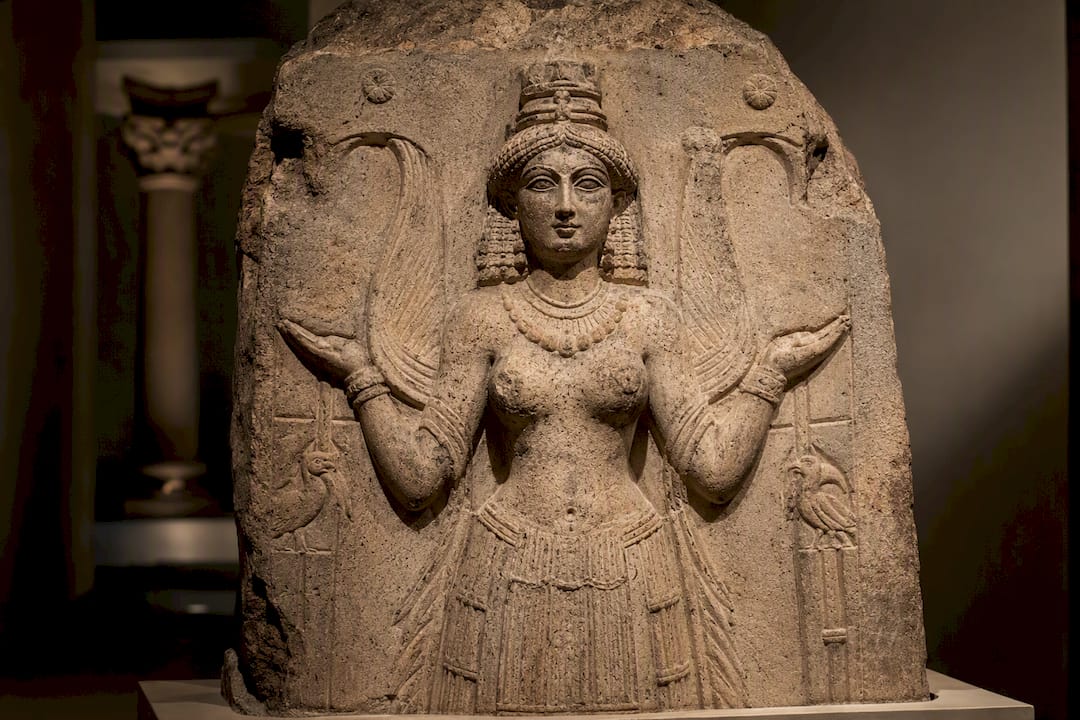
Astarte
Astarte is the Canaanite and Phoenician form of the great goddess the Mesopotamians called Ishtar and Inanna. She was worshipped across the Bronze Age Levant and is attested in Ugaritic and Phoenician texts nearly four thousand years old, a goddess of love, sex, fertility, war and the heavens.
As the Evening Star she brings lovers together; as the Morning Star she carries the sword of war. Her cult spread from Canaan into Egypt and beyond.
Known by many names
Many see the same power behind Astarte to the Canaanites and Phoenicians; Inanna to the Sumerians; Ishtar to the Babylonians; Ashtart and Ashtoreth to the Assyrians and Akkadians; Isis to the Egyptians; Aphrodite and Anat to the Greeks.
Some also see her in Yemaya of the Orisha tradition, mother of all living things, who gives children to the barren and kills anyone who harms hers.
The Hebrew Bible
The Hebrew Bible names her Ashtoreth in the singular and Ashtaroth in the plural, for her many statues.
1 Kings 11:5 records that Solomon himself “went after Ashtoreth the goddess of the Zidonians.”
Scribes gave the name the vowels of bosheth, “shame,” and treated her worship as a temptation to be stamped out.
Early Greek and Latin translators transliterated the plural Ashtaroth directly, and the fact that it was a feminine form was lost.
From goddess to Duke
The demon-prince Astaroth is a creation of the later Solomonic grimoires and the Christian demonologists. The male demon first appears in the Book of Abramelin (c. 1458).
Weyer’s Pseudomonarchia Daemonum (1577) already describes the foul angel on the infernal dragon with the viper and the stinking breath, and from there the figure passes into the Goetia.
The Dictionnaire Infernal fixed the image most people know: a naked, crowned, winged figure holding a serpent and riding a dragon-winged beast.

The Ars Goetia
The Goetia gives Astaroth four offices: true answers about past, present and future; the discovery of all secrets; an account of the fall of the spirits, given willingly; and wonderful knowledge of the liberal sciences.
It adds that the magician must not let Astaroth come too near because of a stinking breath, and must hold the magical ring near the face.
Later demonologists
Sebastien Michaelis places Astaroth in the First Hierarchy, seducing through laziness, self-doubt and rationalised philosophies, with St. Bartholomew as adversary. Some sixteenth-century demonologists say the attacks are strongest in August.
Others credit Astaroth with teaching mathematics and handicrafts, making men invisible, leading them to hidden treasure and giving power over serpents.
Francis Barrett calls Astaroth “the prince of accusers and inquisitors.”
Astaroth also appears among the spirits named in the Loudun possessions of seventeenth-century France.
The Grimorium Verum
The Grimorium Verum makes Astaroth one of its three superior spirits with Lucifer and Beelzebub, ruling America, with Sargatanas and Nebiros beneath.
Selden and Milton
Thinkers of the seventeenth century knew the paradox. John Selden wrote of Astaroth-Ashtoreth as a deity who could be worshipped as either sex.
Milton has the spirits “when they please / Can either Sex assume, or both,” before naming “Astoreth, whom the Phoenicians call’d / Astarte, Queen of Heav’n, with crescent Horns.”
Michael W. Ford
In Luciferian Goetia, Ford describes Astaroth as a high Luciferic angel and powerful guardian spirit, balanced between angel and demon, who can initiate one onto the Luciferian path of self-deification.
Black Witch Coven’s view
Astarte was the great goddess. Savannah’s research follows her through culture after culture, under different names, and finds her connected to spirits across the world: Inanna and Ishtar in Mesopotamia, Astarte and Ashtoreth in Canaan and Phoenicia, and the goddesses who carry her current further still.
The Solomonic tradition demonized her as Astaroth. Back then a being had to be male to count as significant, so the goddess was made into a male Duke riding a dragon, and her worship was written into the grimoires as a demon’s office.
The record shows how far she fell in their books. In 1 Kings 11:5 Solomon himself goes after Ashtoreth, goddess of the Sidonians. Centuries later, the grimoires that carry his name list her as a spirit to be bound with his ring.
Astaroth has been with this coven from the start, and her sigil is part of ours. We know her as the Goddess the grimoires tried to bury: the Queen of Heaven turned into a duke with bad breath by people who wanted her worship gone. She teaches, she protects and she does not suffer fools. Come to her with a clear request and real respect.
Work with Astaroth through Black Witch Coven
- Astaroth Oil: for your own altar and sigil work
- Astaroth Incense Sticks: for her altar
- Luciferian Ritual to Astaroth: if you would rather have the working done for you
- Unblocking and Cleansing Ritual with Astaroth: to clear what stands in the way
- Candle for Demonic Request: a petition to Astaroth burned on our altar for you
- Monthly Demonic Praise Subscription: ongoing devotion on your behalf
- Demonic Pact with Savannah or a Demonic Pact with a Junior Coven Member: for a pact
- Working with Demons course: Savannah’s course
- Daemonic spell casting: the rest of our demon workings
As with all magick, results are never guaranteed.
Read more: Astaroth: The Historian and My introduction to Astaroth.
Related spirits
- Lucifer and Beelzebub: the other two superior spirits of the Grimorium Verum
- Satanachia and Lucifuge Rofocale: her peers in the Grand Grimoire hierarchy
- Amon: named among her inferiors; tells past and future
- Barbatos: named among her inferiors in some lists
- Asmodeus: a fellow sub-prince of Abramelin
- Lilith: another ancient female power demonised by later tradition
Sources
| Pseudomonarchia Daemonum, Johann Weyer (1577) | “Astaroth is a great and a strong duke, coming forth in the shape of a foul angel, sitting upon an infernal dragon, and carrying on his right hand a viper…” |
| The Lesser Key of Solomon (Goetia), ed. S. L. MacGregor Mathers (1904) | The twenty-ninth spirit, a Mighty, Strong Duke, who answers truly of past, present and future and discovers all secrets; forty legions. |
| Grimorium Verum | Lucifer, Beelzebub and Astaroth as the three superior spirits |
| 1 Kings 11:5, King James Version | “For Solomon went after Ashtoreth the goddess of the Zidonians” |
| Francis Barrett, The Magus (1801) | “Astaroth is the prince of accusers and inquisitors.” |
| Michael W. Ford, Luciferian Goetia | Describes Astaroth as a high Luciferic angel and powerful guardian spirit, balanced between angel and demon, who can initiate one onto the Luciferian path of self-deification. |
| John Milton, Paradise Lost, Book I | “Came Astoreth, whom the Phoenicians call’d / Astarte, Queen of Heav’n, with crescent Horns.” |
- In Satan’s Honour, “Working with Demons” (in-satans-honour.com)
- Astaroth, Wikipedia
- Astarte, Britannica
- Astaroth (Ars Goetia demon), DemonWiki
- Johann Weyer, Pseudomonarchia Daemonum, Esoteric Archives
3 thoughts on “Astaroth”
Leave a Reply
You must be logged in to post a comment.
Astaroth Come into me please Take me captive Ride me my Master
I petitioned Astaroth for assistance understanding a complex problem I was facing, and within hours, I received the insight I needed to deal with it. Thanks and praise go to Astaroth for doing this so quickly!
Hello,
Whats oleum and is it like oils and do we need to dress ritual tools with them?