
 New Years Eve Ritual 2026/2027 with Savannah

BEELZEBUB
Before he was the Lord of the Flies he was Baal the Prince, lord of the high house, the storm-king of the Levant. The scribes who hated him changed one letter of his name. They could not change what he is.
Who Beelzebub is to practitioners today
Beelzebub is one of the three great powers of the infernal hierarchy, Prince of Demons in the Gospels and a superior spirit of the Grimorium Verum beside Lucifer and Astaroth, and behind the prince stands one of the oldest gods of the Near East: Baal, the Lord, worshipped at Ekron and across the Levant long before any scripture called him a devil.
His name is a wound. The Philistines of Ekron honoured a god the Bible records as Baal-zebub, and most scholars now read that as a deliberate insult: a play on Baal-zebul, “Baal the Prince” or “Lord of the High House,” bent into “Lord of the Flies” by writers who wanted his worshippers pictured as insects buzzing around filth.
The insult stuck for two and a half thousand years. It turned a storm and sky god into a demon of rot, then into the prince of all demons, and finally into a name Christians used for the Devil himself.
Those who work with him today meet something very different from the fly-headed monster of the engravings. They describe a vast, ancient, kingly presence: proud, exacting, highly intelligent and, once he has accepted you, fiercely protective. Many in the Left Hand Path regard him as a true god of the old world, and not a minor spirit to be commanded.
He is not a gentle first contact, and he does not pretend to be. This page starts with how people actually work with him now, the prayers they use and the questions they ask, and ends with what the old books say.
Why people work with Beelzebub
People come to the right spirit for the right purpose. These are the reasons practitioners come to Beelzebub, from the oldest offices to what people actually bring him today.
Classic reasons
- Power and rulership: the authority of a prince, a lord of the high house
- Command over spirits: his title as Prince of Demons, chief of the infernal court
- Oracle and answers: the god of Ekron was the one a king sent to when he needed to know whether he would live
- Storm and air: the sky, the wind and the weather of the old Baal
- Disease and its lifting: the power to send sickness and to drive it away, the fly as both plague and its master
- Pride: the sin the demonologists gave him, read by his own as dignity and self-rule
Modern reasons
- Authority and leadership: people work with Beelzebub to command respect at work, lead a team, or hold a position of power
- Clearing what is rotten: petitions to strip decay out of a life, a business or a home, the old fly-lord as cleaner of corpses
- Health and resilience: some pray to Beelzebub for strength against illness and to throw off a long sickness
- Protection: calling on him as a hard, kingly guardian against enemies and spiritual attack
- Spirit command and court work: ceremonial magicians invoke Beelzebub as a superior to bring lesser spirits into line
- Divination and hidden knowledge: asking him for true answers, and reading the movement of insects and the weather as his speech
- Breaking a stalemate: summoning his force when a situation needs to be blown open, like a storm breaking heat
- Self-mastery: people invoke Beelzebub to stand in their own pride rather than shrink
- Order among practitioners: some Satanic currents see him as the enforcer who keeps peace and unity among the dedicated
- Witchcraft itself: a number of practitioners report he is drawn to working witches and teaches the craft
- Reclaiming an old god: devotion to Baal in his own right, beyond the demon the Bible made of him
- Gatekeeper to other spirits: as the exarch who, in the Testament of Solomon, makes each demon’s apparition manifest, he is petitioned to open the way to other spirits, so a working with another name begins through him
- Breaking a relationship apart: his storm is called into a couple to stir friction and turmoil until the bond gives way; see our break-up spells
- Necromancy: the lord of the flies that gather where the dead lie is called on in work with the dead
- Invisibility and concealment: the oldest gift of Bael, asked for to move unseen by enemies, rivals and prying eyes
Traditional, for reference
What scripture, demonology and the grimoires assign him. This is historical background, not modern practice.
- 2 Kings 1: Baal-zebub, god of Ekron, consulted by the injured King Ahaziah to learn whether he would recover
- The Gospels: Beelzeboul, “prince of the demons,” by whom Jesus is accused of casting out demons (Matthew 12:24; Mark 3:22; Luke 11:15)
- Testament of Solomon: Beelzeboul, “exarch of the demons,” bound by Solomon’s ring
- Gospel of Nicodemus: given dominion over Hell after the Harrowing
- Sebastien Michaelis (1612): prince of the first hierarchy of Hell and demon of pride
- Binsfeld (1589): the demon of gluttony among the seven princes
- Grimorium Verum: one of the three superior spirits, with Lucifer and Astaroth
- Ars Goetia: as Bael, the first spirit, a king ruling in the East who makes the petitioner go invisible, rules 66 legions, and appears as a cat, a toad, a man, or all three at once
- Dictionnaire Infernal: credited with the power of flight
Spirit Temperament
Ease of working: 4/10
How easy Beelzebub is for a witch, magician or devotee to work with
- Beginner-friendly: 🔥🔥
He is a prince and expects to be treated as one. Many newcomers find him overwhelming or silent until they have some experience behind them. - Human tolerance: 🔥🔥🔥
Cold and distant to the careless, loyal and protective to those he accepts. Respect decides which one you meet. - Intensity: 🔥🔥🔥🔥🔥
One of the heaviest presences in the whole tradition: thick air, a pressure in the head and chest, a sense of standing before a throne. - Upheaval factor: 🔥🔥🔥🔥
He clears what is rotten, and he does not ask first. Things that were dying in a life tend to finish dying quickly. - Speed: 🔥🔥🔥🔥
When he moves, he moves like weather. Signs and results are often reported within days. - Demands: 🔥🔥🔥🔥
Formality, consistency and real offerings. He does not like being treated as a convenience.
Best for: authority and leadership, protection, clearing decay out of a life, health and resilience, divination, and ceremonial work that needs a superior spirit.
Scores are Black Witch Coven’s view, drawn from practitioner reports and our own work.
Beelzebub at a glance
- Other names: Baal-zebub, Baal-zebul, Beelzeboul, Beelzebuth, Belzebuth, Belzebud; the Arabic Baʿl-zabūl
- Name: Baal, “Lord”; zebul, “prince” or “high house,” mocked as zebub, “flies”
- Origin: the god of the Philistine city of Ekron, in the wider Canaanite family of Baal gods
- Titles: Prince of Demons, Lord of the Flies, Lord of the High House, Prince of the Air
- Rank: one of the three superior spirits of the Grimorium Verum; prince of the first hierarchy in Michaelis
- Sin: pride (Michaelis) or gluttony (Binsfeld)
- Enn: Adey vocar avage Beelzebuth
- Appearance: a giant fly; as Bael, a cat, a toad, a man, or all three at once
- Voice: raspy and hoarse
- Direction: East
Correspondences
Used in Black Witch Coven (from our own practice):
- Candle colour: Black
- Plant: Fern
- Planet: the Sun
- Metal: Iron, and gold for his kingship
- Element: Fire, with the air of the storm god
- Rank: King and Prince
- Zodiac: 0–4 degrees of Aries, around 21–25 March
- Tarot: the Two of Rods (Wands)
Also used by other practitioners:
- Element: Air, as Prince of the Air and the old storm and sky god
- Day: Sunday for his royal, solar side; Tuesday for war and protection
- Colours: black, deep red, gold and dark green
- Incense: dragon’s blood resin, myrrh, frankincense, cedar, tobacco
- Stones: obsidian, black tourmaline, smoky quartz, pyrite
- Animals: the fly, the wasp and the hornet, the bull of the old Baal
- Symbols: his sigil, a crown, a fly worked in metal or resin, a storm or lightning bolt
- More incense: agarwood (oud) and sage
- More offerings: black coffee, black tea, hard liquor, flowers, and dead insects
- More plants: chamomile, cinquefoil and eyebright
- More stones: opal, peacock ore and moldavite
- Direction: East
- Season: midsummer, for the old solar lord of the flies
Working with Beelzebub today
Beelzebub is worked in two quite different ways. Ceremonial magicians in the Solomonic line call him as a superior spirit, a prince with authority over others. Demonolaters and theistic Satanists approach him as a god: honoured at an altar, prayed to, and kept in an ongoing relationship. Both are described below, with how we work with him in Black Witch Coven.
Come formally
The advice repeated most often about Beelzebub is that he expects to be addressed as royalty. People who come to him casually, or treat him as one more name to try, frequently report silence or a cold, unsettling presence.
People who prepare, dress the altar properly, use his titles and speak to him the way you would speak to a king in his own hall report a very different response. Formality is not flattery here; it is the language of the court he belongs to.
His sigil and enn
- Draw his sigil by hand, ideally in black on clean paper, or use a consecrated metal or wooden seal
- Chant the enn Adey vocar avage Beelzebuth slowly and evenly until the air in the room changes
- Gaze at the sigil by candlelight until the lines seem to lift or move
- Anoint the sigil or candle with an oil of his, and a drop of your own blood if you wish to bind your call to your own life force
The altar
- His sigil, hand-drawn or consecrated
- A black candle, with a gold one beside it for his kingship
- Dragon’s blood resin or myrrh on charcoal
- A chalice of red wine, strong spirits or dark beer
- Something for the old god of Ekron: raw meat, honey, or a dish of fruit left until it turns
- Iron: a nail, a blade or an iron key
- A symbol of the matter in hand, written or drawn
Offerings
- Red wine, whisky, rum and dark beer
- Meat: raw or cooked, an offering that suits the lord of flies and the old Baal alike
- Honey, dates and ripe fruit, some practitioners leaving it on the altar until it is past its best
- Tobacco and strong incense
- Blood: a drop of your own blood on his candle or sigil, life force offered to a god who has received it in every age
- Acts: clearing something rotten out of your own life in his name, which many say pleases him more than any object
Timing
- Late March: around his degrees of Aries, the strongest time of year for him in our practice
- Sunday: for royal authority, rank and recognition
- Storms: many practitioners work with him while thunder is overhead, calling on the old weather god in his own element
- Waning moon: for clearing, cleansing and the ending of what is dying
- Full or waxing moon: for power, leadership and protection
A simple petition working
- Set his sigil between a black and a gold candle, with incense lit
- Write your petition plainly, using his titles: “Beelzebub, Prince, Lord of the High House”
- State exactly what you ask and exactly what you will give in return
- Chant the enn until the room feels dense and still
- Read the petition aloud, sign it, and add a drop of blood if you choose
- Burn it in a fireproof bowl and give the ash to the earth or the wind
- Pour the offering, give thanks, and close formally
Building the relationship
The practitioners who report the strongest contact treat the first formal call as the end of an introduction, not the start of one.
- Sit with the seal first: draw it by hand, keep it on the altar for the whole cycle, and spend a few minutes with it every day before you ever call him formally
- Choose which Beelzebub you are calling: the oracle of Ekron for answers and health, the lord of the high house for a home, a base or a position of authority, the exarch for opening the way to other spirits, the prince of Hell for sovereignty and rebellion; use the name and title that match, and hold to them for the whole working
- Work in cycles: repeat the working on a fixed schedule for a set number of rounds, usually one lunar month, then review
- Keep a record: write down, dated, what you did, what you felt and saw, and what happened in the world afterwards, before you start explaining it to yourself
- Pair it with action: a working for authority wants you in the room asking for the role; a working for a business wants the business doing its part
Signs of contact
Beelzebub’s signs are among the most consistent in the whole of demonolatry, and they are exactly what his old name would lead you to expect.
- Insects: flies, wasps, bees or beetles appearing indoors where they have no business being, sometimes in numbers, sometimes a single dead one placed somewhere obvious
- Buzzing: a low hum or drone in the ears, or the sense of something crawling on the skin
- Thick air: heaviness, heat, or the feeling of a storm about to break indoors
- Weather: wind rising, thunder or a sudden change during or after the working
- Dreams: a throne, a crown, a vast dark figure, swarms, or a city on a hill
- Rapid change: a dying situation ending abruptly, or a door opening that had been stuck for months
One practitioner in the demonolatry community described a short roach infestation in which the only insect they ever saw was a single dead one laid on top of the couch, followed by the sensation of an insect tangling in the hairs on the back of their hand at the moment wasps were mentioned on a video. They found him “witchy,” in a way they compared to Hecate, and said he told them through a pendulum that witchcraft was one of the things he wanted to teach them.
Beelzebub in ceremonial work
In the Grimorium Verum line, Beelzebub is one of the three superiors, with lesser spirits under his command. Ceremonial magicians call him for authority over other spirits, to bring an unruly working into order, or to open the way to the spirits of his court.
Because of this, some practitioners address him first when working with spirits under him, asking his leave and his support before they call the lesser name. Others keep him as a patron precisely so that they have a prince behind them in everything else they do.
Pacts and dedications
Beelzebub is a king, and a pact with him is a bond with a court rather than a bargain at a stall. A typical modern agreement:
- Is written by the practitioner, in formal language, using his titles
- Names a clear purpose and a clear term
- States what you will give: offerings, devotion, acts in his name, a share of what you gain
- Is signed in your own hand beside his sigil, and may be sealed with a single drop of your own blood, since blood is life force and nearly every faith speaks of it as life itself
- Is kept on the altar and honoured in full
If you would like a pact made with an experienced guide, see our Demonic Pact with Savannah.
Inside the Course
The full pact with Beelzebub as a superior of the Grimorium Verum, with its sealing and the court rite that brings his lesser spirits under your working, is taught inside our course. Pact material of this kind has had our site flagged by hosting companies before, and we have been taken offline and forced to change hosts because of it. That is not a sales pitch, only the reality of running a site like ours.
Prayers and invocations to Beelzebub
Beelzebub is addressed as a prince, and the prayers people use for him tend to be formal, weighty and direct. The pieces below are written by Black Witch Coven for your own use, apart from the traditional invocation, which comes from our earlier page. Speak them as they are, or let them show you the shape of a prayer and use your own words.
How people pray to him
- Standing, formally: using his titles, as you would address a king
- With the enn: chanted to open the working and carried under the prayer
- In a storm: many prefer to pray to him while thunder or wind is up
- Written and burned: a petition composed, read aloud and given to the fire
- Candle colours: black for his own work and for protection, gold for authority and rank
His enn
Adey vocar avage Beelzebuth
Chant it slowly and evenly while his candle burns. Most practitioners use it both to open a working and to carry the energy while a candle is consumed.
Opening invocation
Beelzebub, Prince of the high house,
Baal of Ekron, Lord of the air and the storm,
I call you into this place.
I come before you as one who honours your name,
the old name, before they mocked it.
Be present in this rite.
Adey vocar avage Beelzebuth.
Hail Beelzebub.
Spoken as the candles and incense are lit and the room has settled.
The traditional invocation
This invocation was given on our earlier page for use when opening the Nine Locks of the Abyss, and it is used as a direct call to manifest within the practitioner.
Beelzebub, I invoke thee.
Beelzebub, I summon thee.
Beelzebub, I conjure thee.
Come forth, Beelzebub, and manifest thyself
Within this body, this temple which I have prepared.
Come forth, Beelzebub, and manifest thyself.
Come forth, Beelzebub, and manifest thyself.
Prayer for authority
Beelzebub, Prince, you who sat at the head of the court,
lend me the weight of a crown.
Let those who stand against me feel it.
Let my word be heard and kept.
Let me take my seat and hold it.
By your name, I rule what is mine.
Said with a gold candle before a meeting, an interview, or a position you mean to claim.
Prayer to clear what is rotten
Lord of the Flies, you who know what is dead before it falls,
come into this house and this life.
Find what is rotting and take it.
Strip it to the bone and carry it off.
Leave nothing here that is already dying.
What remains, let it be clean and strong.
Said on a waning moon with a black candle, naming plainly what you want gone.
Prayer for health and strength
Baal of Ekron, to whom a king once sent for his life,
you who send sickness and drive it away,
turn it from me.
Burn it out as the sun burns the field.
Give me back my strength.
I will honour you for it.
Said over a black or red candle, with an offering of honey or meat.
Prayer for protection
Beelzebub, storm-king, stand over me.
Let your thunder fall on those who move against me.
Let your swarm rise around my door.
Whoever comes to harm me,
let them meet the Prince first.
Said facing the door of the home, with iron on the altar.
Gratitude and offering prayer
Beelzebub, Prince and Lord,
I thank you for what you have cleared
and for what you have raised.
I give you this offering freely,
as a subject of your court and not a beggar at its gate.
Hail Beelzebub.
Said as the offering is placed. Name it aloud before you begin.
Approaching him through Satan
Many in the Satanic current come to Beelzebub by way of his brother, asking Satan to move him first.
Lord Satan, by your grace, grant me the power to conceive in my mind and to carry out that which I desire. I ask you to move Beelzebub to come before me, that he may give me a true and faithful answer and help me reach my desired end, provided it is proper to his office. This I ask in your name, Lord Satan.
Questions people actually ask
These are the questions that come up again and again in demonolatry, ceremonial and Left Hand Path communities, answered the way we would answer them.
Is Beelzebub the same as Satan?
No, though the two have been confused for a very long time. In the Gospels, “Beelzeboul” is used almost as another name for Satan, and many Christians still treat them as one.
The demonologists split them back apart. In the Gospel of Nicodemus Satan outranks him; by the sixteenth century Johann Weyer was listing Beelzebub as supreme chief of Hell with Satan beneath him. In the Satanic current that draws on the Joy of Satan’s identifications, he is Satan’s brother and second in command. People who work with both describe them as distinct presences.
Is Beelzebub the same as Bael or Baal?
They share a root. “Baal” simply means “Lord,” and the Bible uses it for several gods of Canaan and Phoenicia. The Goetic King Bael, first spirit of the Ars Goetia, almost certainly descends from that same Baal.
Our earlier page, following that Satanic current, treated Bael as one of Beelzebub’s forms. Many practitioners agree; others experience Bael as a separate, much more approachable King. See our Baal page and judge by the contact.
Why “Lord of the Flies”?
Most scholars read it as an insult. The Philistine god was probably Baal-zebul, “Baal the Prince” or “Lord of the High House”; Israelite writers bent it into Baal-zebub, “Lord of the Flies,” a jibe that made his worshippers flies swarming over filth.
There is also an older and more sympathetic reading. In a hot country, flies gather where the dead lie, and a god who commands them commands disease and its lifting. Some practitioners now take the title back with pride: the lord who knows what is dying, and cleans it away.
Is he dangerous for beginners?
He is not a soft first spirit. Practitioners describe a crushing, very formal presence, and many beginners either feel nothing or feel overwhelmed.
Most people who work with him well came to him after some experience with other spirits, or because he called them first. If he is calling you, come formally, keep it simple, and give him time.
He sent flies. Is that him?
Very often, yes. Flies, wasps or other insects turning up indoors, especially dead or dying ones placed somewhere you will see them, is one of the most widely reported signs of Beelzebub. One practitioner described dozens of half-dead black flies appearing in their home for three days straight before they had even made contact.
Thank him, set out an offering, and ask through divination what he wants.
What does Beelzebub actually want from me?
Respect, formality and follow-through. He is a prince and expects to be treated as one. He also seems to value people who are willing to let go of what is dead in their own lives: an exhausted relationship, a failing habit, a job that is rotting from the inside. Clearing those in his name is one of the offerings people say he values most.
Is Beelzebub really Enlil?
That identification comes from the Joy of Satan, which holds that Beelzebub is the Sumerian god Enlil, the original “Bel,” and that he revealed this to his own. Our earlier page carried it, and a number of our readers work with him on that understanding.
Historians see no direct line from Enlil, the Sumerian lord of wind and air at Nippur, to the Baal of Ekron; Bel was a later title of Marduk in Babylon. What the two share is the role of a great lord of the storm and the sky, and many practitioners feel exactly that in his presence. Treat it as a theological claim from one living current, not as settled history.
What is the Order of the Fly?
In later demonological lore, Beelzebub was said to be the founder of an infernal Order of the Fly, with other demons as its knights. It appears in eighteenth- and nineteenth-century compilations rather than in the early grimoires, and it is best read as part of the courtly picture of Hell that writers of that era loved to draw.
Do I need to be a Satanist to work with him?
No. Demonolaters, ceremonial magicians, chaos magicians, witches and pagans who honour Baal all work with him. What matters is how you approach him: formally, respectfully and with real offerings.
What works, what doesn’t
These patterns come from first-hand accounts in demonolatry and ceremonial communities, practitioner blogs and our own coven. None of it is a rule, and accounts sometimes contradict each other.
What practitioners report works
- Formality. Titles, a properly dressed altar and a clear structure to the rite.
- Real offerings. Meat, strong drink, honey and a drop of blood are all reported to land well.
- Working in his element. Storms, heat, late March, the waning moon for clearing.
- Letting go. Allowing him to clear what is dead rather than clinging to it.
- Consistency. Returning regularly, not only when something is needed.
What practitioners say doesn’t work
- Casual approaches. Treating him as a name to try once tends to meet silence or a cold presence.
- Fear of the flies. Recoiling from his signs rather than recognising them.
- Making him a vending machine. Asking for a favour with no relationship behind it.
- Breaking a promise. Failing to give what was offered is one of the fastest ways to lose his attention.
Common beginner mistakes
- Expecting the horror-film fly monster and missing the king
- Calling him for something trivial
- Skipping the formal opening and closing
- Reading the clearing of a dying situation as punishment instead of his work
- Treating Beelzebub, Bael and Satan as interchangeable without asking which one you are actually speaking to
What changed when they kept going
People who stay with Beelzebub describe a hardening in the best sense. They carry more authority, tolerate less rot in their lives, and lose the habit of asking permission to take their place. Several say that what looked like loss in the first months was simply him clearing the ground, and that what grew afterwards was stronger than anything he took.
The darker work: plague, ruin and the swarm
Beelzebub is the old lord of disease and decay, and people do not only bring him clean petitions. They bring him enemies, rivals and those who have done them harm, and ask the lord of flies to send the swarm. We would rather explain that side than pretend it does not happen.
Workings against an enemy
Some practitioners call on Beelzebub to bring decay into an enemy’s affairs: to rot a rival’s plans, sicken a business, or turn the luck of someone who has caused real harm. This is heavy baneful work, and in our practice it is handled very differently from a petition for protection or authority.
Inside the Course
The plague and ruin workings practitioners bring to Beelzebub against a named person are taught inside our course. Baneful material aimed at a specific individual is a large part of why hosting companies have flagged our site in the past, and why we have been taken offline and had to move hosts. We say that plainly; it is not a pitch.
What the old books say
The living practice above is the real work. The old sources are its background, and they matter, because nearly every image of Beelzebub you have seen was drawn by people who wanted you to fear him.
The god of Ekron
In 2 Kings 1, King Ahaziah of Israel falls through a lattice and is badly hurt. He sends messengers to Ekron to ask Baal-zebub, its god, whether he will recover. The prophet Elijah intercepts them, condemns the king for consulting a foreign god, and tells him he will die.
The story shows what Baal-zebub was to the people of that coast: an oracle, a god you asked about life and death, important enough that a king of Israel would send to him. Ugaritic texts from the Bronze Age use zbl bʿl, “Prince Baal,” as a title of the great storm god, which is why most scholars think “zebul” was his true name.
The Gospels
By the first century, Beelzeboul had become the name of the chief of demons. In Matthew 12, Mark 3 and Luke 11, Jesus is accused of casting out demons “by Beelzeboul, the prince of the demons,” and answers that a house divided against itself cannot stand. From here the name passes into Christian tradition as one of the great powers of Hell, and very often simply as Satan.
Translations still argue over the spelling. The King James Version follows the Latin Vulgate with “Beelzebub,” while the Revised Standard Version uses “Beelzebul,” following the best Greek manuscripts.
The Testament of Solomon
In this early text, Solomon uses his ring to bind a host of demons to build the Temple. Beelzeboul is brought before him and names himself “the exarch of the demons,” the ruler of them all, once the highest of the angels in heaven. He resists, but the ring holds him.
The Gospel of Nicodemus
This apocryphal gospel tells the Harrowing of Hell. Hades, personified, scolds Satan for bringing Christ down among the dead, and Beelzebub is given dominion over Hell in Satan’s place after Christ breaks its gates. In these early stories, Satan outranks Beelzebub.
The demonologists and the grimoires
- Johann Weyer (sixteenth century): listed Beelzebub as supreme chief of Hell, with Satan below him
- Peter Binsfeld (1589): paired Beelzebub with gluttony among the seven princes
- Sebastien Michaelis (1612): made him prince of the first hierarchy and demon of pride
- Grimorium Verum (eighteenth century): one of three superiors, with Lucifer and Astaroth, said to dwell in Africa, with Tarchimache and Fleruty beneath him
- The Sacred Magic of Abramelin the Mage (Mathers, 1898): Belzebud among the eight sub-princes
- Collin de Plancy, Dictionnaire Infernal (1863): pictured him as a monstrous fly and called him supreme chief of the infernal empire
- Francis Barrett: named him the prince of false gods
- Milton, Paradise Lost: second only to Satan in power and in crime
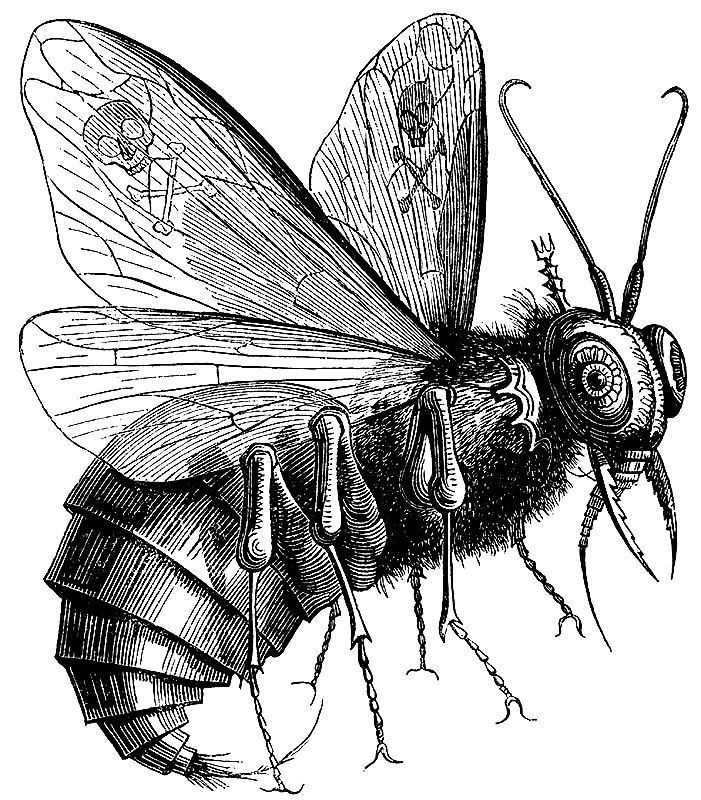
Beelzebub as the Dictionnaire Infernal pictured him (Paris, 1863).
Bael in the Ars Goetia
The first book of the Lesser Key of Solomon opens with him under the name Bael:
“The First Principal Spirit is a King ruling in the East, called Bael. He maketh thee to go Invisible. He ruleth over 66 Legions of Infernal Spirits. He appeareth in divers shapes, sometimes like a Cat, sometimes like a Toad, and sometimes like a Man, and sometimes all these forms at once.”
Johann Weyer’s Pseudomonarchia Daemonum of 1577 set down the same figure, and from there Bael passed into nearly every later grimoire.
Other readings of the flies
A 1909 encyclopedia offered a gentler reading than the insult. The god of Ekron may have been lord of the flies as a sun god, because flies are most numerous at midsummer, when the sun is at its height.
W. Herrmann, writing on “Baal Zebub” in the Dictionary of Deities and Demons in the Bible, puts the old understanding plainly:
“On the basis zebub, ‘flies’, the name of the god was interpreted as ‘Lord of the flies’; it was assumed that he was a god who could cause or cure diseases.”
Samael Aun Weor took him in another direction entirely. In The Revolution of Beelzebub he wrote:
“My intentions were in the long run to perform the greatest task in the cosmos, which was to take Beelzebub out of the Black Lodge and transform him into a disciple of the White Lodge.”
We record it as he wrote it. It tells you how seriously even his would-be converters took him.
A god by many names
Our earlier page, following identifications made by the Joy of Satan, set out what that Satanic current holds about him:
- That he is Enlil of Sumer, the original “Bel,” from which “Baal” later evolved
- That he is the half-brother of Satan, whom they identify with Ea or Enki
- That he was God of the Philistines and ruled over Ekron, and is second in command to Satan
- That he is “Lord over all that flies,” god of storms, the wind, the rain and the element of air
- That he is god of entomancy, divination by the behaviour of insects, and a master of astrology
- That he is patron of the Orient, martial arts and Asian culture, with a raspy voice
- That he enforces unity among dedicated Satanists, and is strict about them cursing one another
- That he hurls thunderbolts and lightning against the enemies of Satan
Our earlier page also quoted a description of Enlil, whom that current identifies with him, as both a god of war and a god of peace: a destroyer and protector, defender and restorer, hostile and most gracious.
That page also gave his ziggurat as Nippur, called “Fi-irn-bar-sag,” and set down this line, which we keep as it stood:
Baal Zebub, the Healing God of Ekron, later became one word, Beelzebub, which came to represent evil and idolatry in the New Testament of the Bible.
It described him, in the words of the old texts, as a gracious, life-giving and life-sustaining god who takes care of his people, the beasts of the field, the fowls of heaven and the fishes of the sea.
How this differs from how he is worked today
- Stance: an ancient lord to be honoured, not a monster to be feared or forced
- The flies: a sign of his presence and power, not of filth
- Relationship: devotion and formal court work rather than constraint by ring and seal
- Aim: authority, protection and the clearing of what is dying, not a soul lost to Hell
Black Witch Coven’s view
We find Beelzebub to be exactly what his first worshippers knew him as: a prince. The men who wrote about him spent centuries trying to shrink him into a fly, and the effort tells you how much they feared him. He is heavy, formal and exacting, and he does not suffer casual approaches. But to those he accepts, he is a hard and loyal lord who clears the ground of everything that is already dead and stands over what remains. He is one of the old gods that were renamed demons, and he still answers to his own name. Come to him as you would come to a king, and he tends to treat you as one of his court.
Work with Beelzebub through Black Witch Coven
- Beelzebub Oil: a ritual oil blended with his correspondences to honour him, for workings of power, dominance, protection and the banishing of what is unwanted
- Break-up spells: where Beelzebub’s storm is called into a relationship to break the bond
- Candle for Demonic Request: a petition to Beelzebub burned on our altar for you
- Monthly Demonic Praise Subscription: ongoing devotion on your behalf
- Demonic Pact with Savannah or a Demonic Pact with a Junior Coven Member: for a pact with Beelzebub
- The Goetia Devils: a compendium of the infernal spirits
Using Beelzebub Oil
Carve his sigil, or your own name, into a black candle. Anoint the candle with the oil, light it, and chant his enn, Adey vocar avage Beelzebuth, while you hold your desire in mind. The oil and the flame carry the working together.
Making your own
Practitioners blend frankincense, myrrh and agarwood into a carrier oil with a pinch of dried fern, and keep it in a dark bottle on his altar. A drop of your own blood can be added to the bottle or to the candle as it is dressed. Anoint a black candle and light it on a Sunday in daylight hours, chanting the enn over your single purpose.
As with all magick, results are never guaranteed.
Go deeper
Read Edwin’s full history of Beelzebub, from the god of Ekron to the prince of Hell, with a working method: Beelzebub: Origins, Meaning, and How to Work With Him.
Related spirits
- Lucifer and Astaroth: the other two superiors of the Grimorium Verum
- Baal (Bael): the Goetic King who shares his root, and to some his own form
- Satan: whom the Gospels named him and later writers set beside him
- Leviathan: one of the first to fall with him, in the old lore
- Belial: named beside him in the old hierarchies, and in some practitioners’ experience one of his own personas
- Eligos (Eligor): the Goetic duke of war, justice and disputes, called alongside him in matters of authority
Sources
| 2 Kings 1, King James Version | Baal-zebub, god of Ekron, consulted by King Ahaziah |
| Matthew 12:24; Mark 3:22; Luke 11:15 | Beelzeboul as “prince of the demons” |
| Testament of Solomon (trans. F. C. Conybeare) | Beelzeboul, “exarch of the demons,” bound by Solomon’s ring |
| Gospel of Nicodemus (Harrowing of Hell) | Beelzebub given dominion over Hell |
| Sebastien Michaelis, Admirable History (1612) | Prince of the first hierarchy; demon of pride |
| Collin de Plancy, Dictionnaire Infernal (1863) | The fly image; supreme chief of the infernal empire |
| W. Herrmann, “Baal Zebub,” in Dictionary of Deities and Demons in the Bible (1999) | On zebub and zebul; a god who could cause or cure disease |
| Lesser Key of Solomon, Ars Goetia | Bael, first spirit, king of the East, 66 legions |
| Johann Weyer, Pseudomonarchia Daemonum (1577) | Bael; Beelzebub as supreme chief of Hell |
| Peter Binsfeld (1589) | The seven princes of Hell; gluttony |
| John Milton, Paradise Lost (1667) | Second only to Satan among the fallen |
| Jewish Encyclopedia (1901), “Beelzebub” | The god of Ekron and the Gospel name |
| New Schaff-Herzog Encyclopedia of Religious Knowledge (1909) | The midsummer sun-god reading of the flies |
| Samael Aun Weor, The Revolution of Beelzebub | Quoted in “Other readings of the flies” |
Further reading: S. Connolly, The Complete Book of Demonolatry; Samael Aun Weor, The Revolution of Beelzebub; Rosemary Guiley, The Encyclopedia of Demons and Demonology.
5 thoughts on “BEELZEBUB”
Leave a Reply
You must be logged in to post a comment.
Beelzubub has been with me now for 11 years. I can attest to the post that he does NOT like other Satanists attacking each other…One of his tennet,s from Satan is to have unity with in Satan’s realm. He is my demonic mentor, teacher and strength. I did not seek him out he found me 11 years ago while I was scrying in a mirror. Amazing things have happend to me from that point. He has changed my entire being and life. He dislikes chaos and fighting among his ranks as he is a commander of 66 legions so go figure. I also believe in the above post also that Bael is another persona for Beelzubub and they are one in the same, for he has told me that men have named him many things but he (laughing) does like Beelzubub …See my post on Lucifer section for a real life accounts that happend to me …He is gracious when you honor him …Again he is a God of War and protection and will protect the unification of Satan’s infernal domain and participants there in. I believe in the un-holy trinity of Satan, Beelzubub, Astaroth! Hail the un-holy trinity as it is the juxapose(alternate) to the other un-free willed slaves of the manipulators of truth. Funny though it took him awhile to reveal his name to me…but I have never asked him why!
Hi! Is there a way we could chat about some of the benefits you’ve seen over the last 11 years while working with him and what it feels like?
It’s also possible that Belial is another alternate persona of Beelzebub: You’ have Beelzebub in the middle and his alternate persona/s beside him that he’ controls.
1: For example making a pact with Beelzebub himself (would mean you’re not under one controlling persona of his (For example Belial likes one to give up something important to them (addictions are great choices to give up.
2: But when you make a pact with the one who has control over these alternate personas of his (those choices are not necessarily essential as long you’ are loyal to him of course. Beelzebub is an amazing demon LORD too work with.
Yes, of course they can if asked (but not forced what makes you’ think someone has asked this LORD too follow you or to put baneful magick upon you unless you’ deserved it of course: and I am sure this demon LORD would be aware of that. Demons are not the satanists slaves per-se but if they’re doing so you’ can not put an hex on a satanist they may/or you’ must have done something to really upset your’ enemy:
However, he is a powerful LORD of MAGICK (Death magick that of hexing and cursing. He’ does not tolerate the same kind cursing one another and provides protection from these attacks – from those’ who are with Satan but unware of it.
This is what he’ explained too me eariler and’ he made the point clear (this is a personal thing’ and should not be shared too change another person/s connection with me as we are all different’.
The reason some are under the impression that Bael and Beelzebub are 2 different demons. Bit like humans some have 2 different personailites or an alternate personaility on-purpose. It’s quiet understanding that’ some feel they are 2 different demon/s; (He understands as to why it’ may come across in’ this way.
1: Bael/ Beelzebub are the same demon; he has made the distinction clear: One is an alternate persona on-purpose and the other is his real personailty simply his true form the more advanced type demonic being of black magick.
2: The same demon’ but Bael is an alternate personailty and can appear as either depending if one is ready for his protection and his skills in magick. he is very happy for those who work under him to connect in-which their belief system correlates with best. For some people’ you’ should call on Bael and ask for knowledge and wisdom: the alternate persona of this great LORD and most people that’ are new to satanism want wisdom and knowledge on magick so Bael would be who you call on. All the advanced stuff (Beelzebub can do himself on behalf of the witch/or the one he protects
3: Connecting with them and can be summoned this way if asked too appear during chanting the ENNS once a connection has been made.
Bael/Beelezbub.
1: Beelezbub: Adey vocar avage Beelzebub:
2: Bael: Alternate Persona: Ayer secore on ca Bael:
Beelzebub is amazing and so his alternate.
Hail Beelzebub.
I’ make pacts with demons quiet easy due too living with Fragile X syndrome (doing pact/s in the normal way is a bit harder so they help me formulate the pact in meditation and doing it symbolically. I’ find they’re very respectful. & Satan has been amazing. If you’ don’t know what Fragile x is (One should read about it.
I’ feel our souls actually communicate on the astral realm.
Hail Satan.
Can someone cast Beelzebub on you to follow you?