
 New Years Eve Ritual 2026/2027 with Savannah
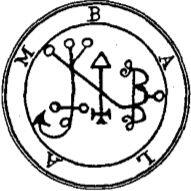
BALAM
Balam is the fifty-first spirit of the Ars Goetia, a terrible, great and powerful King who rules forty legions. He gives true answers of things past, present and to come, makes men go invisible, and makes them witty. Those three offices make him a spirit of hidden knowledge: the answer you cannot get by ordinary means, the ability to move unseen while something matures, and the quick tongue that decides a negotiation or an argument.
Balam at a glance
- Number: 51st of the 72 spirits of Solomon
- Rank: King (some modern lists wrongly call him a duke; the Goetia and Weyer both make him a king)
- Legions: 40
- Appearance: three heads (bull, man and ram), a serpent’s tail and flaming eyes, riding a furious bear with a goshawk on his fist; he speaks with a hoarse voice
- Other spellings: Balaam, Balan
- Enn: Lirach tasa vefa wehl Balam (see our demonic enns page)
Correspondences used by many modern magicians (these come from later zodiacal systems, not from the Goetia itself): 10 to 14 degrees of Sagittarius, strongest December 3 to 7; Nine of Wands; Mars; white candle; oak; iron; Fire. He is usually worked at night.
What the Goetia says
The entry is compact, and every phrase counts:
- True answers of things past, present and to come. Divination in all three tenses: what happened, what is happening out of sight, and what is coming. Old sources extend this to questions such as whether a sick person will recover or a war be won.
- Invisibility. He makes men go invisible. In older centuries that had obvious military and criminal uses. Today it reads as going unnoticed, keeping a project out of view, or carrying out something clandestine without being seen.
- Wit. He makes men witty: cunning, finesse, sharpness of mind and speech.
Notice what is missing. The entry gives no biography, no petition formula and no fixed ritual. What it does give is imagery that rewards close reading. Three heads, animal, human and animal, suggest perception that does not run through one channel. The serpent’s tail and the bear suggest cunning and brute force travelling together. The goshawk is a hunter’s bird, a trained instrument of sight and pursuit, which sits naturally beside an office that retrieves hidden information. You do not need to adopt these readings as doctrine, but they give you a vocabulary for choosing ritual materials.
Where Balam comes from
Balam first appears in print in Johann Weyer’s Pseudomonarchia Daemonum (1577), followed by Reginald Scot’s English version in 1584. Weyer already gives the three heads of bull, man and ram, the serpent’s tail, the bear, the goshawk and the hoarse voice, and adds that Balam was formerly of the order of Dominations. The Ars Goetia, compiled in the seventeenth century, keeps the description and the forty legions, gives him his number 51, and records his seal. Collin de Plancy’s Dictionnaire Infernal (1818, illustrated edition 1863) repeats the same picture.
Mathers gives the name as “Balam or Balaam”. The second spelling echoes Balaam, the diviner of the Book of Numbers who was hired to curse Israel and whose donkey saw the angel he could not. The grimoires do not say the spirit and the prophet are connected, but a seer who answers truly of things to come is a fitting namesake. Some modern sources also describe Balam as a naked man or woman riding a bear. That image is not in Weyer or the Goetia; treat it as later layering.
Editions differ in small ways, spelling, ordering and the drawing of the seal, because the material travelled through many manuscripts and languages. The firm layer is what Weyer and the Goetia share: the king’s rank, the three heads, the serpent tail, the three offices and the forty legions.
Benefits people seek from Balam
- Answers and divination about a hidden situation, an unexplained pattern, or a decision made with missing information.
- The truth about people: what a rival, partner or business contact is withholding.
- Invisibility and discretion: going unnoticed during a sensitive period, keeping plans out of sight of competitors, moving without attracting attention.
- Wit and cunning for negotiation, debate, writing, interviews and any exchange where verbal speed decides the outcome.
Love, prosperity and protection appear in many modern lists, but the entry does not assign them. The cleaner approach is to work through his offices: protection through concealment, prosperity through sharper negotiation, a relationship through finding out what is really going on.
Working with Balam
The Goetia gives his seal and offices, not a modern ritual. This is how we approach him. Like every Goetic king he is no undertaking for the faint-hearted, and he expects you to be in the right frame of mind.
1. Choose one office and one aim. A single, clearly worded question about a defined matter; or a specific period in which you need to go unseen; or a specific meeting where you need your wits. Vague petitions produce results you cannot evaluate.
2. Prepare the seal. Draw his seal by hand and keep the same version for every working so your results stay comparable. Spend time gazing at it in the days before you call him.
3. Prepare the space. Work somewhere quiet and free of disturbance. You need a black scrying mirror and good incense, because he may manifest through either. A pentagram is not necessary, but the seal should be clearly displayed. Imagery from his description, a bull or ram figure, a bear, a hawk feather, makes a fitting altar.
4. Call him. Speak his enn until the atmosphere changes. An older English conjuration calls on five infernal kings to bring him:
“I conjure, charge, and command ye, and every of ye, Sirrael, Malanthan, Thamaor, Falaur, and Sitrami, ye infernal kings, to put into this circle the spirit Balam, learned and expert in those things past. I charge ye, ye noble kings, that the said spirit may teach, show, and declare unto me, and to my companions, at all hours and minutes, both night and day, the truth of all things, both bodily and ghostly, in this world, whatsoever I shall request or desire, declaring also to me my very name. And this I command in thy part to do, and to obey thereunto, as unto thy own lord and master.”
5. Ask, and set the terms. Once you feel his presence, put your question or request plainly and state what you will give in return. Offerings that echo his description suit him: a hawk feather, a small bull or ram figure, incense burned through the working. Offerings tied to his offices work too: time spent researching when you ask for answers, a period of deliberate silence when you ask for concealment. A narrow, time-limited agreement is easier to judge than an open-ended one. Write it down.
6. Close properly. Thank him and dismiss him once the work is done. Keep your end of the bargain.
7. Keep a record. Log the date, the wording and what happened. Over several workings the log shows you how his answering office behaves for you compared with his concealment office, and which of your choices carry weight.
Like the other Goetic spirits, Balam is indifferent to mankind. That does not mean malice, nor any inclination to love. It means you take care, keep your wording precise, and honour whatever you promised.
How it looks in practice
These are illustrations, not client cases.
- The contract negotiation. A woman facing a hard renegotiation works with the office of wit, asking for sharpness of speech and clarity under pressure on a stated date, and rehearses her points daily beforehand.
- The unexplained matter. A man who suspects something is being hidden from him in a business dispute asks a single clearly worded question about what the other party is withholding, repeats the working until a pattern emerges, and writes down every answer before checking it.
- The project kept out of sight. Someone building a new venture while still employed asks Balam to keep it unseen by the wrong people until it is ready to launch.
Black Witch Coven’s view
Balam is a king of hidden things. He sees what is concealed, he conceals you, and he sharpens the mind that has to make use of both. His entry is short and his offices are clear, so resist the temptation to load him with borrowed attributes. Bring him a real question or a real need for discretion, keep the working narrow, and he can be one of the most precise spirits in the Goetia.
If you would rather have the working done for you, see our daemonic spell casting, or book a consultation to find the right approach first. For the relational side of this work, see our demonolatry resources. As with all magick, results are never guaranteed.
Similar spirits
- Zagan: makes men witty
- Ipos: wit, courage and knowledge of past and future
- Amon: tells things past and to come
- Aim: makes men witty and gives true answers
- Asmodeus: also a three-headed king who makes men invisible and gives true answers
Sources
| Pseudomonarchia Daemonum, Johann Weyer (1577; Scot’s English, 1584) | “Balam is a great and a terrible king, he commeth foorth with three heads, the first of a bull, the second of a man, the third of a ram…” |
| The Lesser Key of Solomon (Goetia), ed. S. L. MacGregor Mathers (1904) | “The Fifty-first Spirit is Balam or Balaam. He is a Terrible, Great, and Powerful King…” |
| Dictionnaire Infernal, Collin de Plancy (1863) (paraphrased) | Balam, who commands forty legions, has a serpent’s tail, eyes that shoot fire, and three heads. |
- The Lesser Key of Solomon, Project Gutenberg
- Lemegeton Clavicula Salomonis, Esoteric Archives
- Pseudomonarchia Daemonum, Wikipedia
- Balam, Grimoire.org
- Conjuration of Balam, Spelwerx
- Goetic enn pronunciation guide