
 New Years Eve Ritual 2026/2027 with Savannah

ALLOCES
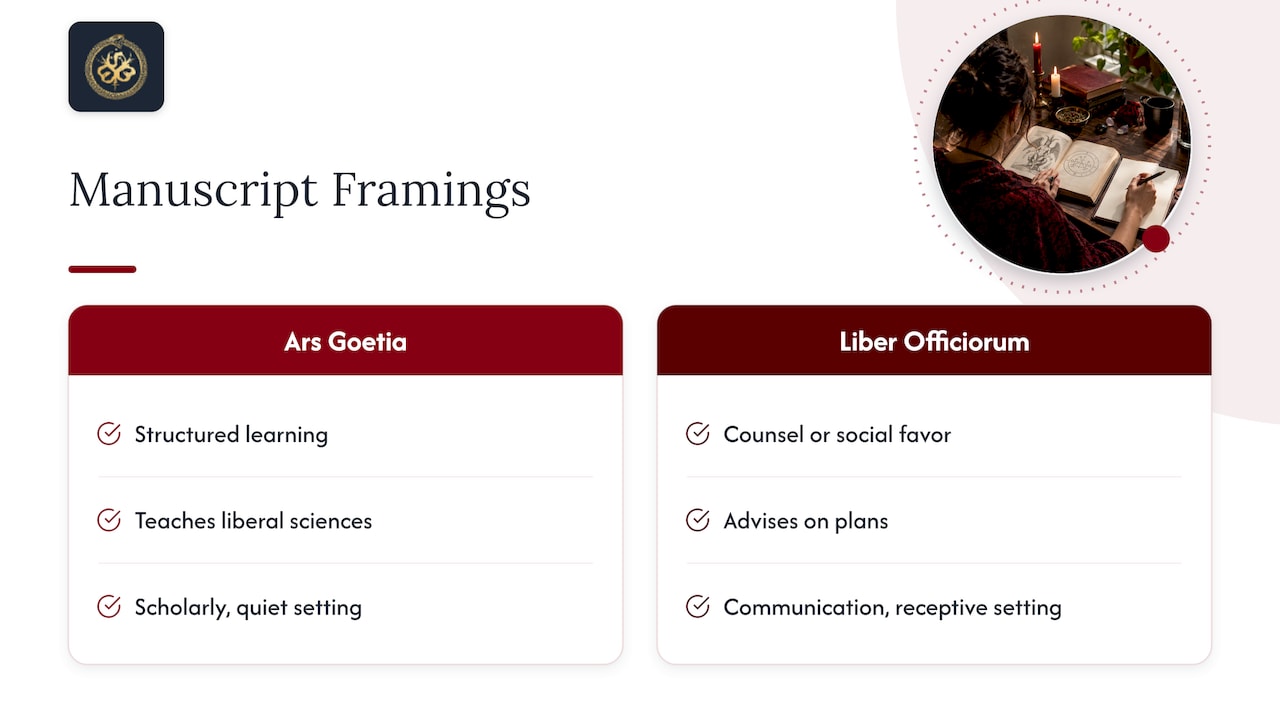
Alloces is the fifty-second spirit of the Ars Goetia, a Duke great, mighty and strong, who rules thirty-six legions. He appears as a soldier riding a great horse, with a lion’s face, very red, with flaming eyes, and he speaks in a hoarse, very big voice. He teaches the art of astronomy and all the liberal sciences, and he brings good familiars. He is a scholar dressed as a warrior: a commanding teacher for those who want structured, serious knowledge, and a source of spirit helpers who stay.
Alloces at a glance
- Number: 52nd of the 72 spirits of Solomon
- Rank: Great Duke
- Legions: 36
- Appearance: a soldier on a great horse, with a very red lion’s face and flaming eyes; a hoarse, loud voice
- Other spellings: Allocer, Allocen, Alocas; Allogor or Algor in the Liber Officiorum Spirituum
- Enn: Typan efna Alloces met tasa (see our demonic enns page)
Correspondences used by many modern magicians (these come from later systems, not from the Goetia itself, and they vary): 15 to 19 degrees of Sagittarius (some give Virgo), strongest August 23 to September 1 and December 8 to 11; Venus or Uranus; Water and Fire; green; bronze and copper; sandalwood; sage; the bat; south. He is usually worked at night. Tarot attributions differ: the Nine of Wands, the Eight of Pentacles and the King of Cups are all used. We recommend you build your own correspondences once you know his energy. In the Rudd tradition his opposing angel is Imamiah.
What the Goetia says
The entry gives Alloces two offices:
- Astronomy and all the liberal sciences. In the old sense the liberal arts are grammar, rhetoric and logic, arithmetic, geometry, music and astronomy: the whole of a structured education. Weyer says he makes a man skilful in them.
- Good familiars. Spirits who assist with ongoing work and guidance after the first working is done.
His appearance is worth reading closely. A lion’s face on a soldier signals command and dignity, an authority that demands respect. The red complexion and flaming eyes tie him to fire, which here reads as the illumination of the mind rather than destruction. The great horse gives him mobility and martial readiness. Everything about him says a teacher who expects discipline.
Where Alloces comes from
Alloces appears in Johann Weyer’s Pseudomonarchia Daemonum (1577) as Allocer, carried into English by Reginald Scot in 1584: a strong and great duke who comes like a soldier on a great horse, with a lion’s face, very red, flaming eyes and a big voice, who makes a man skilful in astronomy and the liberal sciences, brings good familiars and rules thirty-six legions. The Ars Goetia, compiled in the seventeenth century, keeps the description almost word for word and numbers him 52.
The Liber Officiorum Spirituum, a sixteenth-century catalogue related to Weyer’s, is reported to give a variant under the name Allogor or Algor, with thirty legions and somewhat different offices: answering questions, advising on plans, and winning the favour of nobles. Treat that as a separate strand of the tradition, and if you work with those offices, say so in your petition rather than mixing them silently with the Goetic entry. Names, spellings and legion counts shift between manuscripts because the material was copied and translated by many hands. What Weyer and the Goetia share is his core profile.
Some modern pages credit Alloces with granting immortality, presiding over councils of hell or carrying out revenge. None of that is in Weyer or the Goetia, and we no longer list it as lore.
Benefits people seek from Alloces
- Astronomy and astrology: understanding the heavens, celestial timing, predictions and cosmic influences on a situation.
- Serious study: occult study, academic work, and any of the liberal sciences, from logic and rhetoric to mathematics and music.
- Familiars: a lasting spirit helper for your magick.
- Counsel and plans: following the Liber Officiorum strand, advice on a specific plan and favour with people of influence.
- Courage and authority: the lion-faced soldier is often called on to face fears and turn inner turmoil into strength.
Working with Alloces
The Goetia gives his seal and offices, not a modern ritual. This is how we approach him.
1. Choose the office. Decide whether you are asking for instruction in a particular science, for a familiar, or for counsel on a plan. Write the request in one sentence. Precise petitions about learning or skill fit his office far better than generic requests for money or binding.
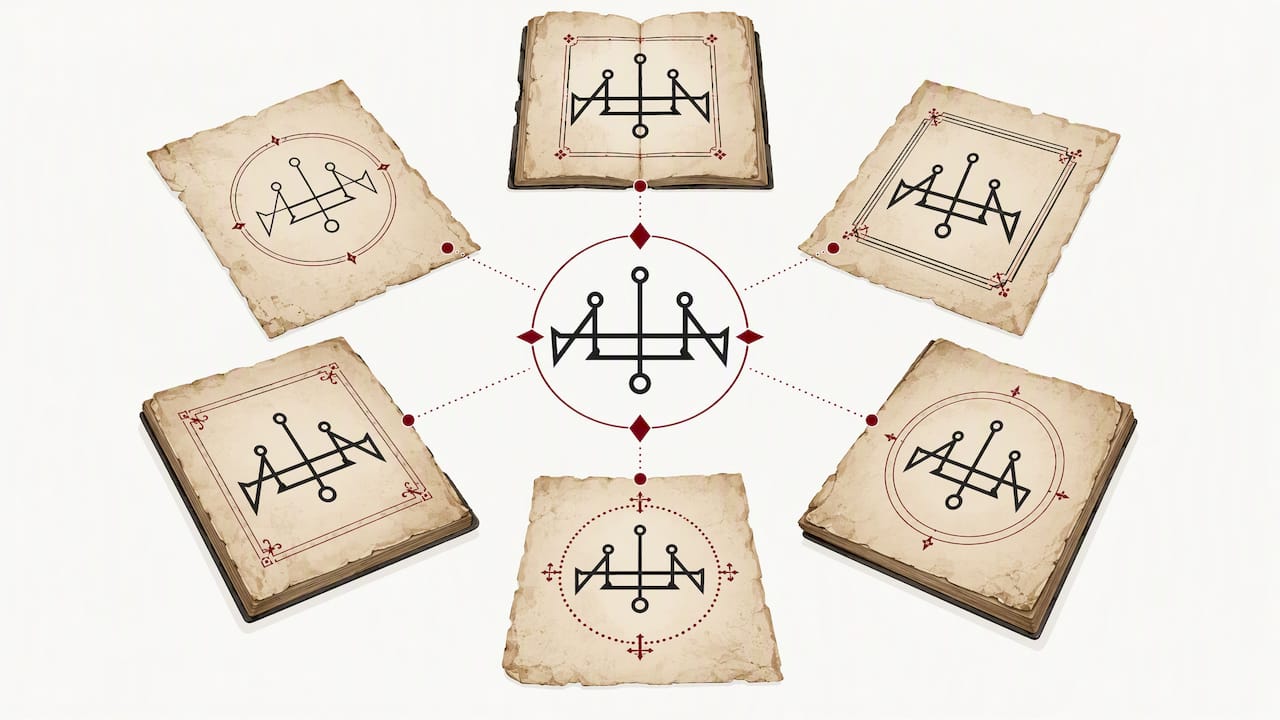
2. Prepare the altar. Display his seal prominently at the centre. Use green candles, sandalwood incense, and items of copper or bronze, with sage leaves scattered on the altar if you use his correspondences. For an astronomy working, star charts or an astrolabe make a fitting focus.
3. Call him. Chant his enn, Typan efna Alloces met tasa, in sets of three while you make your offering, until you feel him in the smoke and the flames. Some add Veni, veni, o Comitis Allocer (“come, come, O Count Allocer”) or Liftoach Pandemonium, et germinet Allocer. Those who prefer a Solomonic conjuration for a first contact can use the traditional form:
“And I say to thee obey, in the name of he who spake and it was, and in every one of ye, O ye names of God! Moreover in the names Adonai, El, Elohim, Elohi, Ehyeh Asher Ehyeh, Zabaoth, Elion, Iah, Tetragrammaton, Shaddai, Lord God Most High, I stir thee up; and in our strength I say Obey! O Spirit Alloces, appear unto His servants in a moment, before the circle in the likeness of a man, and visit me in peace… Come forth, O Spirit Alloces, in a moment: let thy dwelling-place be empty, apply unto us the secrets of Truth and obey my power. Come forth, visit us in peace, appear unto my eyes; be friendly… speaking the secrets of Truth in voice and in understanding.”
Expect a loud presence. The grimoires all agree on the voice.
4. State your wishes and the terms. Address him respectfully, say what you want to learn or receive, and what you will give in return. If you ask for a familiar, say what work it will do and how you will keep it.
5. Close. Thank him and dismiss him respectfully. Snuff the candles rather than blowing them out; blowing them out is said to anger him.
6. Keep a record. Note the date, the source you followed, the petition and any response. Over several workings this becomes your own reference for him.
Some also meet Alloces through pathworking: a visualised journey to stand before the lion-faced rider and ask for instruction. It suits those who want to build contact before a formal call.
Black Witch Coven’s view
Alloces is a teacher in armour. His office is one of the most specific in the Goetia, and we treat that as a reason to be precise: bring him a subject you mean to master, not a vague wish for wisdom, and expect to work. He respects discipline and courage, and he answers loudly. The familiars he brings are part of the same gift; a good student is given help that stays.
If you would rather have the working done for you, see our daemonic spell casting, or our occult tarot and divination readings for guidance first. As with all magick, results are never guaranteed.
Similar spirits
- Amy: astrology, the liberal sciences and good familiars
- Andrealphus: geometry, measurement and astronomy
- Stolas: astronomy and the virtues of herbs and stones
- Marbas: mechanical arts and hidden things
- Bune: wisdom, eloquence and riches
Sources
| Pseudomonarchia Daemonum, Johann Weyer (1577; Scot’s English, 1584) | “Allocer is a strong duke and a great, he commeth foorth like a soldier, riding on a great horsse…” |
| The Lesser Key of Solomon (Goetia), ed. S. L. MacGregor Mathers (1904) | “The Fifty-second Spirit is Alloces. He is a Duke, Great, Mighty, and Strong, appearing in the Form of a Soldier riding upon a Great Horse…” |
- The Lesser Key of Solomon, Project Gutenberg
- The Lesser Key of Solomon, Sacred Texts
- Alloces, Wikipedia
- Allocer, Grimoire.org
- Demonic enns, Satan’s Den